
Browse Items (771 total)
Sort by:
-

Lesbian Nation, October 22, 1973
Martha Shelley and Lois Chaffee discuss the Women’s Liberation Center and an ongoing dispute over its occupancy of 243 West 20th St., as a family services group has tried to claim the space for themselves. Following their conversation, Martha Shelley reads aloud two letters from listeners, one a gay senior at Stuyvesant High School and the other a student at Sarah Lawrence College. Trigger warning: bullying, homophobic slurs. -

Lesbian Nation, October 29, 1973
Martha Shelley interviews authors Rita Mae Brown and Blanche Boyd about growing up in the American South, publishing their work with the independent feminist press Daughters Inc. rather than a mainstream publisher, and the synthesis and conflict between feminism and art. Among other announcements, Shelley also gives a brief update on the Women's Liberation Center and their right to occupy the 20th Street firehouse. -

Lesbian Nation, October 6, 1972
This episode of Lesbian Nation opens with a Mary Flowerpot humor segment then dives into an interview between Martha Shelley and Phyllis Chesler, renowned psychologist and author. In this interview, Chesler discusses women’s health, delving into her observations on how women are treated in mental health institutions. The episode ends with a poetry reading. -

Lesbian Nation, September 1, 1972
Introduction of Mary Flowerpot followed by an interview where Martha Shelley and Mary Flowerpot compare and contrast the beginning of the GLF in the United Kingdom and discuss class distiniction, women in the workforce and the drag scene in Europe. Martha Shelley and Mary Flowerpot also read a letter a homophobic letter directed at Joe Johnston that was sent to the Village Voice. At end the episode, Martha Shelley answers phone calls from two lesbians about the firing of a lesbian speaker from WBAI. -

Lesbian Nation, September 10, 1973
Part two of an interview about Marge Piercy's newest book "Small Changes." Discussion included topics like the value of writing about working class characters and language in writing and speech. -

Lesbian Nation, September 17, 1973
Martha reads a response letter originally published in "Off Our Backs" from the women of Weather Underground in reply to Jane Alpert's letter. This letter references topics including the bridge between the radical feminism movement and the left, the divisions in the women's movement, and the ideals of the organization. [Music from Bali] -

Lesbian Nation, September 22, 1972
In this installment of Lesbian Nation, Martha Shelley interviews women of the Women’s Lesbian Liberation Committee of the Gay Activists’ Alliance (GAA). Mary Flowerpot also hosts her comedy segment. In Shelley’s interview, the women discuss the emergence of the Lesbian Liberation Committee and their role within the GAA. They talk about what they have done to address issues of sexism in the GAA and how they try to maintain positive discourse with male members. -

-

Lesbian Nation, September 29, 1972
In this episode of Lesbian Nation, Martha Shelley and guests read original poetry. They cover love, relationships, and life as a lesbian in New York City. Mary Flowerpot opens the show with her trademark whimsical comedy segment. -

Lesbian Nation, September 8, 1972
Martha Shelley interviews lesbian students from Southern Illinois University in Carbondale about a number of topics including lesbian publishing, local environmental concerns, and student activism. Mary Flowerpot opens the show with another funny segment before Shelley comes on to address more serious topics. The students discuss a recent incident involving unwarranted police brutality against a local student group (trigger warning). -

Lesbian Nation, undated [Placenta Previa-cesarean]
Recorded by Martha Shelley in San Francisco, an unknown woman reading a poem written about the birth of her child and motherhood. -

Lesbian Pride Week '77
Discussion at Lesbian Pride Week '77 that covers topics such as political activism.
Note: This recording suffers from poor sound quality. -
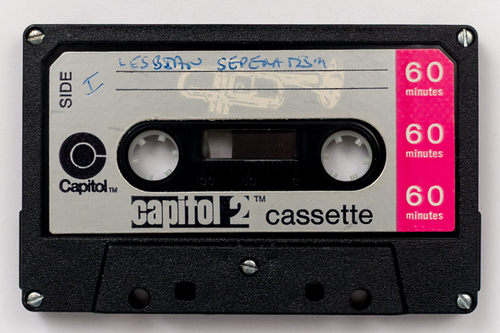
Lesbian Separatism
Broadcast of Gay Alternatives, inscribed as "Lesbian Separatism" on the cassette, hosted by Ronald Gold. Gold interviews three lesbians activists Jan Crawford, Carol Harden, and Doris Lunden about how finding their sexual identity has allowed them to better understand their personal identity and break against gender norms. Recording starts mid conversation, so some context is lost. -

Lesbian Singer and Political Prisoners
This untitled interview features a guest who discusses her time in prison, the songs she wrote about another incarcerated woman, songs she wrote for political prisoners including Lolita Lebron and Susan Saxe, and conditions of the women’s prison which she was subjected to. She talks about how the state justified the horrible conditions at the prison, and the lack of access to any kind of rehabilitation programs, despite rehabilitation being the supposed purpose of prison. -
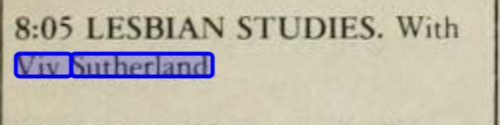
Lesbian Studies, via WBI Folio 1970s
Lesbian Studies, via WBI Folio 1970s -

Lesbian Style Project: Anonymous Interviewee
The interviewee recounts her experiences growing up lesbian and intersex in Brooklyn and Manhattan. She discusses the lesbian community, the ballroom scene, workplace and school bullying, and her experiences working at an urban clothing company.
The interviewee's name has been withheld at her request. -

Lesbian Style Project: Fumio Ichikawa (Disc 1)
Alaina Zulli interviews Fumio Ichikawa, part one. First she reflects on her experiences across her childhood and adolescence; she grew up in a small town in Kanagawa outside of Tokyo, and recounts her experience of class and gender in Japan. She also describes her difficulties adjusting to the culture and language in America as a young adult after her family moved to New York when she was 17 years old. -

Lesbian Style Project: Fumio Ichikawa (Disc 2)
Alaina Zulli interviews Fumio Ichikawa, part two. She reflects on her experiences of xenophobia and colonialism, particularly in the context of the six month university exchange program that she spent in London. Then, she reflects on how she came to understand her lesbian identity, the tensions between Japanese cultural norms and gendered expectations and her identity as a lesbian, and how her identity is reflected in her style. -

Lesbian Style Project: Mariya Gorkhover
Alaina Zulli interviews Mariya Gorkhover. They discuss her family, coming out to her parents, how her style has evolved with her sexuality, how she believes she is perceived, and how she would like to be perceived (based upon her looks). -
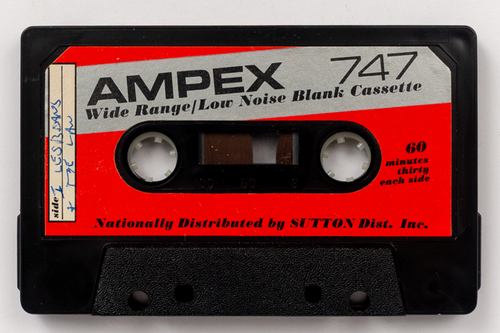
Lesbians + The Law
Broadcast with unknown series title, hosted by Linda Daniels and Marcia Danab, inscribed title “Lesbians + The Law". Jean O’Leary and Eleanor Cooper are interviewed regarding their work with New York Women’s Lobby advocating for the repeal of the Sodomy Law, and appealing to listeners to join for an upcoming lobby day addressing the sodomy laws, maternity disability, childcare, and household workers. Calls from listeners are taking in the second half of the broadcast. Please note that the recording starts after the beginning of the conversation, so some context is lost. Additionally, note that there is some outdated discussion of the inclusion of Trans people in the movement, which might be distressing for some listeners. -

Lesbians in the 1970s Civil Rights Movement
Marcia Danub and Linda Daniels speak with Eleanor Cooper, spokeswoman for Lesbian Feminist Liberation, and Jean O'Leary, Legislative Coordinator, Board for the (then) National Gay Taskforce. LGBTQ+ and women’s rights activists were looking to repeal laws criminalizing homosexuality. Sodomy bills in the 1970s were explicitly written to target gay people, causing fear in the LGBTQ+ in their professional and personal lives. Intro 554 was one of many forms of the NYC Gay Rights Bill, which was passed in 1986, banning discrimination because of sexual orientation. Cooper and O'Leary provide information about the way these laws affect the lives of lesbians and how to participate in the repeal of sodomy laws and support the passing of Intro 554. -

LHA Daughters of Bilitis Video Project: Barbara Grier, November 27, 1987 (Tape 1)
Barbara Grier discusses her personal experiences with developing her identity. She describes lesbian nightlife and particular lesbians frequented in her youth. -

LHA Daughters of Bilitis Video Project: Barbara Grier, November 27, 1987 (Tape 2)
Barbara Grier discusses her time involved with the Daughters of Bilitis as a contributor, poetry and fiction editor, and eventual editor-in-chief of The Ladder. She is interviewed by Manuela Soares. -

LHA Daughters of Bilitis Video Project: Barbara Grier, November 27, 1987 (Tape 3)
Barbara Grier discusses her time involved with the Daughters of Bilitis as a contributor, poetry and fiction editor, and eventual editor-in-chief of The Ladder. She is interviewed by Manuela Soares. -

LHA Daughters of Bilitis Video Project: Barbara Grier, November 27, 1987 (Tape 4)
Barbara Grier proceeds with her conversation, discussing her insights and personal contributions to early lesbian literature and publishing, especially in her endeavors with Naiad Press in 1973.
-

LHA Daughters of Bilitis Video Project: Barbara Grier, November 27, 1987 (Tape 5)
The majority of this video depicts Barbara and her partner, Donna McBride, going through photo albums and images of Barbara’s childhood, her family, and then her later years with Donna. Some topics that come up include Helen Bennett, Barbara’s relationship before Donna, and Naiad Press. The last 30 minutes or so of the video focus on Barbara as she discusses The Ladder and the various women who contributed to it and how publications helped shape social change for the gay and lesbian movement. -

LHA Daughters of Bilitis Video Project: Barbara Grier, November 27, 1987 (Tape 7)
This video consists of a brief interview with Grier’s partner, Donna McBride, and then follows a discussion Grier leads on her book collection, favorite authors, and publishing experience. She and McBride talk about Naiad press and its successes over the years and the video shows their office workspace and the multitude of submissions they receive for publication. Donna McBride’s segment focuses on her awareness of being a lesbian, the aftermath of telling her parents, and her later involvement with women’s activist groups. -

LHA Daughters of Bilitis Video Project: Del Martin and Phyllis Lyon, May 9, 1987 (Tape 2)
Del Martin and Phyllis Lyon discuss changing attitudes of mental health care professionals towards lesbianism, contemporary support networks for lesbians. They are interviewed by Manuela Soares. -

LHA Daughters of Bilitis Video Project: Del Martin and Phyllis Lyon, May 9, 1987 (Tape 3)
Del Martin and Phyllis Lyon discuss DOB's National Conventions. They are interviewed by Manuela Soares. -

LHA Daughters of Bilitis Video Project: Del Martin, Phyllis Lyon, and Nina Kaiser, May 12, 1987 (Tape 4)
Both Del Martin and Nina Kaiser discuss the end of DOB in 1970. Del also touches upon her name and Nina Kaiser touches upon her first lesbian relationship at 19, her involvement with the Navy and her involvement with the National Organization for Women. They are interviewed by Sara Yager. -

Linda Lopez Interview, October 22, 1988
Linda Lopez is interviewed in 1988. She talks about growing up in the South and how she fared as a lesbian living in a conservative community. She discusses the Dallas DOB and how the membership consisted of a number of women who had been married, divorced and had kids (including herself). She talks about the custody battle she had with her parents over her son and how many women faced similar battles but with their spouses. She also talks about how she and a number of women lost their jobs when it was discovered that they were lesbians. She discusses the Dallas DOB's events.
On tape 2, she talks about the impact of the Dallas DOB in Dallas and beyond, how it inspired activism and other organizations. She talks about Rob [Shivers]' leadership and its role in DOB's strength. She discusses Dallas and the South in General - how lesbians were treated and how they lived. She talks about the need for job security, the roles and expectations of women. -
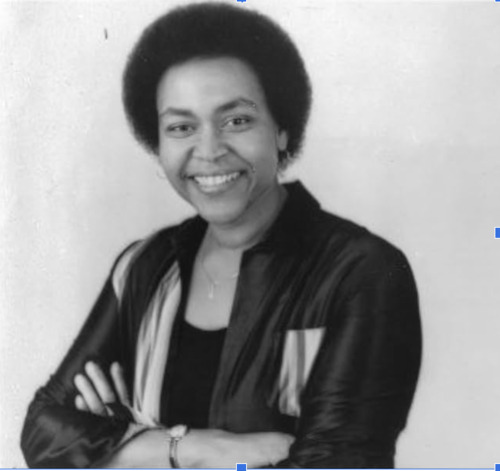
Linda Tillery
Linda Tillery -

Linda, November 19, 1978 (Tape 1)
Linda talks about her relationships and the idea there are no longer clearly defined lesbian roles (i.e. butch and femme) in relationships, as there were when she first came out in the 1960s. She describes her family life growing up and when she came out to her family. -

Linda, November 19, 1978 (Tape 2)
Linda discusses work and how her coworkers knew that she is a lesbian, which did not bother them. She recalls beginning to wear men's clothes to work in the 1970s when women began to wear pants. Linda discusses her relationship, and how her life centers around her lover. She believes that the younger generation is less monogamous than hers. Linda also discusses butch and femme dynamics in relationships.
The sound quality is poor in the beginning. The tape cuts off abruptly at the end. -

Liz Kennedy, 1980 (Tape 2; no Tape 1)
This tape is part of a roundtable discussion between different researchers working on aspects of lesbian social history. Liz Kennedy discusses the early stages of work on the Buffalo lesbian community and how the project was changing from strictly an oral history and becoming a book. She also talks about how the interview format and questions have changed as a result of the earlier attempts and how they were surprised by some of what they were beginning to learn.Tags Liz Kennedy -
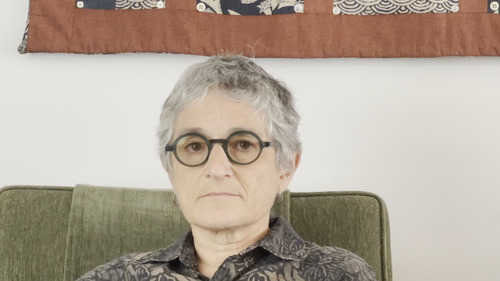
Liz Salen Interview
In this oral history conducted by the Rossmoor Lesbian Social Club, Liz Salen discusses her early feelings of attraction to girls, her experience having girlfriend at her Hebrew high school, remaining closeted through college and the beginning of law school and her ultimate coming out process and her family's reaction after her sister had also come out as a lesbian. She speaks about her work in her private law practice counseling non-profit activist organizations including OUT Week, ACT UP, and other queer focused organizations, becoming a mother with her partner's biological child, her own pregnancy journey and complications, and adopting a son. She discusses her daughters coming out to her as non-binary and moving to Rossmoor with her partner.
-
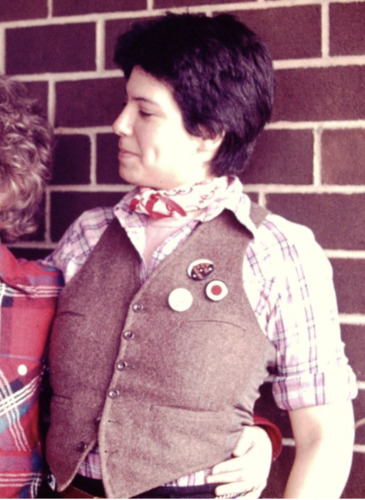
-

Lois Beeby Interview, May 9, 1987
Lois Beeby discusses her early experiences and confusion as to recognizing she was a lesbian. She speaks about her role as a member and officer in the Daughters of Bilitis, and the eventual unrest and split in the group, leading to her leaving DOB. She speaks of unrest between gay men and lesbians and the desire for the two to join together as a united front. -

Lois Johnson and Sheri Barden Interview, April 1, 1989
The interview begins with Lois Johnson, who discusses when she realized that she was a lesbian, which caused her to move out to California and take a job in journalism. It was there that she met a woman who eventually became her lover, and they used to play music together. Sheri Barden talks about her social life after she met Lois Johnson, though she did like to party with her landlord, who was also a lesbian, though these social affairs pretty much came to an end when her relationship began with Lois.
On tape 2, Lois Johnson discusses expressing herself emotionally, and how she repressed her anger initially, unlike Sheri, who would often explode, leading to a lot of crying in the early part of their relationship. However, she continues to believe in love and commitment, and credits Sheri for having a great sense of humor. Sheri Barden also talks about her businesses, including a bed and breakfast that houses many lesbians. The two then reminisce on what they have in common, including their love of cats. -

Lou and Jane, November 8, 1981 (Tape 3)
The interviewee discusses the time she considered getting a sex change. She talks about religion. At the end she talks about getting respect. There is significant distortion at the end of the tape.
Lou and Jane discuss their sexual relationship and further aspects of female sexuality. -

Lou and Jane, November 8, 1981 (Tape 4)
Lou and Jane discuss what life is like as an interracial lesbian couple. They discuss how white "studs" feel threatened by black "studs", feeling they will steal their women. Alcoholism is briefly discussed. They also discuss having to tell lies to their family to prevent them from knowing about their sexuality.
On Side B- Jane begins with her experience as Fem lesbian, and her difficulty with what that means to her. She talks about her difficulty with coming "out", and then is interrupted by one of their children.
Lou discusses her relationship with her Fem partner (Jane), as someone who self-identifies as a Butch. She discusses her choices in life, and her commitment to her relationship, her partner, and her family. She also talks about her disillusionment with the future, and her lack of hope for change. Lou references Jane's feelings, and her hope for Jane to recognize what it means to be a Fem.
-

Lou, October 21, 1981 (Tape 2)
Lou discusses her experience raising children as a lesbian woman, discussing at length her love of children, and wanting them to have a better life then she did. She also discusses her experience with police harassment as both a black women, and a lesbian.
Side B includes songs about lesbians, their lives and realities, and their relationships with children and their families. -
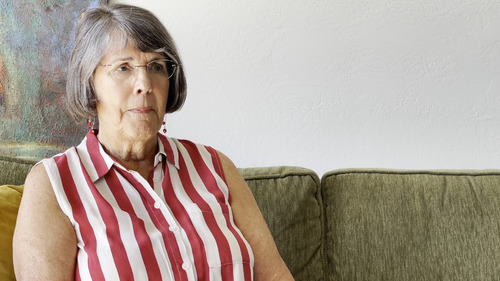
Lynn Gold Interview
In this oral history conducted by the Rossmoor Lesbian Social Club, Lynn Gold discusses being married right out of college, raising two children, their divorce after 20 years, and a second marriage to a man during which time she fell in love with a woman. She also discusses coming out later in life around the same time Ellen DeGeneres came out and that point of culture helping her come out. Despite the shifting cultural views she discusses issues that she had with some friends and family members over her sexuality and eventual marriage to a woman. She also discusses her relationship with her mother in regards to her sexuality and her mothers sexuality. -

Mabel at 85 (Tape 1)
Interview of Mabel Hampton. Mabel discusses her life with Lillian Foster, the lesbian movement, and performing and singing. -

-

Mabel Hampton Interview [1920s / World War II]
Side A: Mabel Hampton describes meeting other lesbians and associating with other women "in the life". Also discussed is her experience during the 1920s of being set up and sentenced to serve three years for a fabricated prostitution charge at the Bedford Hills Correctional Facility for Women. Side B: Mabel's WWII era activities, including being an Air Raid Warden in Harlem, and meeting married women who ""came out"" during their husband's absence due to the war." -

Mabel Hampton for Feminary / Mabel Hampton; Joan Nestle, 1979 (Tape 1)
Oral history interview for Feminary: A Lesbian-Feminist Journal for the South. Joan Nestle interviews Mabel Hampton at 77. Mabel describes her childhood in Winston-Salem, North Carolina, her train journey to New York City, the city vs. the country, meeting lesbians and her views on race, sisterhood and the fight for lesbian rights. -

Mabel Hampton Interview
This oral history interview begins with the title card “Our Faces Our Voices Our Words” and that the video is sponsored by The Lesbian Herstory Educational Foundation Inc. Mabel Hampton talks about her life story, including memories of her childhood, lesbian friendships, and romantic relationships. The video ends with her singing, starting at 00:42:27. -

Mabel Hampton Interview [Books / Working at the Lesbian Herstory Archive / Documentary]
Oral History interview of Mabel Hampton. Conversations between Joan and Mabel about a book Mabel enjoyed, working at the Lesbian Herstory Archives, a documentary film in the making, and Mabel's early life and sexuality. -

Mabel Hampton Interview [Coming out / Lillian]
Oral history interview of Mabel Hampton. Mabel talks about her childhood; coming out with a woman she met at Coney Island; her relationship with Lillian Foster; the LHA and her respect for Joan Nestle and Deborah Edel. -

Mabel Hampton Interview [Coney Island / Lillian / Fashion]
Mabel Hampton discusses, with Joan Nestle, gender identity, attraction, men, and marriage. Mabel Hampton also discusses nicknames she shared with Lillian Foster, including "Little Bear" and "Big Bear." They look at photographs and reminisce about Coney Island, buying new clothes, and Nestle's preparation of slideshows for the LHA. The second half of the recording covers a few takes of stories surrounding Mabel's time living with Joan and Deb after an apartment fire, Mabel and Lillian's nicknames for each other, and the meaning of Mabel's fashion choices. -

Mabel Hampton Interview [Coney Island / Mildred]
Oral history interview of Mabel Hampton. Side A: Mabel discusses Coney Island, and her relationships with women, including Mildred Mitchell. -

Mabel Hampton Interview [Early Childhood]
Oral History interview of Mabel Hampton. Mabel describes her early childhood and rural upbringing in Winston-Salem, North Carolina, in the early 1900s. Notable facts include her mother's death (possibly by poisoning) not long after Mabel's birth, and that Mabel was very small (perhaps premature) at birth. Mabel also discusses a range of subjects including a description of and anecdotes about her early caretaker, life on a farm/agricultural setting, and memories of going to church. -

Mabel Hampton Interview [Gay Language and Culture]
Oral History interview of Mabel Hampton. Mabel discusses the language and culture of being gay in her time. -

Mabel Hampton Interview [Lillian Foster / Femininity]
Oral history interview of Mabel Hampton. Mabel talks about Lilian Foster, her partner, that she has never dated any man, and is a feminine type of lady who likes to dress up. -

Mabel Hampton Interview [Lillian Foster / Youth]
Oral history interview with Mabel Hampton. Mabel tells stories of different women she dated and how she met Lillian Foster, who would be her partner from 1932-1978. She also talks about friends and jobs she had in her youth. -

Mabel Hampton Interview [Marriage / Jealousy]
Oral history interview of Mabel Hampton. Mabel discusses lesbian marriage in the 1930s and 1940s, including stories of women getting married and where the ceremonies were. She tells stories about women she knew who had husbands and families, jealousy among women, and passion. She talks about her own experiences with passion and jealousy, including her crushes and relationships. She discusses her first relationship with a white woman, women she had crushes on, women she felt threatened by, her relationship with Lillian, and an experience at a "party house" in Bedford Hills. At the end of the tape there is a discussion about Lillian's tombstone and what to put on it. -

Mabel Hampton Interview [Married Women / Singing]
Oral history interview with Mabel Hampton. Side A: Mabel discusses relationships she had with married women. She also discusses what she wore when she was in her early 20s and about her feelings about the openness of lesbians today. Side B: Mabel sings two songs- "My Buddy" and "Come to Me". -

Mabel Hampton Interview [New Jersey / Singing]
Oral history interview of Mabel Hampton. Side A: Mabel tells the story of her arrival in New Jersey, and how she found the people who first took her there. Side B: Mabel sings the American popular song, "My Buddy", and also explains how she left her uncle in New York and went to New Jersey. She talks in detail about the first couple days that she spent in a home in Jersey City, and her reticence to discuss details about her origins with the people that took her in. Additional discussion includes a description of the first time she was kissed by a woman, and why she didn't pursue relationships with married women. -

Mabel Hampton Interview [Parties / 1930s]
Oral history interview of Mabel Hampton. Mabel discusses "slumming party" where she first met A'Lelia Walker, and what it was like being gay during the 1930s. -

Mabel Hampton Interview [Stories of Performing / Singing]
Oral history interview of Mabel Hampton. Mabel discusses meeting her partner Lillian Foster in 1932, whom she was with for 40 years until her passing in 1979. Mabel also mentions highlights of her professional career including performing at the World's Fair (perhaps 1939 World's Fair in New York), Carnegie Hall and Coney Island. Mabel also recounts a story involving an incident with a classmate in her youth. The tape finishes with a rendition of "My Buddy", sung by an unidentified vocalist and pianist -

Mabel Hampton Interview [The Twenties and Life With Lillian]
Oral history interview of Mabel Hampton. Mabel Hampton reminisces about her life in the early 1920s. Mabel talks about going to Coney Island, cabarets, and various parties around New York City where women could meet other women. She discusses her friends and relationships with particular emphasis on Lillian Foster. -

Mabel Hampton July, 1986
Oral History interview of Mabel Hampton. Mabel discusses her early life in South Carolina and New York. -

Mabel Hampton Life Stories, November 20, 1978 (Tape 1)
Mabel discusses the importance of lesbian writing and how she considers being a lesbian to be the most important aspect in shaping her life. She goes on to give a description of her childhood. She also describes the the girl with whom she had her first lesbian experience. -

Mabel Hampton Singing and Talking
Oral history interview with Mabel Hampton. Side A: Mabel sings and talks about her life with Lillian Foster, and stories from her youth. Side B: She describes her life in Jersey City, Coney Island and the rape by her uncle. She also talks about the pitfalls of falling in love, and being a working woman at 80 years old. -

Mabel Hampton talks about Lillian and more, January, 1988 (Tape 1)
Mabel discusses meeting Lillian Foster, her wife, Lillian's childhood, and their life together in the community as well as various events they were a part of against the backdrop of World War II. -

Mabel Hampton Tapes transcripts
A two-volume transcript of several tapes in the Mabel Hampton Oral History collection. In addition to tape transcriptions, the volumes include notes and other annotations by Joan Nestle and Sara Atatimur. The final pages of volume two also include Joan Nestle's article "I Lift My Eyes to the Hill: The Life of Mabel Hampton as Told by a White Woman;" Mabel Hampton's obituary in the New York Times; and a draft of Joan Nestle's article "Her Spirit Soars Above Us." -

Mabel Hampton, 1981 (Tape 1)
Oral history interview of Mabel Hampton. Mabel discusses her relationships during her twenties, including how and why she chose her sexual partners and her relationships with married women. She relates a story about being caught with her partner's husband and hiding under the bed. -

Mabel Hampton, 1982 (Tape 1)
Side A: Some discussion of when Mabel first heard the word lesbian, her experiences as a dancer. Side B: Mable describes her experiences caring for children, finding freedom as a child, running away from her aunt and uncle to New Jersey to live with the White family, and her spirituality. -

Mabel Hampton, 1988 (Tape 1)
Mabel discusses her early life as a lesbian in the Village between the two world wars, including the rooming house where she lived and the parties she attended. She describes how women dressed, what they ate at the parties, what they did at the parties, including dancing, the records they listened to, and the general social life of these parties. She describes the interracial relations between white and black lesbians. She also discusses the language lesbians used to describe themselves at the time, including "bulldaggers", "lady lovers", and "butches". She also tells the story of a large lesbian marriage ceremony in Central Park West, officated by a gay minister named Rev. Monroe and how the couple managed to get an offical marriage certificate. She also discusses gay life in Harlem and the New York City drag balls. -

Mabel Hampton, Lillian Foster, 1976 (Tape 1)
Audio cassette. Oral History Interview of Mabel Hampton. Mabel discusses her first girlfriend, a white woman she met while working at a girl's school. She also discusses her three year relationship with a married woman she worked for as a domestic worker, whom she considers her first love. In addition, she discusses her life as a dancer and her trips to a private lesbian club, frequented by notable women. She then relates how she was briefly abducted, attacked and robbed, and how she escaped and how her friends sought revenge on her attackers. -

Mabel Hampton, Morgan Gwenwald, Pam Hicks: Breakfast at Pam's, April 9, 1989 (Tape 1)
Morgan Gwenwald visited Mabel Hampton at Pam Hicks' place. Over breakfast, they talked about the dreams Mabel had been having lately, how people thought about her. Morgan made plans to visit Lillian's cemetery with Mabel together and listened to a tape that Mary gave Mabel. -

Mabel Hampton, Morgan Gwenwald, Pam Hicks: Breakfast at Pam's, April 9, 1989 (Tape 2)
Pam Hicks and Morgan Gwenwald chat with Mabel Hampton over breakfast about mundane topics, including lost keys and colors. The three get in a car and try to find the cemetery where Mabel has purchased a plot to be buried in. They locate the cemetery, but it is closed to visitors, so they proceed on to see if they can find where she purchased the tombstone. -

Mabel Hampton, November 28, 1986 (Tape 1)
Mabel talks about her life at theater Lafayette on Coney Island in the 20s. She also talks about the dress code of her and her friends; also the language describing lesbians back in the 1920s. -

Mabel Hampton's Journey to New York
Oral history interview of Mabel Hampton. Mabel describes her early childhood and rural upbringing in Winston-Salem, North Carolina. She details her journey from Winston-Salem to New York City to live with her aunt. Mabel continues her story with her development into a young lesbian woman and the issues concerning lesbianism in the North versus the South. She speaks about her lifestyle and her no-regrets stance on her life. Her connection with her childhood is vivid and candid and is described in detail. -

Mabel Hampton's Story, July, 1986
Oral history interview of Mabel Hampton. Mabel describes running away from home and the New Jersey family who cared for her, while they sought Mabel's family. Mabel falsified her personal information in order to avoid reuniting with her abusive uncle in New York. Mabel speaks of her early 20s, her interaction within the underground gay and lesbian community. She begins explaining her 1923 arrest at Bedford Hills Prison and how she was setup by her friend's husband for prostitution. Side A = 9:38 minutes -

Mabel Hampton's Story, July, 1986 (Tape 3)
Mabel describes her 1923 arrest (at age 18) and term at Bedford Hills Prison, and the period shortly thereafter. -

Mabel Hampton's Story, July, 1986 (Tape 4)
Mabel describes her life after being released from Bedford Hills, relationships with women in the early 20th century, economic and working situation, and more details about her family history (including the murder of her mother, the death of her father, Mabel's rape by her uncle). -

Mabel's Parties / Mabel Hampton, 1981 (Tape 1)
Oral History interview dated . Side A: Mabel talks about the parties she attended, the atmosphere, the people she met and the music she listened to. She also speaks in detail about romantic relationships with specific women and her first love from Coney Island. Her love of classical music is also discussed, which began when she started her first job. -
MAD Boston
Proceedings from the MAD Conference in Boston -

Madeline Davis and Liz Kennedy. Boots of Leather Oral History Project Panel Gay Pride, 1979
Side A:
Panel discussion on the history of the archives, including a brief introduction on how they gather information through different interview procedures within the Lesbian community in order to build the oral history project.
Side B:
Panel discussion continues with topic brought up in side A. -
March on Washington / Pacifica Program Service, 1979 (Tape 2 of 4)
The second of four recordings of Pacifica Radio coverage of the National March on Washington for Lesbian and Gay Rights on October 14, 1979. Musical performances by Mary Watkins, Meg Christian, and Holly Near. Speeches by Ray Hill and Charles Law. -
March on Washington / Pacifica Program Service, 1979 (Tape 3 of 4)
March on Washington on October 14, 1979, which dealt with the civil rights of the gay and lesbian community. Participants included Audre Lorde (who can be heard on side A about 80% through), Allen Ginsberg, Peter Orlovsky, Ted Weiss, Gotham, Tom Robinson, Howard Wallace, Kate Millet, and Flo Kennedy. Key topics included civil and human rights, the labor movement, racism, sexism, and love. Short technical glitches occur on Side A. -
March on Washington / Pacifica Program Service, 1979 (Tape 4 of 4)
Rally mediated by Audre Lorde given at the March on Washington on October 1979. Speech topics include rights of LGBT prisoners, parents, immigrants, and atheists. -
March on Washington/Pacifica Program Service, 1979 (Tape 1 of 4)
Tape 1 of 4 of a collection of cassette recordings of the NPR/Pacifica Radio national broadcast of coverage of the 1979 Washington DC march and rally for gay rights. Side A includes speeches by Robin Tyler, Troy Perry, Adelle Starr, and Michiko Cornell, as well as brief interviews with spectators in the crowd. Topics covered on side A include general theme of gay rights, as well as advocacy for gay youth and gay Asian Americans. Side B includes speeches by Rene McCoy, Bill Blish, Arly Scott, Maria Diaz, and Steve Alt, as well as brief interviews with spectators in the crowd. Topics covered include general gay/civil rights themes, advocacy for promotion of parental support for gay/lesbian children and discussion of Mayor Berry decision to declare "Gay/Lesbian Awareness Week". Side B. also also includes the song, "Not Anymore", (performed by Celebration). -

Margaret Sloan
Sloan is the President of the National Black Feminist Organization. She discussed NBFO’s mission to provide an organization for black feminists who felt the need to fight both sexism and racism at the same time. She discussed the formation of the organization and the eastern conference on black feminism. -

-

-

Marge, June 4, 1980
Marge speaks of the bars in Buffalo, NY in the 1950s, specifically Bingo's, Chesterfield, Dugan's, Mardi Gras, and Carousel, which had more of an established lesbian clientele. She tells how Carousel changed from a lesbian to gay crowd in the late 1950s and eventually closed because of allowing "careless" behavior. She felt patrons of gay bars in the 1950s were more respectful than at the time of the interview in 1980. Marge was arrested for serving a minor female, which she felt was an attempt to close the bar where she worked. The tape cuts off at the end of the second side. -

Margie Adam Interview (Part 1)
Margie Adam is interviewed by Ruth Scovill. Recorded April 1, 1976. Margie speaks about growing up with music in the home, and the role of music in civil disobedience. She mentions being deeply affected by tragedies of the day, including the Kent State Massacre, and how it informed her relationship with music, and later moving to California. Part 1 of 4. -

Margie Adam Interview (Part 2)
Margie Adam is interviewed by Ruth Scovill. Margie talks about the Women’s Movement, and the National Womens’ Music Festival in Champaign-Urbana. She discusses definitions for women’s music, feminist music, and her song writing. Part 2 of 4. -

Margie Adam Interview (Part 3)
Margie Adam is interviewed by Ruth Scovill. Margie continues the interview, discussing her song-writing style, and musician performance technique. She is passionate about music for social change, and talks about difficulties making a living as a performer, specifically focusing on the financial responsibilities as a musician with women audiences. Part 3 of 4. -

Margie Adam Interview (Part 4)
Margie Adam is interviewed by Ruth Scovill. Margie talks about the value of women musicians as speaking out for women’s communities. She discusses the roles of feminism and autonomy in women’s music. Margie talks about what it is like to be a traveling musician, and bands on tour, acknowledging that most women musicians at the time are soloist, white, middle-class women. She talks about trying to be accessible to audiences through music. Part 4 of 4. -

Margie Adam Interview [Redubbed]
Margie Adam is interviewed by Ruth Scovill. Margie performs music, woven between interviews, in this redubbed interview. She discusses women’s music as not being mainstream music, as well as the politics of women’s music, and need for women’s production companies. She mentions the importance of networking with women-owned companies and businesses. Redubbed. -
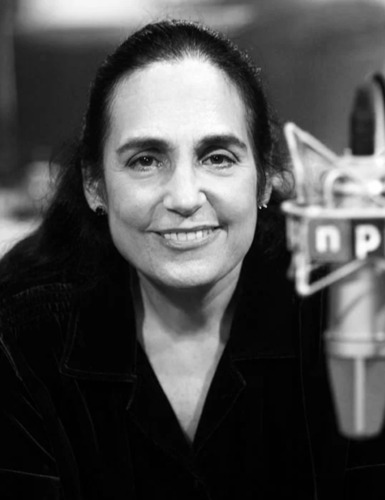
Margot Adler in 2006: Michael Paras/NPR
Margot Adler in 2006 -

-
Maria Maggenti Interview
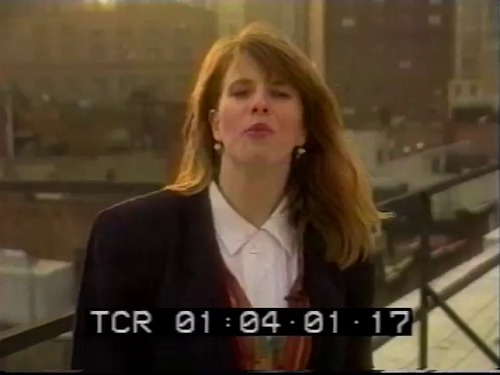
This segment shows a short interview with filmmaker Maria Maggenti about her 1995 film The Incredibly True Adventures of Two Girls in Love. Maggenti first developed the script of the film as a project for NYU’s Graduate Film Program, but abandoned it after several years of trying to work through much darker themes. She explains that, while the film deals with highly politicized topics like coming out, and interracial relationships, the film’s tone remains light and comedic. In this segment, Maggenti describes the making of the film, which included a crew that was entirely women, none of whom were paid; rather, she explains the film provided women the opportunity to expand their careers in the industry. The film was released on June 16th, 1995, and distributed by New Line Cinema. It also participated in several film festivals in 1995, including Sundance.
-

-

Marilyn Lamkay Interview, April 8, 1987
Marliyn Lamkay is interviewed in New York City in 1987 (it seems to continue from a previous video and is perhaps continued in another video). She talks about being a lesbian in New York and coming out to her family and professionally, her relationships and religious beliefs. She discusses lesbian roles and how she didn't fit into any of the existing roles, even in the DOB community. She discusses community building and CR groups when she was younger and how she went on to hold workshops about resources for gay and lesbian New Yorkers at Bronx Community College. She mentions New YorkDOB meetings and the influence that DOB had in the creation of subsequent lesbian groups and communities. -