
Browse Items (771 total)
Sort by:
-
Everywomanspace - Tarot
Tarot reader explains her practice and interpretation of tarot from a “subjective level.” Spirituality/tarot is positioned as a move from patriarchy. The tarot reader credits her practice of tarot to her upbringing around women, reading of feminist texts, also her mother is a witch. -
More Than Half the World - Abortion
Host, Judy Pasternak, discusses abortion and the struggle for the legal right of women to have control over their bodies. In her reflection upon the legal battle surrounding this issue, Pasternak notes that the majority of the individuals making these decisions from a federal level down to its local implementation are male identifying. In her past experience and many other of the callers, the medical infrastructure and service providers were male which they felt impacted their care and the comportment of the medical team. -
1st East Coast Conference on Women & Porn
Side B - 1st East Coast Conference on Women & Porn: “The following segment on the Velvet Sledgehammer features tapings from the 1st East Coast Conference on Women and Pornography.” -
Women + Crime
Side A: In this interview, Dr. Freda Adler discusses the rise in female criminal behavior as a consequence of broader social changes, particularly women’s increased participation in public and professional life. She explains that as women gain access to new roles, they also gain opportunities to engage in crimes once dominated by men. Traditional “feminine” crimes (such as prostitution and shoplifting) are being replaced by more assertive and violent acts like armed robbery and even assassination. Adler emphasizes that this shift doesn’t stem from new motivations but from changing circumstances, and she challenges the myth of inherent female passivity by documenting the evolving cultural landscape.
Side B: This side explores how institutions—from law enforcement to the courts and prisons—have struggled to keep pace with changes in female behavior. Adler critiques the justice system’s gendered assumptions, showing how women have often received either harsher or overly lenient treatment based on outdated ideas. She also highlights discrimination in prison rehabilitation, the invisibility of women’s prison uprisings, and the psychological toll of role confusion (psychological and social uncertainty that many women face as gender roles shift rapidly) and cultural pressure. The tape closes with a call to treat women’s liberation and female criminality as separate issues, arguing for systemic reform rather than a return to traditional gender roles. -
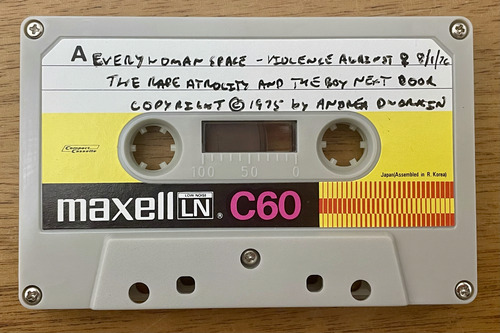
Everywomanspace - Violence Against ♀ (Women) 8/1/76 - The Rape Atrocity and The Boy Next Door - copyright © 1975 by Andrea Dworkin
Woman talking about the toxic beliefs that a woman's body belong to men. Discusses rape, and the poltics behind why people think woman were put on this earth as functional objects to be used by men. Reclamation in naming these harmful systems and acts. Woman proceeds to gives examples of common men violating the boundaries of women and young girls. Goes into discussing the statisitcs of how many rape incidents go unreported, and how many rapists go unconvicted even when reported. Woman then discusses how men bond over the violation of women. That takes precendent over racial bonding. -
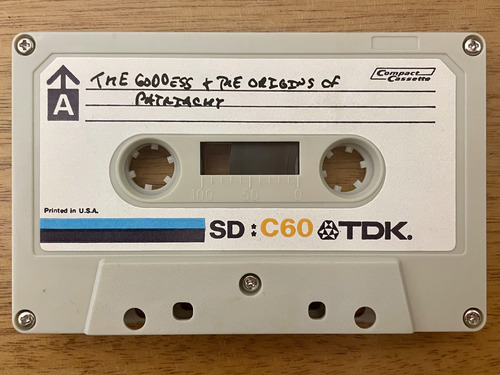
The Goddess and the Origins of Patriarchy
The Lesbian Radio Show, hosted by Rose Jordan. Discussion about the ancient goddess culture and feminist spirituality with Merlin Stone, author of "When God Was a Woman" (1976) and Grace Chanel, who had recent article in feminist journal, Heresies (1978). -
Kwanza
Recordings of a group discussion around the 7 principles of Kwanzaa, particularly in regards to community and faith, interspersed with singing of Kwanzaa songs. -
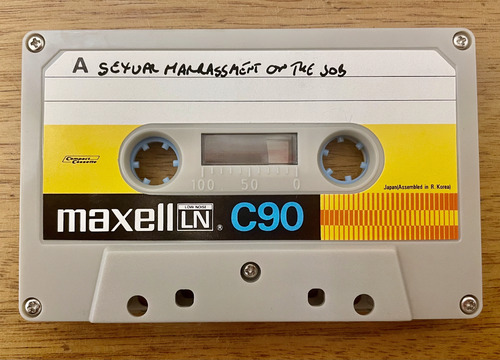
Sexual Harassment on the Job
Side A is a radio program on WBAI in New York, hosted by Viv Sutherland, and addresses the serious issue of sexual harassment in the workplace. The show consists of two central interviews: Mary Garvin, a carpenter and member of a union, and Rachel, a legal secretary, who both tell their own stories of being harassed at the workplace. Mary Garvin, a member of United Brotherhood of Carpenters and Joiners of America, Local 1204, describes her own encounters with casual and malicious forms of harassment at work on building sites, such as discriminatory treatment as a minority worker. Rachel describes a hellish experience of attempted sexual attack by her employer, a private attorney, detailing being physically restrained and assaulted in his office. The program also features phone-ins from listeners discussing different issues surrounding sexual harassment, law, and potential responses to such an event––some advocating for violent responses. The discussion touches upon the issue of complexities of building harassment cases, shortcomings in current legal protection, and the need for systemic changes to assist the victims better and prevent workplace harassment. Side B continues with call-ins. It expands on themes from the first half but brings in more emphasis on legal, economic, and cultural barriers to justice. The program ends with a call for systemic change, grassroots activism, and women reclaiming their power in courtrooms, workplaces, and daily interactions. -

-

-

-

-

-

-

-

-

-

-

-

-

-

-

-

-

A: Simone DeBeauvoir
Recorded in Paris with Studs Terkel, Simone de Beauvoir describes her philosophies of life and writing her memoirs, discussing: her childhood upbringing in Catholic school, dynamics with her parents, artistic influences in her life, the experience of being a woman writer, and wartime. -

The Lesbian in Literature - Female Friendships, Crushes + Afffections in Children's Lit - Janet Cooper
This tape contains the third panel from the Gay Academic Union Conference at NYU, the "Lesbian in Literature" Panel. Panelists are Janet Cooper, speaking on female crushes and friendships in children's literature, and Cynthia Secor, speaking about Gertrude Stein and James Joyce. The moderator was Virginia Caputo.
Janet describes that the first room in a library targeted specifically for children was in the Pratt Library in Brooklyn in 1895. The librarian Anne Carole Moore worked there, and would become a very influential children's librarian. She speaks on the monopoly of children's literature in publishing and book awards, with Anne Carole Moore at the center due to her connections with other powerful librarians. Since Anne Carole Moore's appointment, child friendships and friend crushes in literature have disappeared. The removal of content in library books where children physically touched each other, Janet says, was a direct result of the fear of lesbianism.
Cynthia Secor speaks about Gertrude Stein and James Joyce. She asserts that Stein is an oft-overlooked figure in literature. Gertrude Stein was a sort of hidden figure, while James Joyce was taught everywhere. Stein was read by many lesbian women, but Cynthia did not read Stein until she joined the lesbian community. Cynthia reads a passage by Stein, "Cow come out...", discusses Stein's novella, Q.E.D., and her "Patriarchal Poetry" essay. -

Everywomanspace - Marilyn Coffey
Irene Yarrow hosts writer and poet Marilyn Coffey on the show Everywomanspace. The program starts with Marilyn reading several of her poems: "Insight," "The Diet," "Wordlessly," and "Observation." Irene and Marilyn discuss Marilyn's brief career in journalism and development as a writer, and the writing of her novel, Marcella, a coming-of-age story. Marilyn then reads an excerpt from Marcella.
After the excerpt, Marilyn Coffey explains the projects she has been working on more recently--her second novel, books of essays, and teaching English at Pratt Institute. Irene and Marilyn discuss the difficulties of switching between various forms of writing, like poetry vs. prose vs. non-fiction. Marilyn also reflects on how joining the Women's Movement and becoming a feminist has changed her writing and the reception of her writing. They discuss how deeply ingrained the patriarchy is in their lives and consciousnesses. Marilyn reads a final poem, "Cold," to end the program. -

Amazon Country - Victoria Brownworth Speaks with Bertha Harris
Victoria Brownworth interviews author Bertha Harris in an episode of Amazon Country. Bertha discusses how writing has been a means of freedom and escape for her, and how she would like fiction to help define what it means to be a lesbian. They also explore whether and how the patriarchy has an impact on what women write. They ruminate on the overlap between politics and art. -

Women's Studies - 13th Moon: Marilyn Hacker and Grace Paley
Presented in the Women's Studies series, this episode contains poetry readings by Marilyn Hacker, an editor for feminist literary magazine 13th Moon, and poet Grace Paley. -

The Women's Ausie Hour 10/7/76 - Pamela Brandt + Helen Kooke Speak about the Niteshade + Women's Music
This episode of The Women's Music Hour contains an interview with Pamela Brandt and Helen Hooke, who make up one of the first American all female bands, The Deadly Nightshade. -

It's a Jungle Out There: Jan Alpert Speaks with Rita Mae Brown + Reads from Her Books
Jan Alpert and Rita Mae Brown discuss Rita Mae's career path and motivations outside of being a writer, as well as her involvement as a street organizer in the women's and gay rights movements. Occasionally throughout the interview, Jan will read excerpts from Rubyfruit Jungle, Rita Mae's first novel, and In Her Day, Rita Mae's second novel. While discussing In Her Day, they cover the lessons Rita Mae learned from writing it. -

The Velvet Sledgehammer - Mischief Mime + The Varied Voices of Black ♀♀ (Women)
Donna Allegra hosts members of The Varied Voices of Black Women, a touring poetry and music production, on The Lesbian Show. Guests include poet Pat Parker, singer and percussionist Linda Tillery, pianist Mary Watkins and Gwen Avery. -

The Velvet Sledgehammer - Mischief Mime + The Varied Voices of Black ♀♀ (Women)
On this episode of The Velvet Sledgehammer, Donna Allegra interviews members of Mischief Mime, a two woman theater troupe from Ithaca, New York. Mischief Mime tours and teaches nationally to prove artists can make it outside of the larger cities. -

Women's CR Hour 10/ - Rosemary Cappello + Barbara Ruth Read Their Poetry
In this episode of Women's Consciousness Raising Hour, the first poet Rosemary Cappello reads a mixture of original poems and poems from friends and other notable poets, surrounding the theme of correspondence. Rosemary views correspondence as the most faithful way to show affection and grow closer with other poets. She also reads a poem that she wrote, in place of an angry letter, to respond to an anti-feminist book review.
The second poet, Barbara Ruth, opens with a poems about her awe for life: her experience knowing and being close to other women, seeing a solar eclipse. Her poems discuss women's issues, specifically, the tension between being a woman and having intense or maddening emotions, and the tensions women have with men. Her poems frequently invoke the power of women and call for a revolution. Furthermore, Barbara grapples with issues of valuing some lives over others, witnessing suffering, narcissism, and simple wanting. She also reads poems about her mother. -

Disquieting Muses + Women on Trial - Suzan Shown
For this episode of All Night Sunday with the Radio On, Suzan Shown interviews the cast and creator of Disquieting Muses: A Response to the Suicides of Women Artists, discussing the feeling of obligation to find a man, get married, and otherwise fulfill the role of what a woman is supposed to be.
Episode includes a reading of an untitled poem by Marilyn Monroe. Features a recording of Women on Trial: The Forbidden Texts of the Three Marias, a one-night only performance about the case of three women authors who wrote against Portugal's dictatorship and were subsequently put on trial. -

Disquieting Muses: A Response to the Suicide of Women Artists - Suzan Shown
Suzan Shown interviews the cast and creator of the theater show Disquieting Muses: A Response to the Suicides of Women Artists, which examines suicides among women artists. -

Women's Studies - Apple Pie - Viv Sutherland Speaks with Mynna Lamb About Her New Play
Myrna Lamb guest stars on Women's Studies to talk about her new play, Apple Pie. Apple Pie is a musical theater piece about a woman's life in Nuremberg. The play grapples with issues of moral truths and internal and external judgement. Myrna and Viv also discuss the difficulties and complexities of being a woman playright, and various ways that the play attempts to tackle sexism, racism, and anti-semitism in society. They also discuss Myrna's run-ins with male directors in theater and the complex feelings people have about male directors directing women's stories. -

Amazon Country 9/19/76 - Dyketactics
(Side A) Victoria Brownworth opens this episode of Amazon Country by announcing that an Amazon Country employee lost her house, belongings and pets to a fire, so they're starting a collection for her through the Women's Cultural Trust. Various other announcements regard upcoming events, a lesbian support group, and the council elections at the Gay Community Center.
Roberta Hacker interviews Linda Norwood and Sherrie Cohen of 'Dyketactics!' to discuss their lawsuit against the police, the first time in history that lesbians have sued the police for brutality, excessive force, and harrassment. This lawsuit regards police action on December 4, 1975, when 'Dyketactics!' (and other groups) attended a (Philadelphia) city council meeting to help urge passing of the "Gay Rights Bill" by the committee. Philadelphia's Civil Defense Squad immediately approached and used excessive force against the women, prompting 'Dyketactics!' to file a lawsuit against the City of Philadelphia for lesbophobic police brutality. Linda and Sherrie encourage women to attend the trial in order to support them. They also ask for feedback so that they can better represent and stand up for the lesbian community. When Victoria asks what they hope to get out of the trial, 'Dyketactics!' dsecribes their hopes to raise consciousness around the need for gay rights.
(Side B) Linda and Sherrie discuss the positive reception they've had regarding the trial, and announce that there will be a community meeting hosted by 'Dyketactics!' to discuss the disbursement of the (potential) compensation from the lawsuit into the lesbian community. -

Amazon Country - Gay Community Center
(Side A) Victoria Brownworth this episode of Amazon Country with announcements regarding lesbian and feminist groups and organizations. Roberta Hacker interviews Arleen Olshan of the Gay Community Center. Arleen notes that lesbians are underrepresented in decision-making, policy development and program coordination, and the GCC would benefit from more lesbian involvement. They discuss lesbian separatism (especially relating to how few women are involved with the GCC). Arleen announces upcoming events at the GCC including various lectures by authors and activists, as well as consciousness-raising groups and educational classes. (Continues onto side B) Arleen encourages lesbians to check out the center because they "might be surprised" by the level of feminism that exists within the gay male community.
Includes an ad for the Bicentennial Women's Center. -

National Alliance of Black Leaders Conference Workshop on Black Women in The Arts
Speakers self-describe the show as "a tape of six creative Black women discussing the media portrayal of Black women and their confrontation of racism and sexism." Originally recorded during the "Black Women in the Arts" Workshop at the National Alliance of Black Feminists conference held in Chicago, October 21-23 [1975]. Broadcast in an episode of Everywomanspace.
(On side A) Darlene Hayes (Phil Donahue Show) discusses media portrayal. Margaret Walker Alexander (poet) discusses the problems facing the Black woman writer. Mari Evans (poet) discusses her experience as a Black woman writer. (Panel continues on side B) Carolyn Marie Rodgers (poet) also discusses her experience as a Black woman writer. Two additional panelists are featured, but their names could not be deciphered. -

Everywomanspace - Irene Yarrow Speaks with Marge Piercy
On this episode of Everywomanspace, Irene Yarrow interviews poet and author Marge Piercy. Marge discusses her book "Woman on the Edge of Time" and (side B) reads her poems "To Be of Use" and " Living in the Open." -

Velvet Sledge Hammer - A Woman's Place - Kate Millet Speaks about Sita
(Side A) Viv Sutherland welcomes listeners to The Velvet Sledgehammer and announces that the show's program will include "Hot Flashes," women's news from "Majority Report"; a story on "A Woman's Place" produced by Irene Yarrow; and an interview of author Kate Millett about her book Sita (1976) conducted by Judy Pasternak and Viv Sutherland.
The first segment is "Hot Flashes," a women's news report announced by Nancy Borman. Topics covered include: an "anti-wedding" event sponsored by Majority Report to discuss the sexist details of marriage contracts, Valerie Solanas reprinting Scum Manifesto after the original publisher went out of business and the copyright reverted to her, New York's announcement of plans for a large-scale Women's Rights rally, events for Lesbian Pride Week, and a bill to legalize abortion in Italy.
Irene Yarrow then introduces a tape about "A Woman's Place," a feminist collective in upstate New York that has existed for three years but is now in danger of closing due to lack of support. Irene recorded this tape at "A Woman's Place" and features women's songs, poetry and feelings about what the retreat has meant to them. The recording begins at 19:25 and continues onto side B. Irene announces that women interested in learning about "A Woman's Place" or contributing to save it can contact her. She attributes the music in the recording to Ruth Pelham, and the poetry to Erica Silver.
Kate Millet guest stars in the last segment, discussing her new autobiographical novel, Sita, with Judy Pasternak and Viv Sutherland. Kate describes the plot of Sita as "the plotline of the woman destroyed." She rebuffs "malicious" reviews that called her work either "icky" and "pukey" or "pornographic" for being queer. She considers these reviews to be motivated by bigotry. Kate recounts that a major motivation in writing Sita was to describe the loss of a lover, which she felt does not exist in any other book. She says she wanted to "write a very musical and very romantic book in praise of love: in praise, even, of its melancholy and possible futility." Kate also discusses hoping for "company" in writing "these kinds of books," but that she is alone in having to "take abuse" for them. With Judy Pasternak and Viv Sutherland, Kate Millett reflects on activism and efforts to dismantle the patriarchy. The interview closes with discussion of Kate's visual art. -

Everywoman Space - Women Writers - Irene Yarrow Speaks with Jan Clausen
Irene Yarrow opens this episode of Everywomanspace with information about Lesbian Switchboard and Identity House to help listeners who want to know how to reach the gay community. She recommends these organizations and coming-out groups, along with consciousness-raising groups, for any woman who wants to get together with other women to discuss issues relating to feminism or lesbianism.
Irene interviews Jan Clausen, a poet and writer from Oregon who reads her short story, "The Warsaw Ghetto." Irene and Jan discuss autobiographical writing, the experience of writing about friends and acquaintances, incorporating the political into personal writing, and receiving feedback as a writer. They also debate the question of whether feminist and lesbian writers should publish with women's presses or commercial presses, prompted by a questionnaire Jan sent to a number of lesbian writers, which she describes as her "writing community." Finally, Irene asks Jan if she feels that her stories with "lesbian content" limit her to a lesbian audience. Both hope that all women would be interested in women's content, regardless of sexuality. Jan also reads her poems, "The Christmas Letter" and "This is a Poem for You, Mary."
Irene also takes questions from callers (side B) including a woman asking for advice on how to find resources to respond to her younger sister coming out and a woman who wanted to share her opinion that publishing through women's presses will be the only option when the women's movement "goes out of vogue." -

Judy Chicago Speaks with Anaïs Nin
Part 4 of the Women in the Arts series, introduced by the director of Drama and Literature at KPFK, Clare Spark Loeb. Judy Chicago hosts and interviews author Anaïs Nin on the subjects of feminist literature and women's liberation. They discuss a disagreement they previously had about anger and women's liberation. Anaïs also reads from and discusses her book, Fourth Diary. -
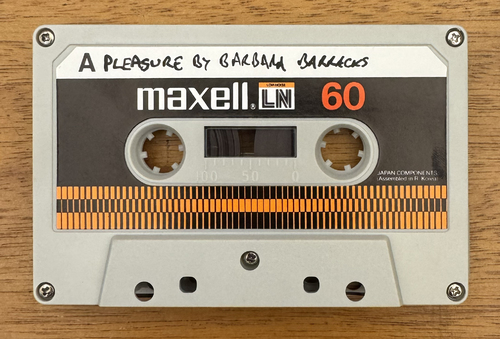
Pleasure by Barbara Barracks
Author Barbara Barracks is interviewed on the show Prose, produced by Sharon Martin. Barbara reads Chapter 10 of her novel Pleasure. -

-

-

-

-

-

-

-

-

-

-

Seneca Women's Encampment for a Future of Peace and Justice - Tape 5
An interview with two women discussing the history of women's peace camps, ecofeminism, and issues of ethnocentricity among non-indigenous activists, particularly among white activists who believe they "know how to do things." Interviewees also discuss restorative land justice and “The Mountain,” a survival camp hosted by Native Americans that teaches indigenous traditions. The video is interrupted by static for the first 16 seconds, as well as from 2:30-6:11 due to the physical condition of the tape. -

Seneca Women's Encampment for a Future of Peace and Justice - Tape 6
Footage of a demonstration that took place outside of the main gates of the Seneca Army Depot, in which a group of women wearing white fabric and fake blood wail and rattle the chainlink gate as guards look on. A group of women beat on small paddle drums and hum behind them.
Interviews in Tape 3 of this collection describe the experience and meaning behind the demonstration. -

A Lesbian Portrait (Lesbian Music For Lesbians Only) - Reel 2
A Lesbian Portrait consists of songs written by Linda Shear from 1972-1975. Shear, who requested that audiences for her performances be exclusively lesbian beginning in 1976, aimed to distribute A Lesbian Portrait through Lesbian-only networks. To support this goal, Shear and her then-partner Tryna Hope formed the distribution company Old Lady Blue Jeans. The album was released in 1977.
Read the liner notes.
2-1: Well Story – Spoken and Written by Tryna
2-2: Well Song
2-3: Old Woman
2-4: Song to Myself/Portrait
2-5: Family of Women
2-6: Lesbian Wombmoon-Chant -

A Lesbian Portrait (Lesbian Music For Lesbians Only) - Reel 1
A Lesbian Portrait consists of songs written by Linda Shear from 1972-1975. Shear, who requested that audiences for her performances be exclusively lesbian beginning in 1976, aimed to distribute A Lesbian Portrait through Lesbian-only networks. To support this goal, Shear and her then-partner Tryna Hope formed the distribution company Old Lady Blue Jeans. The album was released in 1977.
Read the liner notes.
1-1: Mama / Womanchild
1-2: Goddesses And Other Truths
1-3: Woman Let Go Now
1-4: For Tryna
1-5: Ninety
1-6: Remember -

Karen Thompson Interview - Tape 5
This tape is part of a 5-part series interviewing Karen Thompson regarding her legal struggles to secure guardianship of her comatose partner, Sharon Kowalski. (Note: Tape 1 is missing)
In Tape 5, Karen discusses the physical and mental toll her legal battles have had on her, including the struggles she has experienced with Kowalski's family, particularly the pressure to be "perfect" to prevent the courts from using any mistakes against her.
Karen also talks about her relationship with Sharon before the incident, as well as the distance she felt that she needed to create between herself and her colleagues and students to prevent her outing, which could lead to the loss of her job. -

Karen Thompson Interview - Tape 4
This tape is part of a 5-part series interviewing Karen Thompson regarding her legal struggles to secure guardianship of her comatose partner, Sharon Kowalski. (Note: Tape 1 is missing)
In Tape 4, Karen talks about her relationship with religion and her church, her belief that coming out is an important step in normalizing homosexuality, and her struggles against homophobia from medical professionals. -

Karen Thompson Interview - Tape 3
This tape is part of a 5-part series interviewing Karen Thompson regarding her legal struggles to secure guardianship of her comatose partner, Sharon Kowalski. (Note: Tape 1 is missing)
Tape 3 primarily consists of Karen recounting her legal struggles with Sharon’s parents regarding Sharon’s guardianship. Karen also discusses how it felt coming out to her parents. -

Karen Thompson Interview - Tape 2
This tape is part of a 5-part series interviewing Karen Thompson regarding her legal struggles to secure guardianship of her comatose partner, Sharon Kowalski. (Note: Tape 1 is missing)
In Tape 2, Karen begins to describe her legal dispute with Sharon’s parents over guardianship and the emotions she felt during the process. Karen recounts the difficulties of coming out to her own family and Sharon’s parents, as well as her fear of a legal dispute over Sharon's guardianship outing her to the public. -

Seneca Women's Encampment for a Future of Peace and Justice - Tape 4
Three interviews with women who participated in the “Seneca Women's Encampment for a Future of Peace and Justice“ protest. The interviews touch on the women's experiences of being detained, their mistreatment under the hands of the Seneca Army Postmen, and their reasons for participating in civil disobedience. -

Seneca Women's Encampment for a Future of Peace and Justice - Tape 3
[00:00-15:26] Video begins with a protest/ceremony outside the Seneca Army Depot, a military-industrial complex in Seneca, New York.
[15:39-22:52] Following the demonstration, the video cuts to an interview in which two participants explain the importance and objective of their ceremony and the purpose of their "wailing," which was meant to imagine and express the agony of victims and those threatened by nuclear war. -

The Lesbian Avengers Eat Fire, Too
[Description from the Lesbian Avengers]
The Lesbian Avengers Eat Fire, Too offers a look at the New York group's first year, from their initial demonstration in front of an elementary school in '92 to the Dyke March in DC, where the Avengers ate fire in front of the White House, cheered on by an enormous crowd.
The video supplements footage of actions with portraits of real-life Avengers still giddy with their first experiences of taking to the streets as out dykes, as well as interviews with puzzled tourists trying to answer the question, "Who are the Lesbian Avengers?"
Edited by two Avengers, videomaker Janet Baus, and experimental filmmaker, Su Friedrich, the video was a group effort, with a number of Avengers contributing.
--------
The Lesbian Avenger employed fire eating as an act of protest as a response to arson attacks against gays and lesbians who had been killed by Molotov cocktails thrown into their homes. -

Tampa TV Coverage (Tape 2)
Compilation of news coverage from '10 Tampa Bay' of protests organized by the Lesbian Avengers responding to the burning of a trailer belonging to lesbian and HIV advocate Dee DeBerry.
Sections:
- "Why are these lesbian activists eating fire?" [00:38-02:47]
- Tampa Hate Rally: The Lesbian Avengers and other groups [03:07-03:46]
- Gay activists who call themselves Lesbian Avengers [04:07-04:52]
- Temple University News Taping [05:01-14:47]
-

Lesbian Avengers Dyke March Promo / HomoTeens: Portraits of Lesbian and Gay Teenagers
The first 2 minutes are a promotional video for the first annual Dyke Pride March at Bryant Park in June, 1993, featuring footage from the DC Dyke Pride March in April 1993, which includes lesbians marching in the streets, chanting, dancing, and fire-eating.
After, there are several minutes of solid stills featuring text appearing to be the names of individuals featured in the project "HomoTeens: Portraits of Lesbian and Gay Teenagers" by Joan Jubela. The footage features clippings of an article written about Henry, a young gay man, in People magazine that outed him to his mother. From 11:50-13:45, Henry talks about the conversations with his parents after the article was published, wherein his father was accepting but his mother was very upset. -

Cathay Che’s Performance at Dixon Place
Video recording of a spoken word performance art piece put on by Cathay Che at Dixon Place for an audience. Date of performance unknown. -

Mary Daly Lecture / Unidentified Dance
Tape is divided into two sections.
In the first section, radical feminist and theologian Mary Daly lectures about misogyny in the medical field, including the widespread use of Hormone Replacement Therapy for menopausal women and the increased risk of cancer associated with the birth control pill. She also informs her audience about the career of surgeon James Burt who, for approximately 30 years, reconstructed women’s genitalia after childbirth, often without consent, thinking that they were poorly designed for sexual pleasure.
The second section of the tape, which is in poor condition and has soft focus, features a woman performing a dance. -

Speaking to the Future: 1978 Lesbian Regional Conference (Tape 2)
Part 2 of interviews addressed to "lesbians of the future" conducted by the Lesbian Herstory Archives at the 1978 Lesbian Regional Conference. Among the subjects discussed in the interviews include coming out, lesbian bars, racism against lesbians of color, representations of violence against women, feminism, and older lesbians. -

Speaking to the Future: 1978 Lesbian Regional Conference (Tape 1)
Part 1 of interviews addressed to "lesbians of the future" conducted by the Lesbian Herstory Archives at the 1978 Lesbian Regional Conference. Among the subjects discussed in the interviews include coming out, lesbian fashion, older lesbians, chosen names, homophobia, and racism against lesbians of color. -

Performance Theatre Troupe / Gathering (Tape 2)
The tape is divided into two sections.
The first section of the tape contains Act 3 of "The Performance" (6 min), a one-woman play by the Performance Theatre Troupe from Iowa City. The play centers around Effy, a 17-year-old lesbian and musician who must make a decision about her life.
Following "The Performance," the tape cuts to a gathering of lesbians sitting outside, playing guitar, singing, and reading. -

Performance Theatre Troupe (Tape 1)
A video of a one-woman play by the Performance Theatre Troupe from Iowa City. The place centers around Effy, a 17-year-old lesbian and musician who must make a decision about her life.
The three-act play takes place over a single day. Act 1 follows Effy in the afternoon, in her bedroom, before going to a piano recital she is involved in. Act 2 takes after the piano recital. Act 3 takes place later that night after Effy has been thinking about her life.
Tape 1 includes Acts 1 & 2. -
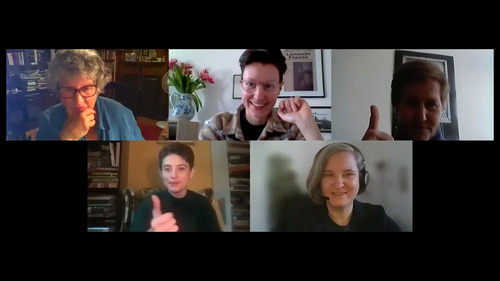
Honoring Lesbian-Queer Archiving: Online-Talk with Joan Nestle
A talk with Joan Nestle, co-founder of the Lesbian Herstory Archive, about the history and importance of lesbian archives and queer archives, along with her personal history. The discussion covers many topics in Joan's life and current activities within lesbian archives. -

It Can Be Done: Chicago Women's Graphic Collective
A video about the relationships and bonds among members of the Women's Graphics Collective. The Collective produced posters addressing the struggles of the women's movement and other political movements, including the United Farm Workers organized a boycott on non-union lettuce and grape farmers. -
Womansphere Hour, October 18, 1974
Taped radio program for the lesbian community. -
Feminist Workshop, March 14, 1971
Recorded discussion regarding the defining features of lesbianism and the lesbian identity. -
Feminist Workshop, February 18, 1971
Recorded discussion regarding what constitutes a lesbian and lesbian identity writ large. -

-

Mabel Hampton Interview
This oral history interview begins with the title card “Our Faces Our Voices Our Words” and that the video is sponsored by The Lesbian Herstory Educational Foundation Inc. Mabel Hampton talks about her life story, including memories of her childhood, lesbian friendships, and romantic relationships. The video ends with her singing, starting at 00:42:27. -
St. Paul's Church Lesbian Pride Week Concert, June 26, 1976
Concert held at St Paul's Church on the occasion of Lesbian Pride Week. Also includes the announcement of the site, details and regulations for a later rally. -

The Heat Is On Miss Saigon
Interviews and speeches from the demonstration at the Broadway opening of Miss Saigon organized by a coalition called "The Heat Is On 'Miss Saigon': Coaltion to End Racism and Sexism on Broadway". -

Reeves Interview (Tape 4)
Interview with Mount Holyoke student Reeves on her experiences taking Barbara Smith's class. -

Reeves Interview (Tape 3)
Interview with Mount Holyoke student Reeves on her experiences taking Barbara Smith's class. -

Meeka Interview (Tape 2)
Interview with 19 year-old Mount Holyoke student Meeka on her experiences with taking Barbara Smith's class. She talks about Black Feminist analysis, colorism, and intersectional feminism. -

Meeka Interview (Tape 1)
Interview with 19 year-old Mount Holyoke student Meeka on the structure of and experiences in Barbara Smith's class. She highlights a presentation on “Homegirls”and talks about discussions in the class surrounding culture and experiences of women of color. -

Keep Your Laws Off My Body
Black and white recorded documentary video exploring themes of Lesbian relationships, the AIDS pandemic and the criminalization of LGBTQ+ media. -

Barbara Smith Classroom Discussion (Tape 7)
Recorded classroom discussion focusing on a fictional story about lesbians and the erotic. Continuation of #6. Location uncertain. -

Barbara Smith Classroom Discussion (Tape 6)
Recorded classroom discussion focusing on a fictional story about lesbians and the erotic. Continuation of #5. Location uncertain. -

Barbara Smith Classroom Discussion (Tape 5)
Recorded classroom discussion focusing on a fictional story about lesbians and the erotic. Location uncertain. -

-

-

Lambda Legal Forum, 1982
This video depicts a panel discussion between Rosalyn Richter, the then Executive Director and attorney for Lambda Legal, and Rhonda Copelon, the then an attorney at the Center for Constitutional Rights and law professor at CUNY Law School moderated by David A.J. Richards, a teacher of Constitutional Law and Legal Philosophy at NYU School of Law .
The speakers discuss values and gay rights issues through the context of individual choice versus choice that brings harm. Richter and Copelon discuss and answer questions about Roe v. Wade and housing for queer youth. The video then cuts to a document entitled "Anti Gay Legislation: an Attempt to Sanction Inequality." An individual then holds up a Lambda document entitled “Court Approves Gay Adoption.” -

Tiny Davis Interview
A portion of the 1988 documentary entitled "Tiny & Ruby: Hell Divin' Women", which was made by Jezebel Productions as a tribute to Tiny Davis and Ruby Lucas.
In the documentary Tiny talks about how she started playing the trumpet, moving to Kansas City and getting involved in the music scene. She travelled and played with the Harlem Play Girls and then the Sweethearts. Tiny and Ruby talk about how they met and the after hours spots in Kansas City where women could be with women. They talk about how they left Kansas City and the formation of Tiny Davis Hell Divers. Tiny says she is ready to keep working and playing even at 76 years old. Also featured in the clip is Tiny’s daughter who talks about how she enjoyed playing music with her mother for 10 or 15 years. She says there wasn’t any song requested they couldn’t play.
Note: This portion contains no audio but contains Tiny and her daughter. -

Anti-Lesbian Violence
This is a recording of assorted clippings regarding women's safety.
Note: No Audio.Tags Police harassment -

Gay Rights Bill Council Hearings
This is a gay rights hearing with speakers arguing both in favor and opposed to the proposed bill. Those in favor urged the council to allow the parliamentary process to move forward so the bill could be debated and voted on. They argued for equality under the law and the importance of respecting the process. Those opposed expressed concerns about the bill extending homosexual rights beyond government employment, potentially affecting private schools and rentals, and equating homosexuality as an acceptable lifestyle. They maintained that homosexuality is not morally or socially equal to heterosexuality. Several speakers share personal life experiences. Eleanor Cooper is featured identifying herself as a spokesperson for Coalition for Lesbian and Gay Rights and a member of Lesbian Feminist Liberation.
U-Matic tapes note that the recordings include the following speakers:
Harrison Goldin
Feather Keane
David Dinkins
Eleanor Cooper
Abraham Modowitz
female doctor
Gay cop
MOS audience
Interview with Pat Bond
Rabbi Dennis M
Eugenia Lee Hancock
Robert Selden (cut-off after 1 sentence) -

Women's Action Organization Rape Crisis Center Presentation, Washington D.C., November 1973
This is a panel introduced by the president of the Women's Action Organization, with the Vice President of the Department of State in attendance. The speakers (from the DC Rape Crisis Center) discuss sexual violence. They also discuss how the crisis center came to be and the services it offers, issues with legal definitions, how to protect women, medical support, and self-defense, among other topics. The first speaker is Karen Kollias (RCC co-founder). The end of this audio includes live instruction and demonstration of self-defense tactics. -

Women's Music Network Interview
Interview with Kay Gardner, executive director and co-founder of the Women's Music Network, and Lou Crimmins, performer. 1974 production of the Feminist Radio Network. Discussion of the nonprofit Women Music Network's ideals and operations supporting women in the music industry. including Lavender Jane. -

Meg Christian and Holly Near Concert (Side B)
Live recording of Meg Christian and Holly Near performing at 1976 LFF concert. Note: Poor sound quality