
WBAI Women's Department and Feminist Programming
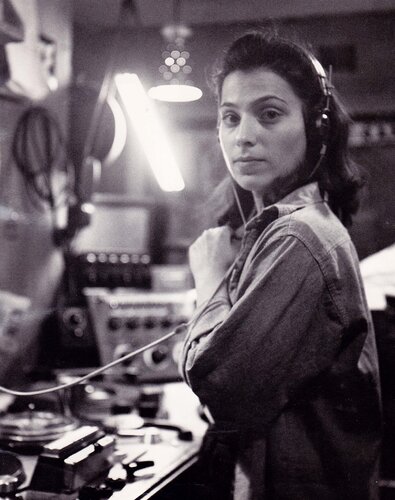
Nanette Rainone at WBAI in 1969, via WBAI/NYTimes
Established in 1960 as a non-commercial and listener-supported station under the Pacifica Radio network, WBAI (99.5) quickly became an incubator for radical thought and experimentation on New York’s airwaves. Fiercely independent, the station was among the first in the country to open its programming to the countercultural and liberation movements of the late 1960s–including the emerging feminist movement. In fact, Pacifica’s radio stations were the first in the country to carry feminist radio programming at a time when few FM stations had women on staff and feminist voices were largely absent from mainstream media. WBAI became a vital space where women could speak publicly, organize politically, and define their own narratives.
WBAI’s women’s department began to take shape under Nanette Rainone, a volunteer-turned-producer whose pioneering programs helped establish feminist radio as a genre. In 1969, she launched Womankind: Discussion and Commentary from the Feminist Community, a weekly half-hour program documenting the latest news of the women’s movement. It was soon joined by Electra Rewired, a late-night, all-women talk show that invited listeners to call in and join ongoing discussions about gender, politics, and daily life.
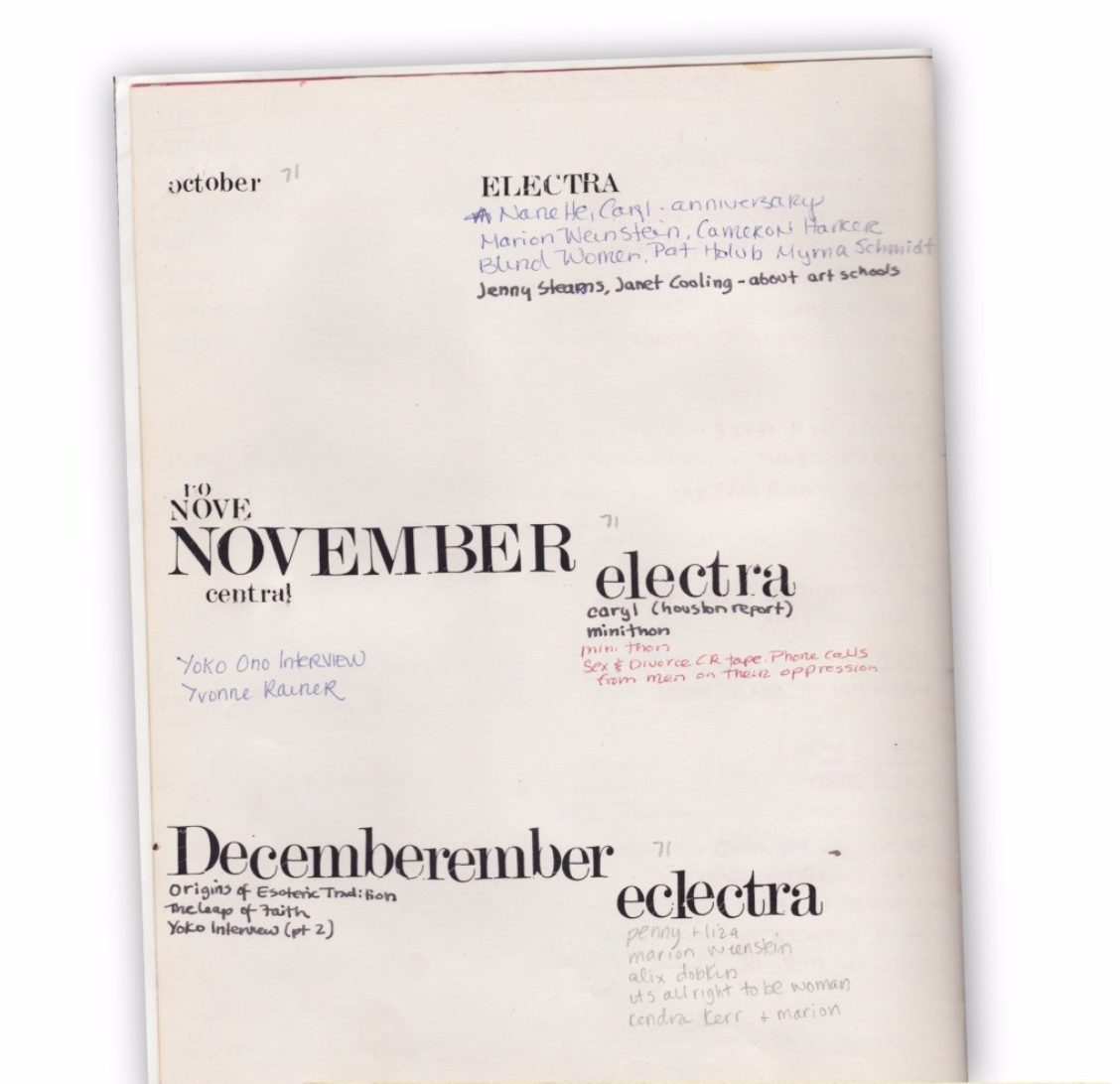
1971 journal page for Electra Rewired, courtesy of Liza Cowan
Notably, Electra Rewired was hosted by lesbian activist, writer and artist Liza Cowan. In 1972, Cowan would controversially be fired from WBAI, likely due to her publicly coming out as lesbian on her show.
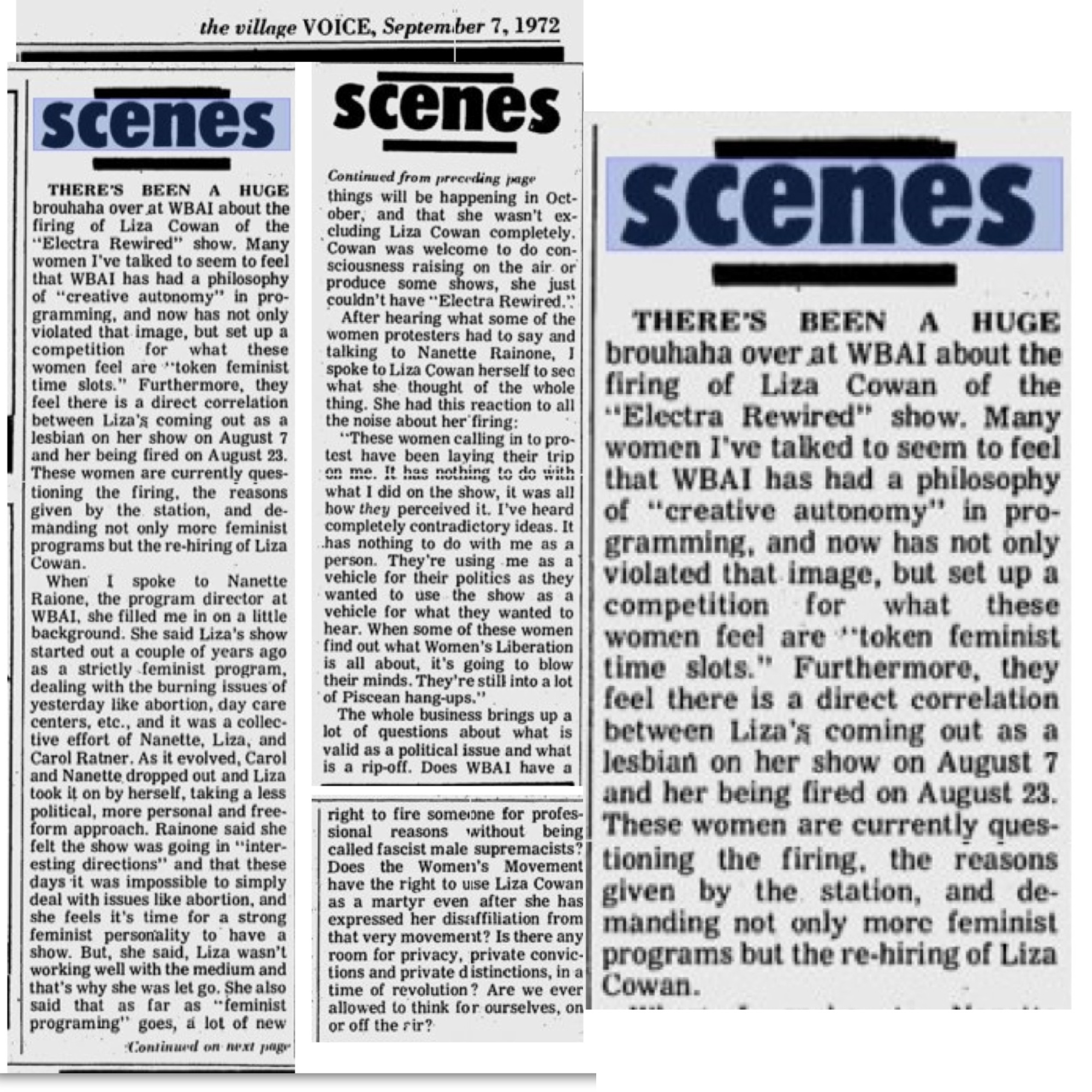
1972 Village Voice article, courtesy of Liza Cowan
By late 1970, a third program was added called Consciousness Raising which pushed the format even further: seven women gathered weekly in the WBAI studio to record candid “rap sessions” on subjects like marriage, sexuality, and housework–followed by live call-ins that extended those private conversations into the public sphere. Together, these programs reflected the radical energy of second-wave feminism and the participatory ethos of Pacifica Radio itself. They positioned WBAI not just as a broadcaster but as an active forum for women’s liberation, transforming the act of listening into one of collective awareness and resistance.
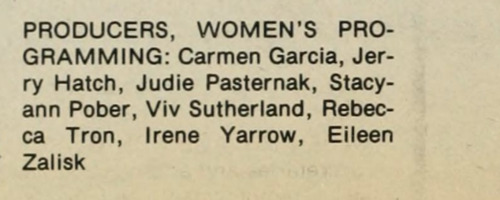
WBAI Women’s Programming Producers, via WBAI 1977 Folio
By the mid-to-late 1970s, the period of time from which much of this collection was recorded, WBAI had a full-fledged Women’s Department comprised of producers, hosts, and engineers and which included, among others, the likes of Carmen Garcia, Jerry Hatch, Judith Pasternak, Viv Sutherland, Rebecca Tron, Irene Yarrow, Eileen Zalisk, and many others. The roster of programming featured recurring shows like Amazon Country, The Real Live Lesbian Show, Everywomanspace, The Velvet Sledgehammer, and Women’s Studies, and covered a wide range of topics including domestic violence, abortion rights, motherhood, and feminist spirituality.

Article featuring the women of ''The Real Live Lesbian Show', 'Our Cities, Our Lives', 'More Than Half the World', 'Women's Studies', and 'Everywomanspace'. Photos: Viv Sutherland, Rebecca Tron, Irene Yarrow (New York: WBAI Folio August 1977)
FCC v. Pacifica Foundation
On the afternoon of October 30, 1973 WBAI aired a program about society's feelings on language. During the program they aired comedian George Carlin’s monologue "Seven Words You Can Never Say on Television" from his 1972 album Class Clown, and played the seven words. CBS executive John Douglas, a member of the watchdog group Morality in Media, was listening to the radio with his 15-year old son at the time. Following the broadcast he filed a complaint with the Federal Communications Commission. A main issue in his complaint was the time of day the program aired.
In 1975, the FCC issued an order saying that the broadcast was "indecent" and threatened to impose sanctions on WBAI’s parent company, The Pacifica Foundation. Pacifica decided to challenge the ruling in court, eventually taking the case to the Supreme Court. In 1978, the Supreme Court issued its ruling that upheld the FCC's power to impose language guidelines and limitations by a 5-4 margin.
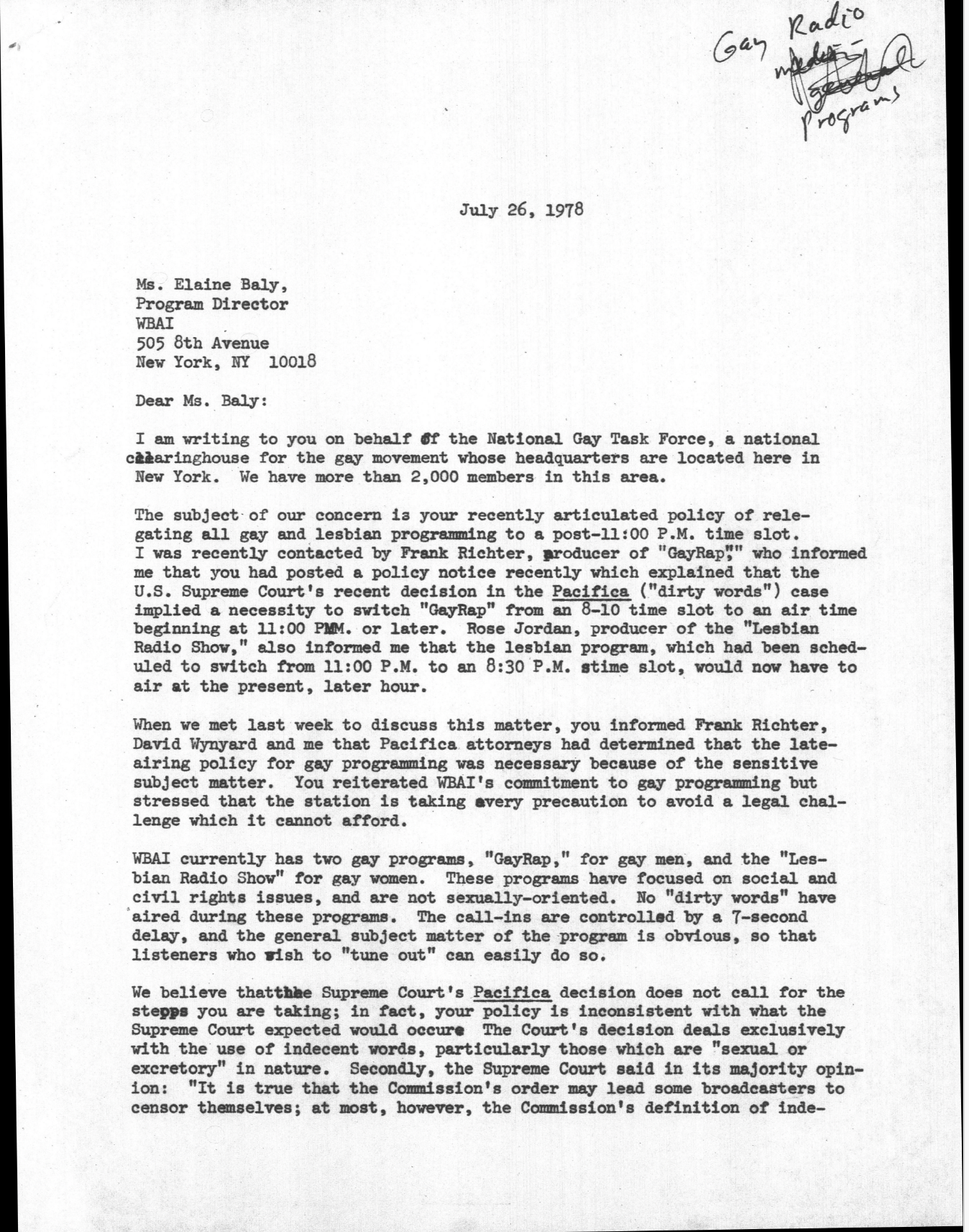
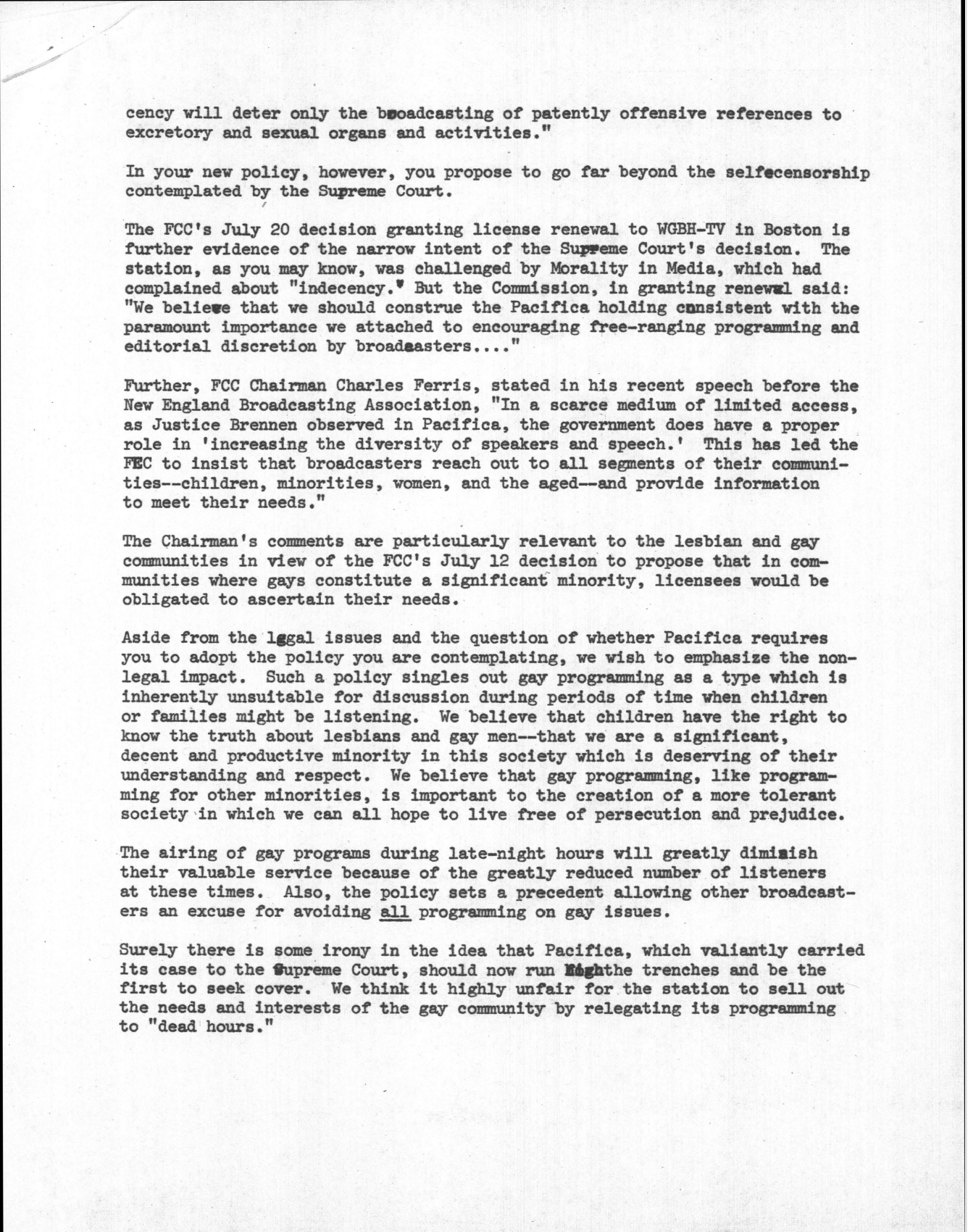
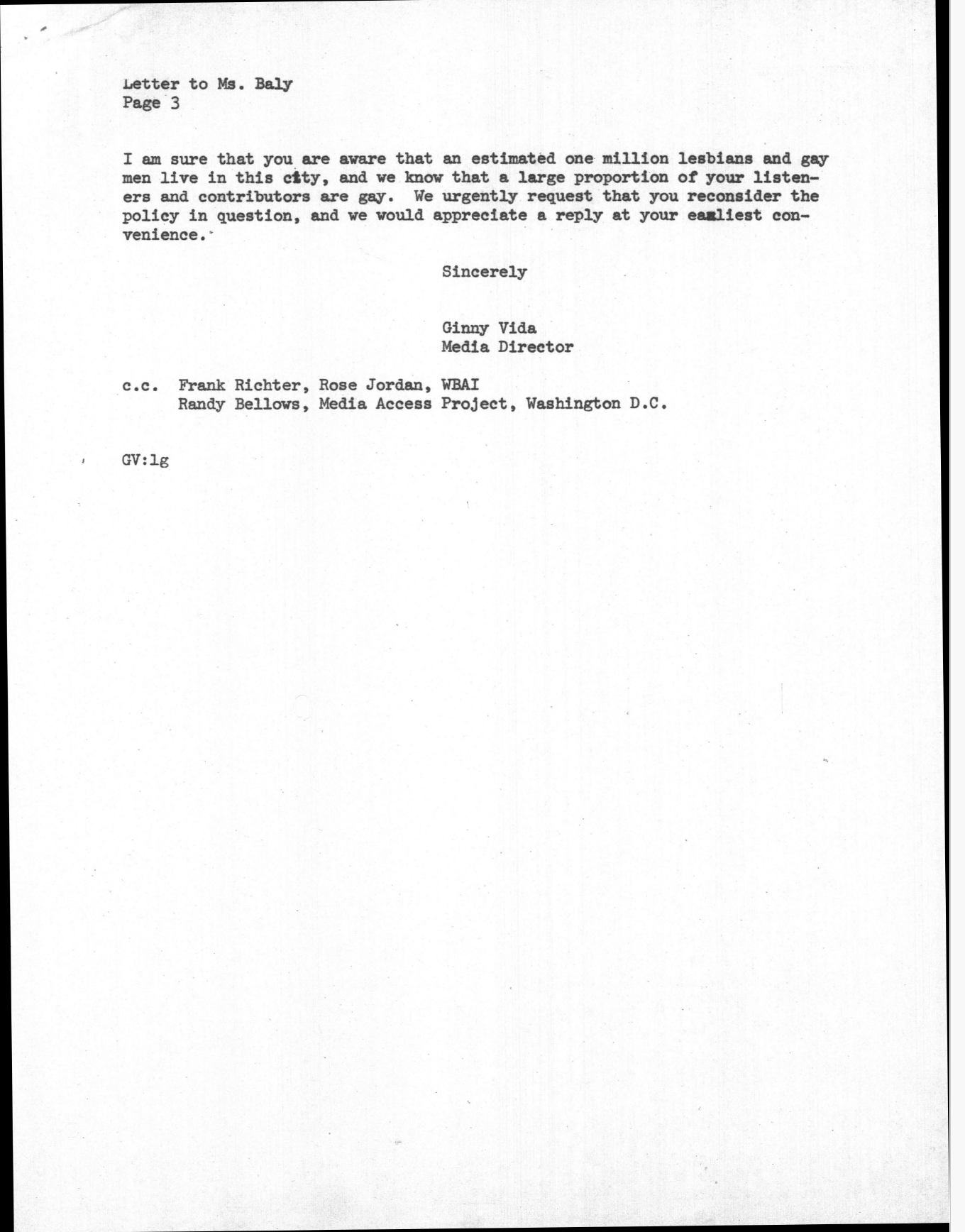
Letter on behalf of the Gay and Lesbian Task Force to Elaine Baly via Cornell University Libraries
As a result of the ongoing court case the head of programming at WBAI, Elaine Baly, issued a policy that moved the airing of all gay and lesbian programming on the station to after 11 P.M. Members of the WBAI community, including the host of Everywomanspace Irene Yarrow, wrote letters arguing that this decision was an overreach and was not justified by the supreme court's ruling on indecent language. In these letters, impassioned hosts argued that gay and lesbian programming was not inherently indecent and that moving it to after-hours marginalized the programing.

Paula Kane and Judy Pasternak (New York: WBAI Folio 1976)
Nevertheless, the continued emergence throughout the 1970s and 1980s of women's and lesbian radio programming at WBAI marked a pivotal chapter in the history of grassroots media and feminist activism. These programs arose during a period of profound social change, fueled by second-wave feminism, the queer liberation movement, and a growing recognition of the power of media to challenge dominant cultural narratives.
Because they operated on public radio stations, the women’s and lesbian radio programs making up this collection frequently harnessed the medium’s accessibility to broadcast a wide array of content, featuring everything from political commentary and interviews with important activists to literary readings and countercultural music by female artists, providing a platform for voices and stories otherwise excluded from traditional media. These programs did more than amplify marginalized perspectives; they also fostered a sense of solidarity across dispersed communities, allowing listeners to connect with movements that resonated both personally and politically.

WBAI Folio listing programs by type. Special interests include 'Women', 'Gay', 'Third World', 'Urban' and 'Spiritual' (New York: WBAI Folio August 1977)
Created at a time when mainstream broadcasting largely marginalized or misrepresented women and LGBTQ+ individuals, these independent radio initiatives thus carved out critical spaces for self-representation, community-building, and political mobilization. The impact of these broadcasts extended beyond their immediate audiences and shaped broader discourses on gender and sexuality, influenced feminist media production, and established a legacy of community-driven, activist-oriented broadcasting. By foregrounding the lived experiences of women and lesbians, these programs challenged stereotypes and offered alternative frameworks for understanding identity, power, and culture.
By digitizing and making these historic broadcasts accessible online, we are not only preserving a vital cultural artifact but also reactivating its potential to inspire new generations of listeners and media makers. This collection therefore serves as a testament to the ingenuity and resilience of the women and lesbians who utilized radio as a tool for empowerment, resistance, and creative expression. By contextualizing these programs within their historical and social milieu, this project honors their contributions to the ongoing struggle for equity and representation.
See the WBAI collection here: WBAI Radio Programs, circa 1970s.