
Browse Items (771 total)
-

Ruth Berman and Connie Kurtz on the Michelangelo Signorile Show, 2003
Episode of the Michelangelo Signorile Show on Sirius OutQ which aired July 20, 2003 in which have Ruth Berman and Connie Kurtz to talk about their life and new film “Ruthie and Connie: Every Room in the House.” At the beginning of the episode, they also talk about other people they are having on the show.
Ruth and Connie's interview starts at 10:55 and ends at 30:30. They discuss their Cotello Towers neighbohood where they met when they were both married and young mothers. There they started the "Mother's Action Committe" within their community. They talk about their own internalized homophobia at the beginning of their relaionship and their fear that they would have been found out, and the transition to feeling comfortable with themselves and their sexuality. They discuss their lawsit with the New York City Board of Education for Domestic Partnership Benifits and their apperance on the Donahue Show in 1988.
They take questions from callers which relate to being lesbian and Jewish, the community they have found there, and the importance for others around the country to find similar communities, or to create them.
After Ruth + Connie's interview the hosts discuss a NYC teen, Natalie Young, who is sueing her teacher for harasmeent over comments made about the teenagers shirt that said "Barbie is a Lesbian"and other LGBT current events. -
Ruth Berman and Rosemary Dempsey for the National Organization for Women NYC, 1991
Audio starts with Ruth Berman talking to an audience about the importance of voting as a Lesbian and as an ally, an about the importance of being political and coming out as a gay person. She touches on the role of money and legality in domestic partnerships and the need to prove them. Ruth encourages the audience to join the National Organization for Women (NOW) to amplify their voices.
10:00 mins into the tape, Rosemary Dempsey from NOW discusses the importance of legal tools to protect gay people and their families, ad how coming out is an important part of that process.
Audio ends at 13:11, the rest of the tape is blank.
-
Ruth Berman, Connie Kurtz , and Deborah Dickson Interview with Bay Area Reporter, 2001
In this interview with an unknown reporter, Ruth Berman and Connie Kurtz discuss their lives in context with the recent documentary about their life directed by Deborah Dickson, who is also interviewed.
Ruth and Connie discuss how they met, their early activism within their communities, being married to men and having families, and their eventual falling in love with one another and coming out as Lesbians. They discuss their relationships with their families then and now, and the importance of coming out of the closet.
Deborah talks about her process when working in this film, and how she tried to make the film for both gay and striaght audiences -
Ruth Berman, Connie Kurtz, and Karen Thompson at the National Organization for Women Conference in San Diego, CA
"Out: One Road to Empowerment" panel moderated by Dixie Johnson from National NOW Power Through Action Conference. Panel includes Karen Thompson, Ruth Berman, and Connie Kurtz.
Side 1 Ruth starts off by singing "I Am What I Am" by Gloria Gaynor and then talks about her life and knowing she was a lesbian from a young age and her journey to get rid of the same she originally felt about her sexuality. She talks about being married and having children, being in the closet, and her early relationship with Connie. She expresses the shame she first felt when being with Connie and regretting how much time she lost being in the closet. Ruth talks about going on the Phil Donahue show and the lawsuit after being denied partner benefits for Connie by the NYC Board of Education because they weren't married. She encourages the audience to undo the damage of being brought up as heterosexual women and to come out.
At 21:40 Connie speaks and talks about being a mother and grandmother, and her relationship to her family. She talks about how abuse has been perpetuated throughout her life about working through her problems and celebrating changes. Connie shares her experience of being diagnosed with cancer and her experience trying to heal herself and going into remission.
At 38:30 Karen Thompson discusses trying to be what other people wanted throughout her early life and meeting a partner who taught her how to live and be herself. She recalls not being able to admit her sexuality to herself or her partner, the car accident that her partner was involved in, and realizing she had to come out to get through this challenging time.
Side 2 The second part of this tape is a duplicate of the audio described in "National Organization for Women (NOW) NYC - Ruth Berman and Rosemary Dempsey" -

Ruth Simpson and Ellen Povill Interview, October 8, 1989
Ruth Simpson and Ellen Povill are interviewed in Woodstock, New York. Ruth talks about her past experience dating men and falling in love. She discusses coming out and realizing her sexual orientation when she was doing theater in college. On tape 2, she and Ellen Povill talk about various movements, including civil rights, feminism and gay and lesbian rights. They describe the day a group of feminists were arrested at a demonstration and the police brutality they experienced and later on, examples of FBI interception. Ruth discusses DOB and her leadership of the New York chapter and Ellen talks about her activities on the action committee. -
SAGE's Second National Conference on Aging: the Many Faces of Activism for Middle Aged and Old Lesbians, 2000
Audio from SAGE's Second National Conference on Aging, which took place from May 5-6, 2000 in New York, NY.
The audio starts with a conversation with a woman discussing activism, being an out lesbian parent, and atheticism and answering questions from the auidence. She talks about "The Gay Games" and the healing effect of sports for women and girls. Questions from the audience include comments on finding community at the intersection of elder lesbians and sports.
At 9:41 the audio cuts to a panel discussion with Ruth Berman and Connie Kurtz. They play a clip of Ruthie + Connie's 1988 apperance on the Phil Donahue Show. Ruth and Connie talk about their personal hsitroy and early activism, their lawsuit against the New York City Board of Education for domestic partner benefits, the importance of being political and of coming out. They also talk about oening a counceling cener in their home and issues with the Butch/Femme Bianary.
At 28:41 the audio switches to Joan Nestle speaking about the Lesbian Herstory Archives and the importance of including reords about diverse Lesbian History.
AT 33:11 a woman from the aidence speaks from the perspective of radical lesbians who have never had children or been married and about expanding the lesbian agenda in the future. She reads from a a piece she wrote called “a week in the life of a 60 Year Old Lesbian” about her activism within the lesbian community. -

Sally Piano Interview (Part 1)
Sally Piano is interviewed by Ruth Scovill. Sally discusses her early life, including her ethnicity, and racial identity. She mentions how learning the piano and music led her to the women’s movement, and feminist music. Part 1 of 3. -

Sally Piano Interview (Part 2)
Sally Piano is interviewed by Ruth Scovill. Sally talks about her relationship with her audience as a performer. She addresses difficulties with men in the women’s music scene, as well as appropriation and criticism. Part 2 of 3. -

Sally Piano Interview (Part 3)
Sally Piano is interviewed by Ruth Scovill. Sally talks about her distrust of the government, including phone-tapping, spying, and the CIA. She addresses mainstream musicians of ripping off minority culture, including lesbians by men in power. She shares views on women’s music as alienating male audiences, intended to create space for women-only, as well as differences between straight and gay audiences. She discusses issues of maintaining an ethnic name as a performer, and how she came about using a stage name. Sally touches on themes of separatism in the women’s and lesbian movements. Part 3 of 3. -
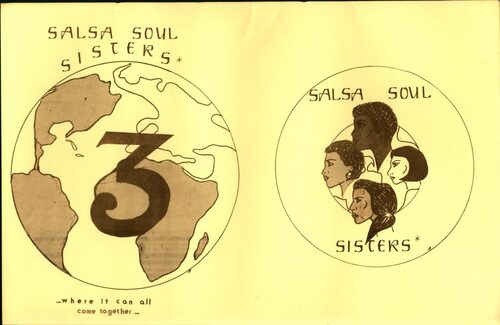
Salsa Soul Sisters, via Salsa Soul Collection, Lesbian Herstory Archives
Salsa Soul Sisters, via Salsa Soul Collection, Lesbian Herstory Archives -
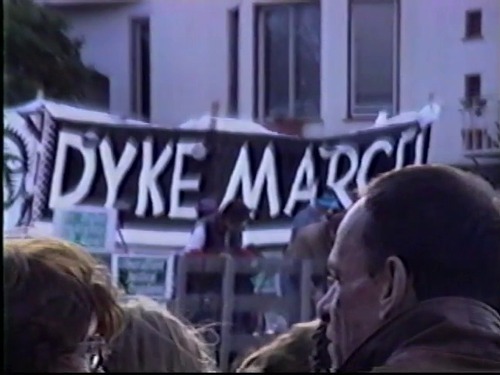
San Francisco Dyke March and Gay Pride Footage, 1995
This footage shows events and gatherings from the third annual San Francisco Dyke March on June 18, 1995, themed "A World Without Borders." It includes several women giving brief speeches before the march begins on topics such as domestic violence and gay communities in South Africa. California State Senator Carole Migden and Assistant Secretary of Department of Housing and Urban Development Roberta Achtenberg appear in the march. At the end of the march, Achtenberg gives a speech and the singer Rozalla performs. -

San Francisco Lesbian History Project discusses Buffalo lesbian bars in the 1950's, 1981 February 24
Side A:
Discussion on the social issues in the Lesbian communinity bar and nightlife scene in Buffalo, NY during the 1950s.
Side B:
Continuation of side A. Only 2 minutes of side B used in original recording.Tags Butch and femme -
Sanders, Side A, October 24, 1976
This tape contains an interview with Helen Sanders in her home. -
Sanders, Side B, November 24, 1976
An interview with Helen Sanders in her home. It includes audio from side A. -
Sara Brown, 1978
Sara Brown discusses her experiences with her previous female partners. She talks about her childhood and the influence that her family and Catholic School had on her life as she was growing up. She also discusses the difficulty she has had in coming out to her parents in later life. -
Seneca Falls Radiodrama
The Seneca Falls radiodrama is a brief overview of what led to the first Women's Rights Convention in Seneca Falls, New York, 1848. The convention, now called the Seneca Falls Convention, was held in order to converse about the liberties that women do and do not have, be they civil, social, political, or religious. The recording introduces listeners to Lucretia Mott and Elizabeth Cady Stanton, two prominent members of the women’s rights movement at the time. A reading of the Declaration of Sentiments, which outlines the civil, social, political, and religious rights of women, as well as various quotes, are included in this recording. -

Seneca Women's Encampment for a Future of Peace and Justice - Tape 3
[00:00-15:26] Video begins with a protest/ceremony outside the Seneca Army Depot, a military-industrial complex in Seneca, New York.
[15:39-22:52] Following the demonstration, the video cuts to an interview in which two participants explain the importance and objective of their ceremony and the purpose of their "wailing," which was meant to imagine and express the agony of victims and those threatened by nuclear war. -

Seneca Women's Encampment for a Future of Peace and Justice - Tape 4
Three interviews with women who participated in the “Seneca Women's Encampment for a Future of Peace and Justice“ protest. The interviews touch on the women's experiences of being detained, their mistreatment under the hands of the Seneca Army Postmen, and their reasons for participating in civil disobedience. -

Seneca Women's Encampment for a Future of Peace and Justice - Tape 5
An interview with two women discussing the history of women's peace camps, ecofeminism, and issues of ethnocentricity among non-indigenous activists, particularly among white activists who believe they "know how to do things." Interviewees also discuss restorative land justice and “The Mountain,” a survival camp hosted by Native Americans that teaches indigenous traditions. The video is interrupted by static for the first 16 seconds, as well as from 2:30-6:11 due to the physical condition of the tape. -

Seneca Women's Encampment for a Future of Peace and Justice - Tape 6
Footage of a demonstration that took place outside of the main gates of the Seneca Army Depot, in which a group of women wearing white fabric and fake blood wail and rattle the chainlink gate as guards look on. A group of women beat on small paddle drums and hum behind them.
Interviews in Tape 3 of this collection describe the experience and meaning behind the demonstration. -
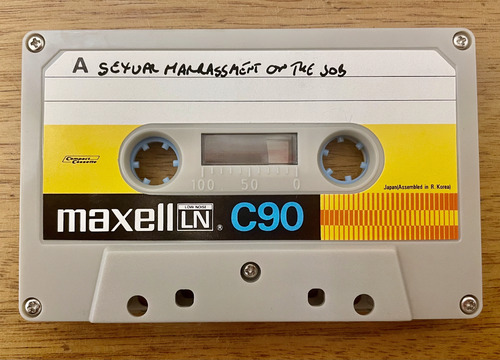
Sexual Harassment on the Job
Side A is a radio program on WBAI in New York, hosted by Viv Sutherland, and addresses the serious issue of sexual harassment in the workplace. The show consists of two central interviews: Mary Garvin, a carpenter and member of a union, and Rachel, a legal secretary, who both tell their own stories of being harassed at the workplace. Mary Garvin, a member of United Brotherhood of Carpenters and Joiners of America, Local 1204, describes her own encounters with casual and malicious forms of harassment at work on building sites, such as discriminatory treatment as a minority worker. Rachel describes a hellish experience of attempted sexual attack by her employer, a private attorney, detailing being physically restrained and assaulted in his office. The program also features phone-ins from listeners discussing different issues surrounding sexual harassment, law, and potential responses to such an event––some advocating for violent responses. The discussion touches upon the issue of complexities of building harassment cases, shortcomings in current legal protection, and the need for systemic changes to assist the victims better and prevent workplace harassment. Side B continues with call-ins. It expands on themes from the first half but brings in more emphasis on legal, economic, and cultural barriers to justice. The program ends with a call for systemic change, grassroots activism, and women reclaiming their power in courtrooms, workplaces, and daily interactions. -

Shane, undated (Tape 1)
Shane talks about getting into trouble during her teenage years and how her father kept sending her to all-girls schools thinking it would straighten her out. She speaks about gay bars in Buffalo and Pittsburgh. She tells a story about running away from home to pursue a relationship, ending up involved with hustlers and begging her father to help her stay out of jail. She talks about moving back to Buffalo, getting a job, and how things have changed.Tags Atheism, Bars, Education, Families, Fathers, Friendship, Mothers, Oral history, Parents, Relationships, Religion, Sex work, Work -

Shane, undated (Tape 2)
Shane talks about running away from home with two girls after her father forced her to leave home. She then lived as a man in New Orleans under an assumed identity. She was arrested and held for 72 hours on suspicion of robbery. She recalls the people she met during her stay in jail. -

Shane, undated (Tape 3)
Shane talks about the different lives she led during her youth. These different roles included working a job at Goodwill, dating and living with hookers on the weekends, and studying to become a Methodist minister as a man. She then talks about her current career as a trucker. -
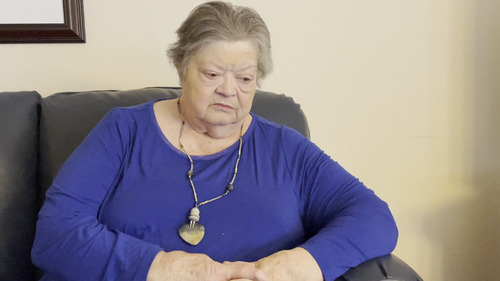
Sharon Noteboom Interview
In this oral history conducted by the Rossmoor Lesbian Social Club, Sharon Noteboom discusses growing up on a farm in the Midwest in a religious family, the influence of conservative religion through her life, her coming out process in the late 70s, her involvement with the civil rights movement and various communities in San Francisco, and teaching as an out Lesbian.
-

Shirley Willer Interview, July 11, 1987
Shirley Willer talks about becoming aware of her true sexuality, being a lesbian nurse, the DOB, her view on motherhood, and her experience as an activist. On tape 2, she discusses her National Presidency of DOB, the break up of DOB in 1970 and the end of the Ladder in 1972. She also touches on the 1968 convention and her relationship with Marion. -
Shirley Willer, Tape 2 of 4, Side A, July 11, 1987
This is a recording of Shirley Willer talking about her life. She talks about her experience with men, her experience as being labeled a lesbian, coming out to family and friends, how she discovered the existence of homosexual organizations through ONE Magazine, discrimination, the DOB, her initial expectations when first joining the organization, becoming chapter president, duties and achievements as president, conflicts surrounding the DOB, her decision to step down as chapter president, and the dissolution of DOB.
Marion Glass is recorded as well. She talks about her relationship with women, joining the Mattachine Society, and about DOB’s activist approach.
-
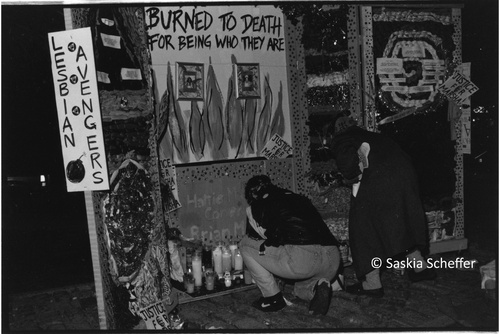
-

Sidney Abbott at Lesbian Herstory Archives "The Good Old/Bad Old Days: Lesbian-Feminism, Its Origins—What's Helpful to Us Now?" Part 1 of 2
Sidney Abbott reflects on earlier years of the gay and lesbian movements; audience participation turns the presentation into a discussion on turning tides in the movements. -

Sidney Abbott at Lesbian Herstory Archives "The Good Old/Bad Old Days: Lesbian-Feminism, Its Origins—What's Helpful to Us Now?" Part 2 of 2
Sidney Abbott reflects on earlier years of the gay and lesbian movements; audience participation turns the presentation into a discussion on turning tides in the movements. -

Slide Titles for GWA
This is a collection of video clips, photos, and opening/closing credits for a Daughters of Bilities documentary sponsored by the Lesbian Herstory Archives. -
Sophie's Parlor
Radio Free Women/ Sophie's Parlor episode about rape in terms of legal representation and shortcomings, poor and prejudiced treatment of rape victims. Audio is poor at times. The discussion focuses on the need to implement legal changes to how rape is understood through hearings and testimonies that are very difficult experience for the rape victims. They point out the sexist, classist, and racial discriminations against victims of sexual assault (such as victims having to pay for their medical expenses after forensic collection). They talked about the availability of the Rape Crisis Center to help women in need. -

Speaking to the Future: 1978 Lesbian Regional Conference (Tape 2)
Part 2 of interviews addressed to "lesbians of the future" conducted by the Lesbian Herstory Archives at the 1978 Lesbian Regional Conference. Among the subjects discussed in the interviews include coming out, lesbian bars, racism against lesbians of color, representations of violence against women, feminism, and older lesbians. -

Speaking to the Future: 1978 Lesbian Regional Conference (Tape 1)
Part 1 of interviews addressed to "lesbians of the future" conducted by the Lesbian Herstory Archives at the 1978 Lesbian Regional Conference. Among the subjects discussed in the interviews include coming out, lesbian fashion, older lesbians, chosen names, homophobia, and racism against lesbians of color. -
St. Paul's Church Lesbian Pride Week Concert, June 26, 1976
Concert held at St Paul's Church on the occasion of Lesbian Pride Week. Also includes the announcement of the site, details and regulations for a later rally. -
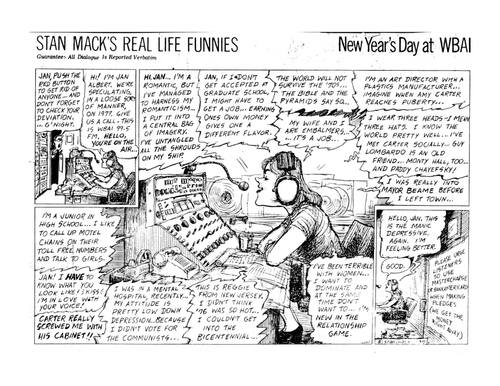
Stan Mack's "New Year's Day at WBAI" comic featuring Jan Albert
Stan Mack's "New Year's Day at WBAI" comic featuring Jan Albert, from Stan Mack's Real Life Funnies -

Statement of Purpose; Visitor Feedback / Lesbian Herstory Archives
Oral history recording that documents the history and legacy of the Lesbian Herstory Archives. Members of LHA recite the LHA Statement of Purpose from 1974. This is followed by the reading of quotes (with multiple, unidentified readers) from appreciative visitors to LHA. -

Stella Rush & Helen Sandoz, May 15, 1987 (Tape 2 of 3)
Stella Rush and Helen Sandoz discuss writing and printing the Ladder, and another lesbian publication, the One. They also touch on a range of topics including obscenity laws, pornography, spirituality, the Homosexual Bill of Rights, and DOB conferences. They discuss the politics of the 1980s and compare it to that of the 1950s. Stella goes into detail about her upbringing and subsequent mental health issues. -

Stella Rush & Helen Sandoz, May 15, 1987 (Tape 3 of 3)
Stella Rush and Helen Sandoz are interviewed in 1987. The interview mostly concerns Stella Rush, who talks about her childhood; specifically her encounters with incest and molestation. She also talks about her experiences with police discrimination in the 1950s and 1960s in L.A. Helen and Stella both talk about being editors of the Ladder and being a part of the DOB. Stella talks about workplace harassment, and fear of loser her job. They show photographs from the 1960s, including some of their cat. The video closes with the two discussing their wedding rings.Tags Bars, Christianity, Daughters of Bilitis, Discrimination, Families, Gay liberation movement, Hate crimes, Helen Sandoz, Homosexuality, Incest, Intergenerational relationships, Interviews, Job discrimination, LGBTQ+ civil rights, Mailing lists, Mental health, Mothers, Older lesbians, Parents of lesbians and gays, Police harassment, Radical lesbians, Rape, Religion, Sexual assault, Stella Rush, The Ladder, Violence, Women -

Stella Rush and Helen Sandoz (aka Sten Russell and Helen Sanders) Interview, May 15, 1987 (Tape 1 of 3)
Stella Rush and Helen Sandoz discuss personal experiences about living as a lesbian in the late 1930's and early 1940's, Sandoz choosing to remain off camera for the interview. Featuring anecdotes of when they realized they were lesbians, career choices, and the story of their relationship. -

Stella Stone, April, 1978
Stella describes growing up in a broken home, and having to take on a lot of responsibilities. Explains her curiosity in women as she got older. Later, she discusses how her bisexuality made her feel different than everyone. -

Stephanie Singer Interview
Recording of a Zoom event "Life Passages" where Stephanie Singer speaks on her experience as a transwoman and a Lesbian and discussed her early life, her coming out, and her family dynamics. After Stephanie speaks, there is a Q&A with other people on the Zoom meeting who are part of the Rossmoor Lesbian Social Club. -

Straight Talk About Lesbians, 1980
An educational film strip about lesbian women in which several speak frankly about who they are, as well as their culture and history. Features women discussing their experiences, histories, and perspectives as lesbians, including coming out and living in a homophobic society. Also features discussions with children about their experiences having lesbian parents, as well as with the parents of lesbians. Notable is the discussion of lesbian music, with many songs played throughout.
Video restoration created by digitizing two filmstrips and accompanying cassette tape and assembling through computer video editing program. -

Susan Abod Interview
Susan Abod is interviewed by Ruth Scovill. The tape starts in the middle of a conversation. Susan talks about women’s rock music as the antithesis to “cockrock,” or rock music for and by men. She discusses her journey of auditioning and joining bands, and being influences by socialism, feminism, and how she joined a political band of women. (Some audio distortion). She talks about rewriting song lyrics, the concepts of straight-baiting, utopian politics, and differences between women’s music and feminist lyrics in music. Around 49:30 the narrator changes, and the topic changes to the Woman’s Coffee Coven, which later became a production company. This may be the predecessor of Olivia Records. -
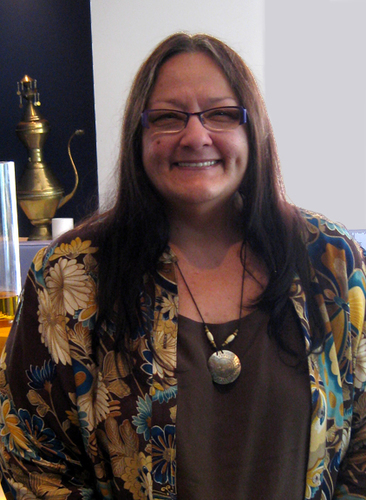
Susan Shown Harjo
Susan Shown Harjo via wikipedia (Public Domain) -
Susan, undated (Tape 1)
Susan discusses discovering her sexuality, her first relationship with another woman, and the university atmosphere for a lesbian. Her interview includes stories about her romantic experiences as an overweight woman, the gay and lesbian nightlife in Buffalo, and her political advocacy in the gay and women's rights movements. -

Susan, undated (Tape 2)
Susan continues her discussion of lesbian social and political groups, both at the university and within Buffalo. This interview also covers Susan's experience with Buffalo nightlife (specifically gay and lesbian bars), coming out to her parents, and how being gay affected her career. -
-

Tampa TV Coverage (Tape 2)
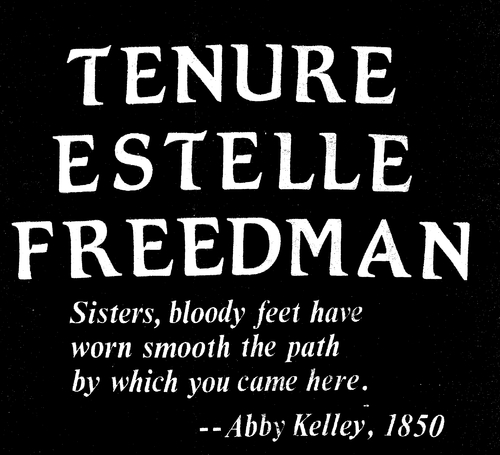
Compilation of news coverage from '10 Tampa Bay' of protests organized by the Lesbian Avengers responding to the burning of a trailer belonging to lesbian and HIV advocate Dee DeBerry.
Sections:
- "Why are these lesbian activists eating fire?" [00:38-02:47]
- Tampa Hate Rally: The Lesbian Avengers and other groups [03:07-03:46]
- Gay activists who call themselves Lesbian Avengers [04:07-04:52]
- Temple University News Taping [05:01-14:47]
-

Target City Hall [D.I.V.A. Footage], 1989
Handheld video recording of the ACT UP action "Target City Hall" on March 28, 1989. -

Target City Hall, 1989
Produced by DIVA TV, this video focuses on the ACT UP action known as Target City Hall when activists demonstrated against access to AIDS drugs and Mayor Ed Koch's response to the crisis at the New York City Hall. -
Terry, May 12, 1980
Terry talks about her experience, coming of age as a woman and specifically as a lesbian; and how she sought comfort first in alcohol and then within the lesbian community. -
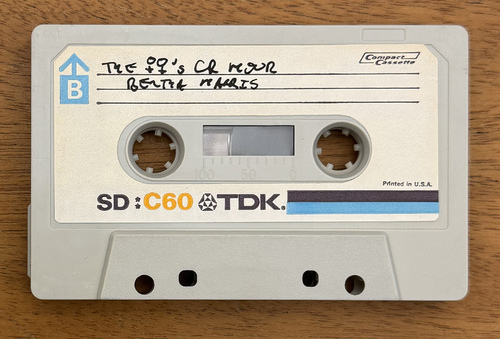
The ♀♀'s (Women's) CR Hour - Bertha Harris
This episode of the Women’s Consciousness Raising Hour, hosted by Diane Trombley, features an interview conducted by Victoria Brownworth with writer and scholar Bertha Harris, Director of Women’s Studies at the City University of New York. Harris discusses her literary influences, the role of writing as personal liberation, and her exploration of lesbian identity and imagination through fiction. She reflects on the lesbian and feminist writers of 1920s Paris, such as Djuna Barnes, Natalie Clifford Barney, and Renée Vivien, emphasizing their impact on women’s literature and the need for broader recognition of their works. The program also features feminist songs highlighting women’s autonomy, labor, and resistance to patriarchy. -

-

-

-

-

-

-
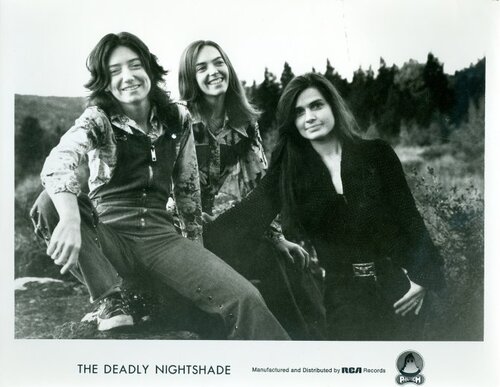
The Deadly Nightshade Press Photo
The Deadly Nightshade Press Photo -
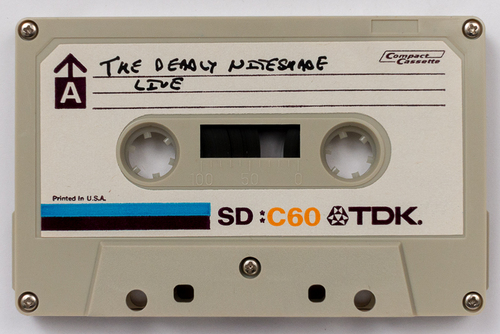
The Deadly Niteshade Live
The Deadly Nightshade Live, hosted by WBAI in NYC. The radio show they appeared on nor the host(s) are noted at the beginning of the recording. Note, the incorrect spelling of Nightshade on the Inscribed Title. -
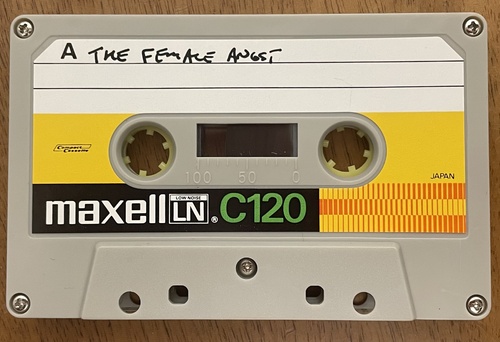
The Female Angst
Side A:Women playing the guitar singing a jingle. She goes on to talk about the pain that comes with operating in a male centered society. In an interview, two women talk about women not being as confident in their ability of being without the "big father" figure present for reassurance. There's a conversation discussing how a woman sacrifices more, does more, feels more, which makes them gifted. They talk about women as nature, explaining how a woman's suffering forces people to experience life on a deeper level. There is talk about work as a form of salvation while finding moments of joy in the process.
Side B:"Equating women to death, and men with life." Person being interviewed offers a new perspective on coexisting as both man and woman. She stresses personal identity over identification and speaks about how when a women acquires education she poses as a threat to men. She mentions how women giving boundless and immense love to men, when in actuality women are in search of themselves as an individual. Tape ends in music.Tags Women -

The Franny Chicago Play
This production from Radio Free Women is an interview with Judith Katz, playwright, and Betsy Toth, director, of the Franny Chicago Play. The play revolves around the suicide of Franny Chicago, a lesbian who lives with her partner and a roommate, who is also a lesbian. Katz and Toth speak about the struggle of accurately portraying lesbian life while not turning it into a spectacle. In addition, they talk about the importance of feminist representation in theater. -

The Furies
The Furies was a group of twelve lesbian separatists in Washington, D.C. who saw heterosexual women as an obstacle in their feminism. Heterosexuality was as cyclical, and women in heterosexual relationships reinforced their oppression by absorbing the name and values of their male partners and moving them forward. The Furies published a newspaper, The Furies, that ran from 1972-1973. -
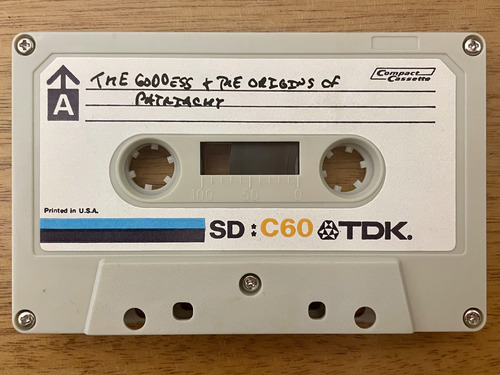
The Goddess and the Origins of Patriarchy
The Lesbian Radio Show, hosted by Rose Jordan. Discussion about the ancient goddess culture and feminist spirituality with Merlin Stone, author of "When God Was a Woman" (1976) and Grace Chanel, who had recent article in feminist journal, Heresies (1978). -

The Heat Is On Miss Saigon
Interviews and speeches from the demonstration at the Broadway opening of Miss Saigon organized by a coalition called "The Heat Is On 'Miss Saigon': Coaltion to End Racism and Sexism on Broadway". -

The Lesbian Avengers Eat Fire, Too
[Description from the Lesbian Avengers]
The Lesbian Avengers Eat Fire, Too offers a look at the New York group's first year, from their initial demonstration in front of an elementary school in '92 to the Dyke March in DC, where the Avengers ate fire in front of the White House, cheered on by an enormous crowd.
The video supplements footage of actions with portraits of real-life Avengers still giddy with their first experiences of taking to the streets as out dykes, as well as interviews with puzzled tourists trying to answer the question, "Who are the Lesbian Avengers?"
Edited by two Avengers, videomaker Janet Baus, and experimental filmmaker, Su Friedrich, the video was a group effort, with a number of Avengers contributing.
--------
The Lesbian Avenger employed fire eating as an act of protest as a response to arson attacks against gays and lesbians who had been killed by Molotov cocktails thrown into their homes. -

The Lesbian in Literature - Female Friendships, Crushes + Afffections in Children's Lit - Janet Cooper
This tape contains the third panel from the Gay Academic Union Conference at NYU, the "Lesbian in Literature" Panel. Panelists are Janet Cooper, speaking on female crushes and friendships in children's literature, and Cynthia Secor, speaking about Gertrude Stein and James Joyce. The moderator was Virginia Caputo.
Janet describes that the first room in a library targeted specifically for children was in the Pratt Library in Brooklyn in 1895. The librarian Anne Carole Moore worked there, and would become a very influential children's librarian. She speaks on the monopoly of children's literature in publishing and book awards, with Anne Carole Moore at the center due to her connections with other powerful librarians. Since Anne Carole Moore's appointment, child friendships and friend crushes in literature have disappeared. The removal of content in library books where children physically touched each other, Janet says, was a direct result of the fear of lesbianism.
Cynthia Secor speaks about Gertrude Stein and James Joyce. She asserts that Stein is an oft-overlooked figure in literature. Gertrude Stein was a sort of hidden figure, while James Joyce was taught everywhere. Stein was read by many lesbian women, but Cynthia did not read Stein until she joined the lesbian community. Cynthia reads a passage by Stein, "Cow come out...", discusses Stein's novella, Q.E.D., and her "Patriarchal Poetry" essay. -

-
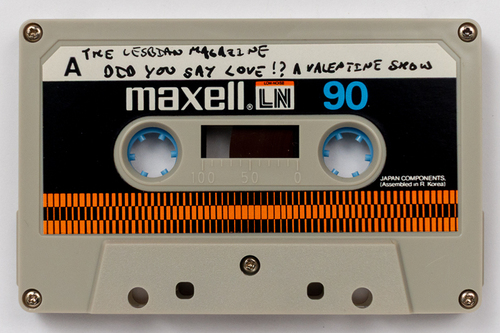
The Lesbian Magazine - Did You Say Love!? A Valentine Show
Broadcast of The Lesbian Magazine, noted as "Did You Say Love!? A Valentine's Show," on both side A and B. Valentines themed episode containing lesbian love songs, roundtable of host Judy Pasternak's friends reflecting on love in varied forms, and news updates relevant to the lesbian community. -

The Personal or the Political - I / Conference on Feminist Theory, September 29, 1979
In addition to Audre Lorde, Linda Gordon, Manuela Prairie, Jessica Benjamin, Bonnie Johnston, Camille Bristow, and Susan McHenry participated in the panel. The recording includes a question and answer session between panelists and audience members. The topics discussed include racism, feminism, class oppression, individualism, sexuality, community, and sisterhood. -

The Personal or the Political - II / Conference on Feminist Theory, 1979
Audre Lorde continues her presentation as part of “The Personal and the Political” panel held at the Second Sex Conference on September 29, 1979. Audience members pose questions and make comments regarding the intersections between race, class, sexual orientation, and gender and feminism in response to Audre Lorde’s speech, “The Master’s Tools Will Never Dismantle the Master’s House”, from SPW1155. -
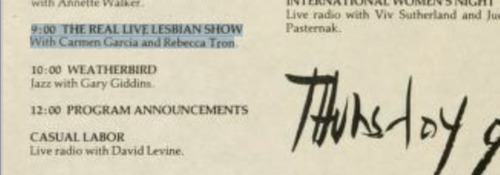
The Real Live Lesbian Show
The Real Live Lesbian Show -
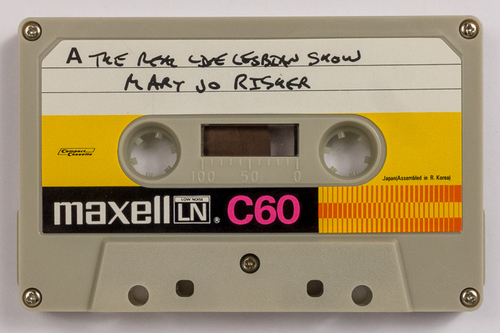
The Real Live Lesbian Show - Mary Jo Risher
Broadcast of The Real Live Lesbian Show, noted as “The Real Live Lesbian Show - Mary Jo Risner,” on both side A and side B. In this broadcast, Rebecca Tron (one of two hosts) interviews Mary Jo Risher and her partner Anne Forman, in promotion of Risher’s book By Her Own Admission: A Lesbian Mother’s Fight to Keep Her Son. Risher lost her son in a highly publicized custody battle with her husband. She was discriminated against for being a lesbian. Note that Risher’s name is misspelled on the inscribed title. -

-

The Velvet Sledgehammer - Mischief Mime + The Varied Voices of Black ♀♀ (Women)
On this episode of The Velvet Sledgehammer, Donna Allegra interviews members of Mischief Mime, a two woman theater troupe from Ithaca, New York. Mischief Mime tours and teaches nationally to prove artists can make it outside of the larger cities. -

The Velvet Sledgehammer - Mischief Mime + The Varied Voices of Black ♀♀ (Women)
Donna Allegra hosts members of The Varied Voices of Black Women, a touring poetry and music production, on The Lesbian Show. Guests include poet Pat Parker, singer and percussionist Linda Tillery, pianist Mary Watkins and Gwen Avery. -

The Women's Ausie Hour 10/7/76 - Pamela Brandt + Helen Kooke Speak about the Niteshade + Women's Music
This episode of The Women's Music Hour contains an interview with Pamela Brandt and Helen Hooke, who make up one of the first American all female bands, The Deadly Nightshade. -

-

Third World Lesbian Writers Conference featuring Audre Lorde, Yvonne Flowers, and Robin Christian, 1979
Audio recording of the Third World Lesbian Writers Conference that took place on March 24, 1979. This is one of two tapes from the workshop, the second tape is missing. This is a workshop with Audre Lorde, Yvonne Flowers, and Robin Christian. Audre Lorde is on Side 1. Joan Nestle, Deb Edel, and Candice Wood are mentioned. -
Ti Grace Atkinson, Tape 1 of 10, Side A
This sound recording captures workshop discussions led by Ti Grace Atkinson at the Daughters of Bilitis office. -
Ti Grace Atkinson, Tape 1 of 10, Side B
This sound recording captures workshop discussions led by Ti Grace Atkinson at the Daughters of Bilitis office. -
Ti Grace Atkinson, Tape 10 of 10, Side A
This sound recording captures workshop discussions led by Ti Grace Atkinson at the Daughters of Bilitis office. -
Ti Grace Atkinson, Tape 10 of 10, Side B
This sound recording captures workshop discussions led by Ti Grace Atkinson at the Daughters of Bilitis office. -
Ti Grace Atkinson, Tape 2 of 10, Side A
This sound recording captures workshop discussions led by Ti Grace Atkinson at the Daughters of Bilitis office. -
Ti Grace Atkinson, Tape 2 of 10, Side B
This sound recording captures workshop discussions led by Ti Grace Atkinson at the Daughters of Bilitis office. -
Ti Grace Atkinson, Tape 3 of 10, Side A
This sound recording captures workshop discussions led by Ti Grace Atkinson at the Daughters of Bilitis office. [THIS FILE DUPLICATES FILE "SPW159_DOB ATKINSON #3 SIDE B_"] -
Ti Grace Atkinson, Tape 3 of 10, Side B
This sound recording captures workshop discussions led by Ti Grace Atkinson at the Daughters of Bilitis office. -
Ti Grace Atkinson, Tape 4 of 10, Side A
This sound recording captures workshop discussions led by Ti Grace Atkinson at the Daughters of Bilitis office. -
Ti Grace Atkinson, Tape 4 of 10, Side B
This sound recording captures workshop discussions led by Ti Grace Atkinson at the Daughters of Bilitis office. -
Ti Grace Atkinson, Tape 5 of 10, Side A
This sound recording captures workshop discussions led by Ti Grace Atkinson at the Daughters of Bilitis office. -
Ti Grace Atkinson, Tape 5 of 10, Side B
This sound recording captures workshop discussions led by Ti Grace Atkinson at the Daughters of Bilitis office. -
Ti Grace Atkinson, Tape 6 of 10, Side A
This sound recording captures workshop discussions led by Ti Grace Atkinson at the Daughters of Bilitis office.Tags Ti Grace Atkinson -
Ti Grace Atkinson, Tape 6 of 10, Side B
This sound recording captures workshop discussions led by Ti Grace Atkinson at the Daughters of Bilitis office. -
Ti Grace Atkinson, Tape 7 of 10, Side A
This sound recording captures workshop discussions led by Ti Grace Atkinson at the Daughters of Bilitis office. -
Ti Grace Atkinson, Tape 7 of 10, Side B
This sound recording captures workshop discussions led by Ti Grace Atkinson at the Daughters of Bilitis office. -
Ti Grace Atkinson, Tape 8 of 10, Side A
This sound recording captures workshop discussions led by Ti Grace Atkinson at the Daughters of Bilitis office. -
Ti Grace Atkinson, Tape 8 of 10, Side B
This sound recording captures workshop discussions led by Ti Grace Atkinson at the Daughters of Bilitis office. -
Ti Grace Atkinson, Tape 9 of 10, Side A
This sound recording captures workshop discussions led by Ti Grace Atkinson at the Daughters of Bilitis office. -
Ti Grace Atkinson, Tape 9 of 10, Side B
This sound recording captures workshop discussions led by Ti Grace Atkinson at the Daughters of Bilitis office.