
Browse Items (771 total)
Sort by:
-

Margaret Sloan
Sloan is the President of the National Black Feminist Organization. She discussed NBFO’s mission to provide an organization for black feminists who felt the need to fight both sexism and racism at the same time. She discussed the formation of the organization and the eastern conference on black feminism. -

Ruth Berman & Connie Kurtz Talk with Pride NY, 2002
Audio recorded at an event put on by Pride NY, the employee network group for LGBT individuals at JP Morgan Chase with Out and Equal Metro New York and the NY Bankers Group.
Side1
Blythe Masters from JP Morgan Chase introduces Ruth Berman and Connie Kurtz . Connie recalls feeling different from an early age, issues with shame about being different, and the necessity to challenge the system that makes people feel that way. She talks about her relationship with her family and with Ruthies Family. Ruthie talks about being a mother, coming out as a lesbian as a parent, and her illness that resulted from her internal struggle and shame related to being a Lesbian. Ruthie talks about applying for partner benefits for Connie that lead to the lawsuit against the New York State Board of Eduction and her experience working with Lambda Legal. Ruthie discusses the collective power that queer people and their allies have.
Side 2
Ruthie + Connie talk about their film and take questions from the audience. They discuss making politicians accountable during their time in office and demanding full legal acknowledgement and recognition of rights and personhood. They talk about their involvement with their synagogue, and the power of corperate and professional LGBT groups.
-
Cecilia, 1990
Phone message left by Cecilia from Routledge publishers. In the message she gives feedback on a chapter of the Boots of Leather, Slippers of Gold: The History of a Lesbian Community manuscript and discusses the next steps in the publishing process. -

Phil, January 18, 1980
Phil talks about being in a relationship with another woman and how she provided for her. She also goes on to talk about how other butch femmes provided for their partners and what would happen when they would break up. Phil further goes on to talk about gay literature and her problems with it. She also discusses gay bars and the lack of support for them. -

Paula, January 18, 1990 (Tape 2)
Paula describes the absence of love and romance in her relationships with women, but later in the interviews describes a relationship after her divorce. She mentions one-night stands and sexual experiences she had with friends, and the importance of these friendships to her. Paula mentions that she was married and had children, and would go out to bars at night with her friends or alone. -

Paula, January 18, 1990 (Tape 1)
Side A: Paula describes various locations where gay men and women would meet each other, like Kleinman's Corner and bars such as Ralph Martin's. Often these locations also served as hubs for sex workers. She speaks about the rigidly defined roles of "butch" and "femme" provided for lesbians during the 1940s. Paula talks about her life as femme and being married to a man who introduced her to gay/lesbian life. She discusses her sexual life and the type of sex that women had with each other in the 1940s, specifically within the strict binary of butch and femme. Paula recalls the social life at bars, such as Ralph Martin's, which included dancing, drag shows, prostitution, and drugs.
Side B: Paula speaks about her family life in relation to her sexual identity. She talks about her husband's fast lifestyle and her changing preferences eventually causing the dissolution of their marriage. Paula mentions the types of employment she has had, including working in department stores, as a waitress, as a desk clerk at the Genesee Hotel, and on the assembly line at Bell Aircraft. She speaks more about various bars that she went to: Pat's, Dugan's, the Carousel, and the Carlton Hotel. She talks about a long-term relationship that she had, after her divorce, that lasted ten years, as well as traveling out of the Buffalo area to places like Florida, California, and Utica, N.Y.
The recording cuts off abruptly after 23 minutes. -

Pat G., May 21, [year unknown] (Tape 2)
Pat shows family photos. She says several of her family members were gay, including her mother and brother. She talks about bars, the 557 and 217, with racially mixed clientele. She describes violence when straight men tried to dance with gay women. She mentions other favorite bars from the 1950s: the Chesterfield, the KittyCat, Club Coco, the 469. Pat describes her relationships, many of which involved "messing around on and off" for many years. She describes coming out to her mother at age 13, and talks about the "white girls from Canada" (lesbians) who were her mother's friends. -
March on Washington / Pacifica Program Service, 1979 (Tape 2 of 4)
The second of four recordings of Pacifica Radio coverage of the National March on Washington for Lesbian and Gay Rights on October 14, 1979. Musical performances by Mary Watkins, Meg Christian, and Holly Near. Speeches by Ray Hill and Charles Law. -
Ruth Berman, Connie Kurtz, and Karen Thompson at the National Organization for Women Conference in San Diego, CA
"Out: One Road to Empowerment" panel moderated by Dixie Johnson from National NOW Power Through Action Conference. Panel includes Karen Thompson, Ruth Berman, and Connie Kurtz.
Side 1 Ruth starts off by singing "I Am What I Am" by Gloria Gaynor and then talks about her life and knowing she was a lesbian from a young age and her journey to get rid of the same she originally felt about her sexuality. She talks about being married and having children, being in the closet, and her early relationship with Connie. She expresses the shame she first felt when being with Connie and regretting how much time she lost being in the closet. Ruth talks about going on the Phil Donahue show and the lawsuit after being denied partner benefits for Connie by the NYC Board of Education because they weren't married. She encourages the audience to undo the damage of being brought up as heterosexual women and to come out.
At 21:40 Connie speaks and talks about being a mother and grandmother, and her relationship to her family. She talks about how abuse has been perpetuated throughout her life about working through her problems and celebrating changes. Connie shares her experience of being diagnosed with cancer and her experience trying to heal herself and going into remission.
At 38:30 Karen Thompson discusses trying to be what other people wanted throughout her early life and meeting a partner who taught her how to live and be herself. She recalls not being able to admit her sexuality to herself or her partner, the car accident that her partner was involved in, and realizing she had to come out to get through this challenging time.
Side 2 The second part of this tape is a duplicate of the audio described in "National Organization for Women (NOW) NYC - Ruth Berman and Rosemary Dempsey" -
Ruth Berman and Rosemary Dempsey for the National Organization for Women NYC, 1991
Audio starts with Ruth Berman talking to an audience about the importance of voting as a Lesbian and as an ally, an about the importance of being political and coming out as a gay person. She touches on the role of money and legality in domestic partnerships and the need to prove them. Ruth encourages the audience to join the National Organization for Women (NOW) to amplify their voices.
10:00 mins into the tape, Rosemary Dempsey from NOW discusses the importance of legal tools to protect gay people and their families, ad how coming out is an important part of that process.
Audio ends at 13:11, the rest of the tape is blank.
-
NYPAP Oral History Interview: Maxine Wolfe and Anne Maguire
Oral History conducted by New York Preservation Archive Project in which Maxine Wolfe and Anne Maguire are interviewed. They discuss their early lives, background on their family histories, and the work as activists.
The talk about the environments they grew up in, Maxine in Brooklyn and Anne in Dublin, and their early interest in, and awareness of, politics. Anne talks about the political climate of Ireland that made her want to leave, eventually winning a green card in a lottery, and moving to New York City. Anne describes meeting Maxine at a Thanksgiving Dinner through a friend, Marie, who would eventually become her partner.
Maxine discusses her involvement in various LGBTQ and Radical organizations in NYC that lead her to ACT UP. Anne discusses being part of the founding group of ILGO, the Irish Lesbian and Gay Organization, which started in 1990, and which she was part of for 10 years. She talks about ILGO's rejection from the St. Patrick's Day Parade and the publicity the group got from that.
They talk about the erasure of lesbian organizers and leadership within LGBTQ history which tends to focus on gay men, and how Lesbians had to advocate for themselves and form their own movements to be heard and to focus on Lesbian issues. They talk about Lesbian and women erasure during the AIDS crisis and how that lead them to for the Lesbian Avengers along with Ana Maria Simo, Anne-Christine D'askey, Marie Honan, and Sarah Schulman. They decided they wanted to focus on serious politics rather than cultural issues, and to not be a top-down organization. Anne and Maxine discuss the first meetings and actions of the Lesbian Avengers and talk about offering organizing help and support to other Lesbian groups around the country.
Maxine and Anne talk about the real depth of activism, and the dangerous legal and personal implications of direct actions. They discuss the importance of being part of a group and having a support structure when taking part in a direct action. Maxine talks about the learning and training and teaching that happens behind the scenes before any direct actions. They go into more detail about work they did as the Lesbian Avengers around the country, and the effect that their bottom-up structure had on small community movements.
They talk about the Alice Austen House and the fact that the Board was homophobic and hiding the queer part of that story, and work they did around protesting how the history was being handled. They discuss the importance of recovering queer histories from the 19th Century, and making gay history available to the public. Maxine talks about the role of the Lesbian Herstory Archives in preserving the history and lives of all lesbians for this reason. They talks about how visibility and survival are related for Lesbians, and the need for people to see themselves represented.
Maxine and Anne talk about seeing the fruits of their activist labor come to fruition after 25 years, and their thoughts about current acceptance of LGBTQ people as being partially related to capitalism and revenue. They discuss more recent LGBTQ history and archive projects and the celebrating of gay institutions that have survived over the past 50 years. However, through some of these projects, they are still experiencing Lesbian, Bisexual, and Transgender erasure and erasure of the history of every day people.
-

Neighborhood Voices: Irving Cooperberg [Partial interview]
Irving Cooperberg discusses the importance of having a physical, experimental space and what it means for the legitimacy and stability of the community. He discusses different LGBT groups and community spaces throughout NYC, and the ways in which they promote life and hope amidst the HIV/AIDs epidemic. He talks about how these spaces give legitimacy to the community and allow for the melding of all different cultures and people. He also discusses the gay Synagogue and its role in the larger gay and lesbian community. -

Neighborhood Voices: Sonny Wainwright Interview (Tape 5)
Sonny Wainwright provides discourse about the privilege of marriage as it pertains to illness and becoming a parent. She explains her choice to "live straight" for several years so that she could have a child. It was not until she met Audre Lorde that she realized she had "choices", whom she called her teacher. Wainwright also discusses the need for lesbian illness support groups due to unjust experiences brought on by the illegality of same-sex marriage. -

Neighborhood Voices: Sonny Wainwright Interview (Tape 4)
Sonny Wainwright discusses being closeted, her group of closeted friends, and keeping her private life private. She also discusses labels as being necessary because the word “woman” does not define every part of her, and when she is free to be who she is she will no longer feel the need to be labeled a “radical lesbian feminist” because woman will be sufficient. Also mentioned is Wainwrights’ battle with breast cancer, and how it brought her first book Stage V: A Journal Through Illness.
-

Neighborhood Voices: Sonny Wainwright Interview (Tape 3)
The New York gay bar scene in the 1950s gave Sonny Wainwright and her peers a place to be together without the interference of straight society. She left New York in 1953 to become a college teacher at University of New Hampshire. Wainwright oscillates between ideas of identity and stories of different instances of being outed in her personal and professional life, including a story about developing a relationship with a student at the University of New Hampshire, who outed her sexualty leading to her dismissal. -

Neighborhood Voices: Sonny Wainwright Interview (Tape 2)
Wainwright remembers her youth and feeling on the “fringes” of society. Growing up and attending an all girls highschool, she was aware of her feelings about women and only later realized what it meant after graduating high school and meeting her first lover. Despite understanding her identity and sexuality, she made the choice to “live straight” in the 1960s due to the lack of acceptance by society and the threat of losing her job as principal of a junior high school while raising her daughter alone. -

Neighborhood Voices: Sonny Wainwright Interview (Tape 1)
Sonny Wainwright discusses coming out in 1948, navigating the Village bar scene as a young college student with her lover Kelly, and the social life of lesbians in the 1950s. Wainwright found support in the bars as well as her close circle of closeted friends prior to the formation of the Gay Women’s Alternative. -

Neighborhood Voices: Audre Lorde Interview (Tape 4)
In the final part of the Old Neighborhood Voices interview with Audre Lorde, she wraps up the talk with a discussion on the drama of lesbian life in her youth. She talks about the difficulties and joys of living in community with lesbians in the 1950s and how being on the edge of society gives you a different worldview. She stresses how everyone should view themselves as an outsider so they don't lose perspective on the true sense of power structures at play in the world. -

Neighborhood Voices: Audre Lorde Interview (Tape 3)
In the third part of the interview, Audre Lorde discusses the lure of the Village for gay people, black people, and others who wished for an egalitarian environment, and how sometimes they would ignore the homophobia and racism they faced in the neighborhood to hold onto this dream. Also, she discussed in more depth what she thought about the Stonewall riot, and how it felt tied to the black revolutionary movement of the time. Furthermore, she discusses at length the different gay bars she would frequent, their ties to the mafia, and the different women that would frequent them. -

Neighborhood Voices: Audre Lorde Interview (Tape 2)
In the second part of the Old Neighborhood Voices interview with Audre Lorde, she talks about living around the Village in the 1950s - from the migrators who came into the gay bars just for the weekend, to the imagined mythos of the Village as a place for anyone outside of white, middle-class America, and to the conflicts between the older residents and the newcomers to the area. Lorde touches on what her apartments were like and the rent situation of the area, as well as scrouging together food to share with her communities as a poor person. Then, Lorde discusses the multiple lives lesbians of the time had to live and the incredible gift that integrating every aspect of herself was as she got older. She touches on the Stonewall Riot, as well as the way she had to stop arbitrarily dividing aspects of herself to make others more comfortable. -

Neighborhood Voices: Audre Lorde Interview (Tape 1)
Old Neighborhood Voices interviews Audre Lorde about living as a young Black lesbian in the Lower East Side (now referred to as the East Village). She discusses the interconnectedness of the lesbian communities in the neighborhood, the imperfect support systems they offered each other when there were no other options, and the pressures of living on the edge of society. Lorde also discusses the racism that was rampant in the gay community in the Village, and how the few black lesbians within these communities were met with apathy when discussing political matters. She also discusses the effects of McCarthyism in the 1950s on her lesbian communities, as well as how she gained political consciousness growing up with the Brown v. Board of Education case, as well as by living near the Women’s House of Detention in the Lower East Side and seeing Black incarcerated women for the first time. -

Astraea
Short clips of several interviews with various members of the Daughters of Bilitis about their experiences with the group and being a lesbian in the 1950s and thereafter. -

-
Ruth Berman and Connie Kurtz on the Michelangelo Signorile Show, 2003
Episode of the Michelangelo Signorile Show on Sirius OutQ which aired July 20, 2003 in which have Ruth Berman and Connie Kurtz to talk about their life and new film “Ruthie and Connie: Every Room in the House.” At the beginning of the episode, they also talk about other people they are having on the show.
Ruth and Connie's interview starts at 10:55 and ends at 30:30. They discuss their Cotello Towers neighbohood where they met when they were both married and young mothers. There they started the "Mother's Action Committe" within their community. They talk about their own internalized homophobia at the beginning of their relaionship and their fear that they would have been found out, and the transition to feeling comfortable with themselves and their sexuality. They discuss their lawsit with the New York City Board of Education for Domestic Partnership Benifits and their apperance on the Donahue Show in 1988.
They take questions from callers which relate to being lesbian and Jewish, the community they have found there, and the importance for others around the country to find similar communities, or to create them.
After Ruth + Connie's interview the hosts discuss a NYC teen, Natalie Young, who is sueing her teacher for harasmeent over comments made about the teenagers shirt that said "Barbie is a Lesbian"and other LGBT current events. -

Mary T., July 7, 1978 (Tape 1)
Side A: Mary briefly describes her childhood and family dynamics. Mary and the interviewer then discuss the first time Mary recognized being different and her thoughts on desiring women at a young age, yet not knowing about lesbianism as a concept or about the lesbian community. Mary then recalls the first time she encountered the word "lesbian" when she joined the U.S. Air Force and describes her experiences with women while in the service. Mary talks about being a lesbian in the military, the investigation into her conduct, and her dishonorable discharge. After Mary got another job, she started going to a bar in Buffalo, N.Y., and she talks about the other lesbians she met there. Mary then discovered other bars and talks about the scene as well as the role-playing of butch and femme.
Constant whirring noise that stops about 10 minutes into the recording.
Side B: Mary continues the discussion on butch and femme role-playing. She elaborates on fights, holding down jobs, and being "out." She also explains the relationships lesbians had with gay men in Buffalo, N.Y., and the bar scene dynamics of mixed, gay, or lesbian bars. Mary and the interviewer discuss gay activism and the difficulties of being involved in activism at that time. Mary also describes outings where there was a risk of being visible as a group, such as going on picnics or renting cottages. She elaborates on her experience with social dynamics like cliques and having heterosexual friends within the lesbian and gay community. Mary then expands upon the nature of her relationships with women as well as with black lesbians - racial prejudice and relationships are discussed.
Constant whirring noise that stops about 5 minutes into the recording. -

Mary T., July 7, 1978 (Tape 2)
Mary describes the bar scene, parties, fashion, music, bar layouts, and fights at Bingo's and Carousel bars. -

Mary Patierno Interview Transcript
In this interview Mary Patierno, co-founder and executive producer of DykeTV discusses DykeTV, a groundbreaking public access program produced by and for lesbians. Pateirno talks about the program’s history and its goals. She mentions some of DykeTV’s important news stories and recollects some of the interviews the show conducted with women artists, activists and public figures. Patierno stresses the importance of preserving other DykeTV footage that currently remains in storage. She also describes the production and post-production process, the ideas behind show segments and reflects on how she would like the show to be remembered.
The transcript can be searched when viewed in the document viewer below. -

AIDS Clinical Trials Group, 1992
Women from ACT UP LA and some gay men who worked with them, attending the AIDS Clinical Trials Groups Meetings in Washington, D.C. -

Mary K., December 12, 1981
Side A: Mary discusses her experiences in the gay community in Buffalo in the 1950s. She discusses in detail the gay bar scene and describes the clientele at the Carousel, Bingo's, and the Chesterfield. The interviewee also describes the dynamic of the relationships she experienced and observed in terms of both race and gender identity. Mary also discusses prostitution in the Buffalo community during the 1950s. She describes some of her own sexual and relationship experiences.
Side B: Continuing the conversation from Side A, Mary discusses in more detail the types of people she observed in the various bars in Buffalo, as well as her family. She explains that she got along with her family, but never came out to them, in spite of which her father never questioned her about her relationships or pressured her to get married. She also discusses the socio-economic status of various gay communities throughout Buffalo. Both the interviewer and the interviewee discuss butch and femme identities within the larger context of the lesbian community in Buffalo. Mary speaks in more detail about her social experiences. -

Mary Ann, October 15, 1988 (Tape 2)
Mary Ann talks about posing as a prostitute for men in a straight bar. She would arrange a meet-up location and then she and two girl friends would overpower and rob men. She describes several muggings she and her two friends carried out. One happened in a hotel; another took place in a man's house with his family there. She claims she and her friends never hurt anybody "more than they had to." Mary Ann also talks about the distinction between gay bars and bars where she would go to hustle. Gay bars were places to have fun with friends and not for prostitution. In one aside, the interviewer asks Mary Ann why she calls her girlfriend "my man," to which she replies that's the way her lover wanted to be addressed. -

Mary Ann, October 15, 1988 (Tape 1)
Side A: Mary Ann discusses her experiences going out in public with her girlfriends, and the treatment they receive at restaurants, bars, and on the street. She mentions that their public treatment is very often instigated by the masculine way her partners are dressed; she herself has always been very femme. Mary Ann talks about her incarceration for robbery, and her time in a psychiatric hospital for depression and attempted suicide.
Side B: Mary Ann continues to discuss her time in jail. She took on a butch look, and began to receive small gifts under her cell door from femme girls in other divisions. She developed relationships with different girls that she worked with while in jail, and talks about lookouts, or "chickies," standing watch for girls who were with their partners in the showers or elsewhere. She then talks about her sex life with a long-term partner of 22 years, with whom she raised foster children. Later, she touches on her job as a dancer at Buffalo clubs, and a two-year period when she worked as a prostitute. -
Womansphere Hour, October 18, 1974
Taped radio program for the lesbian community. -

Marge, June 4, 1980
Marge speaks of the bars in Buffalo, NY in the 1950s, specifically Bingo's, Chesterfield, Dugan's, Mardi Gras, and Carousel, which had more of an established lesbian clientele. She tells how Carousel changed from a lesbian to gay crowd in the late 1950s and eventually closed because of allowing "careless" behavior. She felt patrons of gay bars in the 1950s were more respectful than at the time of the interview in 1980. Marge was arrested for serving a minor female, which she felt was an attempt to close the bar where she worked. The tape cuts off at the end of the second side. -

Pamela Oline Interview, [date unknown]
Pamela Oline is interviewed. She is heterosexual and talks about her path to and experience of being a member of DOB and campaigning for gay and lesbian rights. She describes her childhood growing up in England, moving to America when she was 14 and changing career from a mathematician and to a psychotherapist. Recognizing the psychological issues of the time, she decided to understand the lesbian community from the inside. She talks about DOB meetings, lesbian and feminism issues, radical and conventional activism, marriage, and GAU (Gay Academic Union) meetings, panel discussions, etc.
Accompanied by an edited collection of clips, featuring Oline talking about being a Lesbian, the DOB and its eventual fractioning, and the debate of whether the lesbian's movement should be separate from the women's movement. -

Judith Schwarz and Joan Nestle Interview, November 14, 1992
The interview begins with Judith Schwarz and her recollections of the late 1950s and early 1960s, and how she knew of women who were hesitant to join Daughters of Bilitis, as they simply wanted to meet women at the bar, and feared their names appearing with labels publicly. She also discusses how women were hesitant to receive mail from Daughters of Bilitis for the same reason. She also talks about her first woman lover, and the circumstances that led to that.
Accompanied by an edited version where Judith Schwarz talks about the significance of DOB, the secrecy of membership, new member experience, social events, and harassment. Joan Nestle talks about the perception of the DOB as a threat during the McCarthy Era, the complexity of the organization, and her own perceptions of DOB. -

GWA Rough Cut and Crawl Titles
Del Martin, Phyllis Lyon, Billye Talmadge, Nikki Nichols, and Barbara Gittings speak about their experiences with the Daughters of Bilitis organization. -

Daughters of Bilitis Interview cuts
Del Martin, Phyllis Lyon, Billye Talmadge, Nikki Nichols, Barbara Gittings, and Shirley Willer speak about their experiences with the Daughters of Bilitis organization. -

Barbara Gittings and Kay Tobin Interview, 1988
Barbara Gittings talks about her life and her history with the Daughters of Bilitis. She served as the National Corresponding Secretary for DOB and helped run the NYC chapter when she was living in Philadelphia. Despite that, she frequently criticizes DOB positions and found herself to be more radical in her approach to activism. She speaks about concerns of being infiltrated by the FBI, and heists of the publication "The Ladder". The interview closes with Gittings speaking about organizing for conferences and workshops, including creating exhibits for the 1971 American Psychiatry Conference in San Francisco. -

Jeanne Cordova Interview, October 27, 1988
Jeanne Cordova discusses how the Daughters of Bilitis inspired her to change her career path and passions in life from aspirations of playing soft ball, to becoming highly involved in activism. -

LHA Daughters of Bilitis Video Project: Barbara Grier, November 27, 1987 (Tape 1)
Barbara Grier discusses her personal experiences with developing her identity. She describes lesbian nightlife and particular lesbians frequented in her youth. -

LHA Daughters of Bilitis Video Project: Del Martin and Phyllis Lyon, May 9, 1987 (Tape 3)
Del Martin and Phyllis Lyon discuss DOB's National Conventions. They are interviewed by Manuela Soares. -

LHA Daughters of Bilitis Video Project: Del Martin, Phyllis Lyon, and Nina Kaiser, May 12, 1987 (Tape 4)
Both Del Martin and Nina Kaiser discuss the end of DOB in 1970. Del also touches upon her name and Nina Kaiser touches upon her first lesbian relationship at 19, her involvement with the Navy and her involvement with the National Organization for Women. They are interviewed by Sara Yager. -

Carole Morton Interview, October 21, 1988
Carole Morton discusses her discovery of Daughters of Bilitis and her activism on behalf of lesbian mothers. -

Pat Helin and Barbara Deming Interview, May 10, 1987
Pat Helin and Barbara Deming discuss their childhood in Iowa, relationships with their familes, their involvement with the Daughters of Bilitis in San Francisco and their friendship with Del Martin and Phyllis Lyon.
On tape 2, they elaborate on their early days in San Francisco, Pat’s previous marriage, political affiliations, jobs, dancing in gay bars, and why they ultimately left the DOB. -

LHA Daughters of Bilitis Video Project: Barbara Grier, November 27, 1987 (Tape 4)
Barbara Grier proceeds with her conversation, discussing her insights and personal contributions to early lesbian literature and publishing, especially in her endeavors with Naiad Press in 1973.
-

LHA Daughters of Bilitis Video Project: Barbara Grier, November 27, 1987 (Tape 3)
Barbara Grier discusses her time involved with the Daughters of Bilitis as a contributor, poetry and fiction editor, and eventual editor-in-chief of The Ladder. She is interviewed by Manuela Soares. -

LHA Daughters of Bilitis Video Project: Barbara Grier, November 27, 1987 (Tape 2)
Barbara Grier discusses her time involved with the Daughters of Bilitis as a contributor, poetry and fiction editor, and eventual editor-in-chief of The Ladder. She is interviewed by Manuela Soares. -

Edythe D. Eyde aka Lisa Ben Interview, October 25, 1988
Edith Eyde talks about her life growing up in rural southern California, moving to Los Angelos and discovering the lesbian culture there. She discusses publishing Vice Versa, one of the first lesbian magazines, and her music career.
On the second tape, she continues to discuss her experiences in California, interacting with others who were vested in the same interests surrounding lesbian culture, and being proactive in literature and the arts. -

Lois Johnson and Sheri Barden Interview, April 1, 1989
The interview begins with Lois Johnson, who discusses when she realized that she was a lesbian, which caused her to move out to California and take a job in journalism. It was there that she met a woman who eventually became her lover, and they used to play music together. Sheri Barden talks about her social life after she met Lois Johnson, though she did like to party with her landlord, who was also a lesbian, though these social affairs pretty much came to an end when her relationship began with Lois.
On tape 2, Lois Johnson discusses expressing herself emotionally, and how she repressed her anger initially, unlike Sheri, who would often explode, leading to a lot of crying in the early part of their relationship. However, she continues to believe in love and commitment, and credits Sheri for having a great sense of humor. Sheri Barden also talks about her businesses, including a bed and breakfast that houses many lesbians. The two then reminisce on what they have in common, including their love of cats. -

LHA Daughters of Bilitis Video Project: Del Martin and Phyllis Lyon, May 9, 1987 (Tape 2)
Del Martin and Phyllis Lyon discuss changing attitudes of mental health care professionals towards lesbianism, contemporary support networks for lesbians. They are interviewed by Manuela Soares. -

Stella Rush and Helen Sandoz (aka Sten Russell and Helen Sanders) Interview, May 15, 1987 (Tape 1 of 3)
Stella Rush and Helen Sandoz discuss personal experiences about living as a lesbian in the late 1930's and early 1940's, Sandoz choosing to remain off camera for the interview. Featuring anecdotes of when they realized they were lesbians, career choices, and the story of their relationship. -

Portia, September 24, 1978 (Tape 1)
The gay movement has taken the lesbian community out of the bars or the "gay underworld," as compared to when she came out in the late 1960s, about 10 years prior to the interview. Portia, age 26, is not out at her job, but is known as a feminist and civil rights activist; her sister is openly homosexual. She talks about her early sexual experiences with girls and how she never felt guilty or different, but felt guilty with boys because of her Catholic upbringing. Her father beat Portia after she went out with her lover, and then she moved out of home at 18. She attended university and discusses her relationships and friendships in college, as well as her relationship with her first lover, who is still her partner, and their infidelities. -

Buff, September 23, 1979
Talks about dating a prostitute, lesbian prostitutes, lesbians and butches having sex with men, lesbian pregnancy, clothing styles, -

Elaine, June 28, 1982 (Tape 2)
Discussion on early childhood, being Canadian but growing up on an Indian Reservation near Syracuse. Also discusses being the head of a black gang, her relationship with her mother and abusive stepfather, and the jail time she spent for his murder, finding work (while hiding she was gay) and relationships. -

Elaine, April 17, 1980 (Tape 1)
Discussion centers on bars in Buffalo in the late 1950s and into the 1960s, in particular Bingo -

Joan, September 11, 1978 (Tape 2)
Joan discusses permanent relationships and other lesbians' relationships, dating process, how she and others approach lesbians they are interested in, and terminologies in dating (example: when do you start "going" with someone, and is it actually called "going"?). She identifies herself first as a lesbian, second as an African American. She talks about racism in the white lesbian community and the acceptance of black lesbians in black communities, which she says has to do with class. She talks about the black movement and gay/women's liberation in Buffalo. She describes how she's dressed. -

Pat, June 6, 1978 (Tape 2)
Side A: Pat talks about her childhood in North Port, N.Y., her relationship with her parents and siblings. She goes into detail about her estranged relationship with her older sister. She describes when she first knew that she was a lesbian and tells the history of her relationships with women. She starts with her first affair at age 13, with a nun from her Catholic school - Sister Eugenie - to a relationship she had with Maryann (Marty). She describes her time at nursing school in Niagara Falls, N.Y., and the gay bars she frequented until she moved to Florida with her then girlfriend. She says she moved to Buffalo, N.Y., in the late 1950s, and describes the Buffalo bar scene, mentioning Dingles, Mardi Gras, the Chesterfield, the Carousel and the Carol Hotel. Pat mentions that the Carousel was very elite, something she did not like. This leads her into a discussion on “role play†and how important it was to distinguish oneself as either a butch or a femme. She classified herself as butch, but stated that she was very uncomfortable with the label and now prefers to be less overt.
Side B: In this interview Pat talks about how she does not like or feel comfortable in the gay community. She has never identified with it, or been made to feel welcome. This is one of the reasons that she does not maintain friendships with other lesbians, unless she is having a sexual relationship with them. She mentions being victimized and physically assaulted because she was a butch lesbian. Interviewer Madeline enters the discussion, speaking about her own sexual experiences with women. Madeline classifies Pat as “untouchable,†something that Pat denies, stating that she is simply very private. She feels that sex is a necessary but not important part of a relationship; it is something that is never sought or welcomed. She is suspicious of those who claim to experience sexual pleasure, including Madeline. -

Mabel Hampton Interview [1920s / World War II]
Side A: Mabel Hampton describes meeting other lesbians and associating with other women "in the life". Also discussed is her experience during the 1920s of being set up and sentenced to serve three years for a fabricated prostitution charge at the Bedford Hills Correctional Facility for Women. Side B: Mabel's WWII era activities, including being an Air Raid Warden in Harlem, and meeting married women who ""came out"" during their husband's absence due to the war." -

Mabel Hampton, 1988 (Tape 1)
Mabel discusses her early life as a lesbian in the Village between the two world wars, including the rooming house where she lived and the parties she attended. She describes how women dressed, what they ate at the parties, what they did at the parties, including dancing, the records they listened to, and the general social life of these parties. She describes the interracial relations between white and black lesbians. She also discusses the language lesbians used to describe themselves at the time, including "bulldaggers", "lady lovers", and "butches". She also tells the story of a large lesbian marriage ceremony in Central Park West, officated by a gay minister named Rev. Monroe and how the couple managed to get an offical marriage certificate. She also discusses gay life in Harlem and the New York City drag balls. -

Mabel Hampton's Story, July, 1986 (Tape 4)
Mabel describes her life after being released from Bedford Hills, relationships with women in the early 20th century, economic and working situation, and more details about her family history (including the murder of her mother, the death of her father, Mabel's rape by her uncle). -

Mabel Hampton's Story, July, 1986 (Tape 3)
Mabel describes her 1923 arrest (at age 18) and term at Bedford Hills Prison, and the period shortly thereafter. -

Mabel Hampton Interview [Coney Island / Mildred]
Oral history interview of Mabel Hampton. Side A: Mabel discusses Coney Island, and her relationships with women, including Mildred Mitchell. -

Mabel Hampton Interview [The Twenties and Life With Lillian]
Oral history interview of Mabel Hampton. Mabel Hampton reminisces about her life in the early 1920s. Mabel talks about going to Coney Island, cabarets, and various parties around New York City where women could meet other women. She discusses her friends and relationships with particular emphasis on Lillian Foster. -

Mabel Hampton's Story, July, 1986
Oral history interview of Mabel Hampton. Mabel describes running away from home and the New Jersey family who cared for her, while they sought Mabel's family. Mabel falsified her personal information in order to avoid reuniting with her abusive uncle in New York. Mabel speaks of her early 20s, her interaction within the underground gay and lesbian community. She begins explaining her 1923 arrest at Bedford Hills Prison and how she was setup by her friend's husband for prostitution. Side A = 9:38 minutes -

Mabel Hampton July, 1986
Oral History interview of Mabel Hampton. Mabel discusses her early life in South Carolina and New York. -

Mabel Hampton Interview [Gay Language and Culture]
Oral History interview of Mabel Hampton. Mabel discusses the language and culture of being gay in her time. -

Mabel Hampton Interview [Marriage / Jealousy]
Oral history interview of Mabel Hampton. Mabel discusses lesbian marriage in the 1930s and 1940s, including stories of women getting married and where the ceremonies were. She tells stories about women she knew who had husbands and families, jealousy among women, and passion. She talks about her own experiences with passion and jealousy, including her crushes and relationships. She discusses her first relationship with a white woman, women she had crushes on, women she felt threatened by, her relationship with Lillian, and an experience at a "party house" in Bedford Hills. At the end of the tape there is a discussion about Lillian's tombstone and what to put on it. -

Mabel Hampton's Journey to New York
Oral history interview of Mabel Hampton. Mabel describes her early childhood and rural upbringing in Winston-Salem, North Carolina. She details her journey from Winston-Salem to New York City to live with her aunt. Mabel continues her story with her development into a young lesbian woman and the issues concerning lesbianism in the North versus the South. She speaks about her lifestyle and her no-regrets stance on her life. Her connection with her childhood is vivid and candid and is described in detail. -

Mabel Hampton Interview [Stories of Performing / Singing]
Oral history interview of Mabel Hampton. Mabel discusses meeting her partner Lillian Foster in 1932, whom she was with for 40 years until her passing in 1979. Mabel also mentions highlights of her professional career including performing at the World's Fair (perhaps 1939 World's Fair in New York), Carnegie Hall and Coney Island. Mabel also recounts a story involving an incident with a classmate in her youth. The tape finishes with a rendition of "My Buddy", sung by an unidentified vocalist and pianist -

Mabel Hampton Interview [Married Women / Singing]
Oral history interview with Mabel Hampton. Side A: Mabel discusses relationships she had with married women. She also discusses what she wore when she was in her early 20s and about her feelings about the openness of lesbians today. Side B: Mabel sings two songs- "My Buddy" and "Come to Me". -

Mabel Hampton Interview [New Jersey / Singing]
Oral history interview of Mabel Hampton. Side A: Mabel tells the story of her arrival in New Jersey, and how she found the people who first took her there. Side B: Mabel sings the American popular song, "My Buddy", and also explains how she left her uncle in New York and went to New Jersey. She talks in detail about the first couple days that she spent in a home in Jersey City, and her reticence to discuss details about her origins with the people that took her in. Additional discussion includes a description of the first time she was kissed by a woman, and why she didn't pursue relationships with married women. -

Mabel Hampton, 1981 (Tape 1)
Oral history interview of Mabel Hampton. Mabel discusses her relationships during her twenties, including how and why she chose her sexual partners and her relationships with married women. She relates a story about being caught with her partner's husband and hiding under the bed. -

Joan Nestle / Mabel Hampton [undated]
Oral history recording of Joan Nestle. Side A: Joan Nestle speaks about lesbian self-expression and the importance of language to identity. She goes on to talk about her early life and how she was motivated to take a stand against the oppression she saw around her in society, specifically oppression against women and lesbians. Side B: Mabel Hampton takes over as the main speaker and recounts her life story, beginning when she was only one month old. Mabel discusses her early years, including the crucial transition from living with her grandmother to living with her aunt, and how she eventually decided to run away to Jersey City. -

Mabel Hampton, Lillian Foster, 1976 (Tape 1)
Audio cassette. Oral History Interview of Mabel Hampton. Mabel discusses her first girlfriend, a white woman she met while working at a girl's school. She also discusses her three year relationship with a married woman she worked for as a domestic worker, whom she considers her first love. In addition, she discusses her life as a dancer and her trips to a private lesbian club, frequented by notable women. She then relates how she was briefly abducted, attacked and robbed, and how she escaped and how her friends sought revenge on her attackers. -

Lou and Jane, November 8, 1981 (Tape 4)
Lou and Jane discuss what life is like as an interracial lesbian couple. They discuss how white "studs" feel threatened by black "studs", feeling they will steal their women. Alcoholism is briefly discussed. They also discuss having to tell lies to their family to prevent them from knowing about their sexuality.
On Side B- Jane begins with her experience as Fem lesbian, and her difficulty with what that means to her. She talks about her difficulty with coming "out", and then is interrupted by one of their children.
Lou discusses her relationship with her Fem partner (Jane), as someone who self-identifies as a Butch. She discusses her choices in life, and her commitment to her relationship, her partner, and her family. She also talks about her disillusionment with the future, and her lack of hope for change. Lou references Jane's feelings, and her hope for Jane to recognize what it means to be a Fem.
-

Lou and Jane, November 8, 1981 (Tape 3)
The interviewee discusses the time she considered getting a sex change. She talks about religion. At the end she talks about getting respect. There is significant distortion at the end of the tape.
Lou and Jane discuss their sexual relationship and further aspects of female sexuality. -

Straight Talk About Lesbians, 1980
An educational film strip about lesbian women in which several speak frankly about who they are, as well as their culture and history. Features women discussing their experiences, histories, and perspectives as lesbians, including coming out and living in a homophobic society. Also features discussions with children about their experiences having lesbian parents, as well as with the parents of lesbians. Notable is the discussion of lesbian music, with many songs played throughout.
Video restoration created by digitizing two filmstrips and accompanying cassette tape and assembling through computer video editing program. -

Pat G., May 21, [year unknown] (Tape 1)
Side A: Pat discusses her experiences as an African American lesbian. She developed friendships and relationships with both white and black gay women in the 1950s. She denies there were any racial tension in the Buffalo lesbian community; Pat says her experience was very inclusive. She also discusses experiencing police harassment, but says that she longer experiences discrimination from law enforcement. Pat discusses her wardrobe in the 1950s, which was composed of mens' clothing, and where she used to shop.
Side B: Pat discusses her friendship and romantic relationship with Jerry Jones, a male impersonator, who was well known in the 1950s Buffalo lesbian community. Pat discusses her move to Albany, N.Y., in the late 1950s and the birth of her daughter in 1957. She also mentions her experiences at after-hour bars which were only open to African Americans. While she used to frequent them in her early years, she no longer goes. Pat identifies as a butch lesbian and discusses the differences between butches and femmes. When she was younger she did not allow her partner to touch her during sex, but is much more open to the idea now. According to Pat, many butch lesbians did not receive sexual contact from their partners. -

Charlie, January 7, 1989
Charlie talks about her life as a lesbian after twice being married to men. She discusses having two long committed lesbian relationships and the differing dynamics between her and those partners as a reflection of her age and comfort with herself. Charlie identifies as a Femme, and the Butch / Femme dynamic is explored. There is also discussion of her mother’s reaction to her lifestyle and the not somewhat non-forthcoming dynamic with her daughter.
Note: To listen to this recording, please contact the Lesbian Herstory Archives to make an appointment. -

Liz Kennedy, 1980 (Tape 2; no Tape 1)
This tape is part of a roundtable discussion between different researchers working on aspects of lesbian social history. Liz Kennedy discusses the early stages of work on the Buffalo lesbian community and how the project was changing from strictly an oral history and becoming a book. She also talks about how the interview format and questions have changed as a result of the earlier attempts and how they were surprised by some of what they were beginning to learn.Tags Liz Kennedy -

A Lesbian Portrait (Lesbian Music For Lesbians Only) - Reel 2
A Lesbian Portrait consists of songs written by Linda Shear from 1972-1975. Shear, who requested that audiences for her performances be exclusively lesbian beginning in 1976, aimed to distribute A Lesbian Portrait through Lesbian-only networks. To support this goal, Shear and her then-partner Tryna Hope formed the distribution company Old Lady Blue Jeans. The album was released in 1977.
Read the liner notes.
2-1: Well Story – Spoken and Written by Tryna
2-2: Well Song
2-3: Old Woman
2-4: Song to Myself/Portrait
2-5: Family of Women
2-6: Lesbian Wombmoon-Chant -

A Lesbian Portrait (Lesbian Music For Lesbians Only) - Reel 1
A Lesbian Portrait consists of songs written by Linda Shear from 1972-1975. Shear, who requested that audiences for her performances be exclusively lesbian beginning in 1976, aimed to distribute A Lesbian Portrait through Lesbian-only networks. To support this goal, Shear and her then-partner Tryna Hope formed the distribution company Old Lady Blue Jeans. The album was released in 1977.
Read the liner notes.
1-1: Mama / Womanchild
1-2: Goddesses And Other Truths
1-3: Woman Let Go Now
1-4: For Tryna
1-5: Ninety
1-6: Remember -
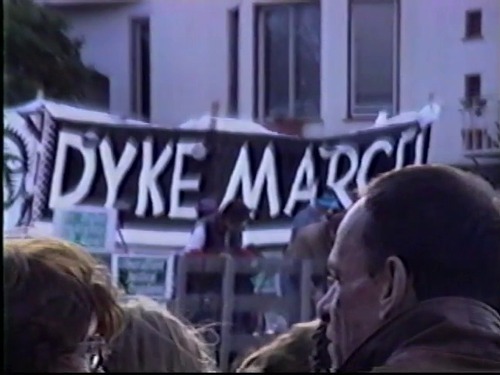
San Francisco Dyke March and Gay Pride Footage, 1995
This footage shows events and gatherings from the third annual San Francisco Dyke March on June 18, 1995, themed "A World Without Borders." It includes several women giving brief speeches before the march begins on topics such as domestic violence and gay communities in South Africa. California State Senator Carole Migden and Assistant Secretary of Department of Housing and Urban Development Roberta Achtenberg appear in the march. At the end of the march, Achtenberg gives a speech and the singer Rozalla performs. -
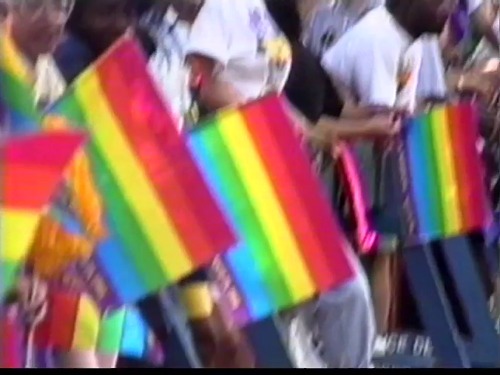
Gay Pride Parade New York City, 1993 (Part 2)
Raw footage of the the Gay Pride Parade in New York City near Washington Square Park. Includes shots of spectators and parade participants including the Gay Police Association, RuPaul, Love Lounge, New Jersey Lesbian Coalition, The Eulenspiegel Society, Parents and Friends of Lesbians and Gays Long Island, Senior Action in a Gay Environment (SAGE), the Hetrick-Martin Institute, People With AIDS Coalition (PWAC) and PWAC Mother's Support Group, AIDS Resource Center, Community Health Project, The Village AIDS Programs, and Gay Men's Health Crisis. "Boycott Colorado" signs are present throughout, referencing Colorado's 1992 ballot Amendment 2 that prevented protected status under the law for homosexuals or bisexuals. -
Don't Ask Don't Tell Protest Footage
This video is documentation of a demonstration protesting Don’t Ask Don’t Tell. The protest occurred on September 23, 1993 outside a fundraiser for the then prospective mayor of New York David Dinkins in which Bill Clinton was speaking. This segment combines raw footage artifacts with more formal documentation of the chants, and informal interviews with the participants. The last portion of this video shows police attempting to forcibly remove demonstrators. -
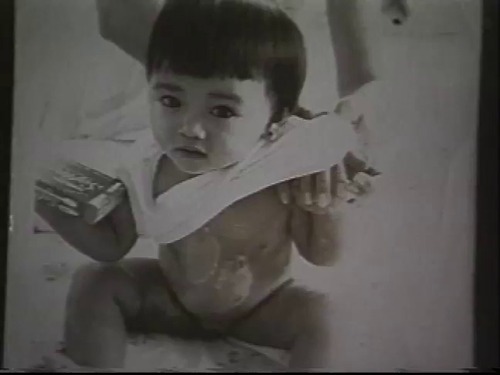
I Was a Lesbian Child [Desireena Almoradie]
In this segment of I Was a Lesbian Child, Desireena Almoradie shares photographs from her childhood in the Philippines and stories of her life while growing up there. -
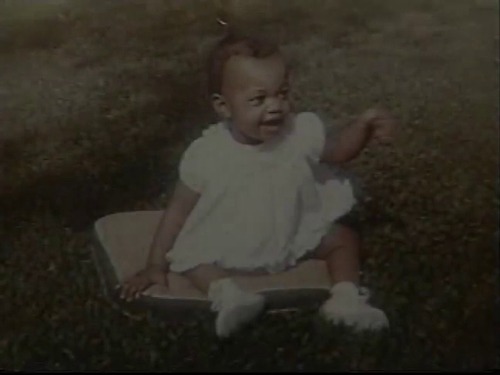
I Was a Lesbian Child [Jocelyn Taylor]
In this segment of I Was a Lesbian Child, Jocelyn Taylor shares photographs from her childhood and stories of her life while growing up. She shares a memory from when she attended Duke Ellington School of the Arts in Washington DC. -
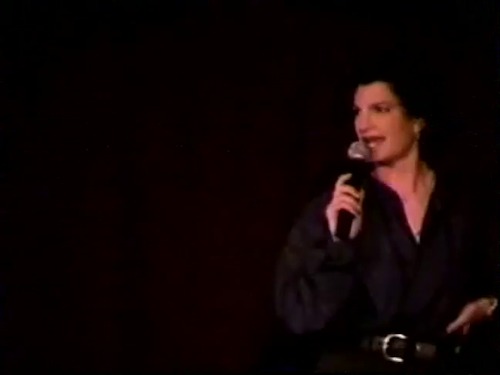
Georgia Ragsdale Interview
This video features comedian Georgia Ragsdale. The video includes clips from an interview and stand up footage from one of Ragsdale’s performances. She discusses the way she approaches her work and being out as a comedian. Ragsdale explains that for her, “Being out as a comic isn't a choice, because as a stand up comedian all you have is your worldview, your perspective on life and your life and the people around you, so I don’t see how you have a choice to be in or out if you're a stand up comedian.” She also reminisces about her first hour long show when circumstances forced her to come up with enough material in a very short period of time.
-
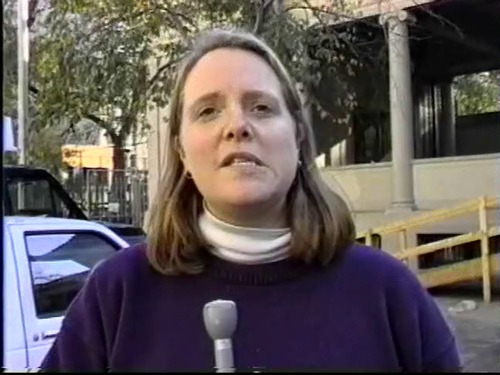
Discrimination at Clark's Corner Restaurant
A woman reports about discrimination and threats she and her girlfriend faced when they kissed at a restaurant in Brooklyn Heights. She talks about the “kiss in” she and the Lesbian Avengers were having restaurant in protest. She also talks about plans to file a police report and take legal action if possible. -
Dyke TV Episode
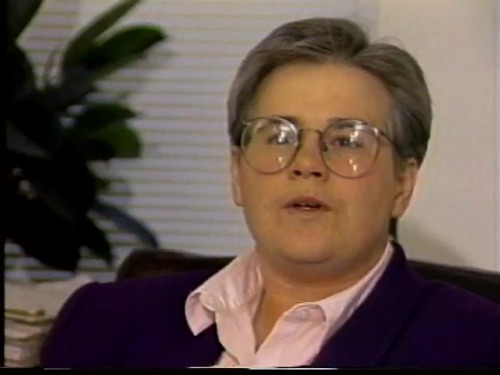
This video serves as a valuable resource to understand what a full episode of Dyke TV would have looked like when it aired. In addition to a segment titled, “From the Archives,” which spotlights the experience of lesbians in Harlem, and further illustrates the community presence outside of the well documented activism surrounding Stonewall. Next was an “Arts” segment, in which filmmaker Su Friedrich discusses her background and experience making films. Finally, there are two segments of “I was a Lesbian Child,” a segment which is represented in clips on this site. These segments aimed to normalize the lesbian experience; interviewees discuss their childhoods and showcase childhood photos. The video closes with credits, contact information, and a Public Service Announcement about street harassment.Tags Anna Maria Simo, Archives, Art, Children, Humor, Linda Chapman, Mary Patierno, Media, Su Friedrich -
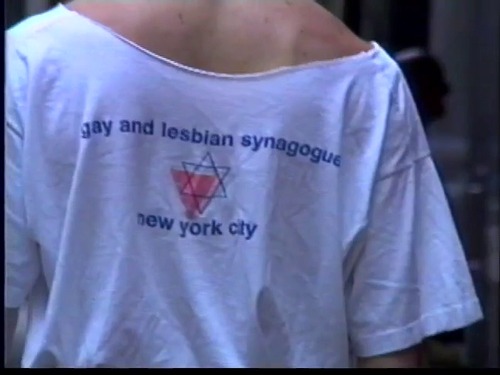
Gay Pride Parade New York City, 1993 (Part 1)
This clip shows archival footage of the New York City Gay Pride Parade on June 27, 1993. This particular parade represented the 25th anniversary of the Stonewall Riots. It was also taking place at an apex for the movement against Don’t Ask Don’t Tell, banning out gay people from military service. Participating groups include the Lesbian and Gay Big Apple Corps, the Lesbian Avengers, the Women's Action Coalition, the Gay Veterans Association, and the Lesbian Herstory Archives. Also seen marching is politician Ruth Messinger and comedian/performer Lea DeLaria. -

Dyke Marches, 1993-2001
This video is a compilation of edited footage of Dyke Marches from 1993-2001: the 1993 Dyke March in Washington D.C.; the 1993 Dyke March in New York City; the 1994 Dyke March in New York City; the 1995 Dyke March in New York City; the 1999 Dyke March in New York City; the 2000 Dyke March in New York City; and the 2001 Dyke March in New York City. The video includes interviews with lesbians and individuals who are participating in the Dyke March and studio interviews with Kelly Cogswell, Maxine Wolfe, and Marlene Colburn. Lesbians participating in the march express their need for visibility, civil rights, and liberation on all fronts. -
Being a Lesbian Woman in Yugoslavia
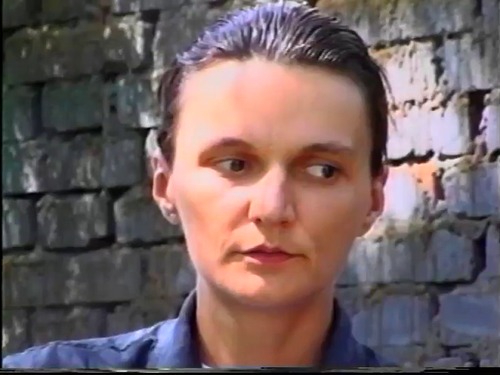
This is an interview with Jelena Topalović* about being a queer woman in Yugoslavia during the Yugoslav Wars. She discusses nationalism of the Serbian government, women’s rights, and social attitudes toward homosexuality. Topalović discusses the role of women in Serbian society- that of the mother and the nurturer, and how being a lesbian places people outside that paradigm. She also discusses the government campaign to ban abortion, explaining that this makes lesbian women 'useless' members of society because they do not fit into a nationalistic image that a woman's purpose is to bear children to increase the Serbian population. While she notes there were no specific bans in place against lesbians, the government could still make life very difficult for them. She then discusses Arkadia, Serbia’s first Lesbian Lobby, in which she provides a space for women to gather and discuss issues that affect them, and how to fight misconceptions about lesbianism propagated by the government, and social stigmas against lesbians and single women.
*Name changed for privacy
-
Maria Maggenti Interview
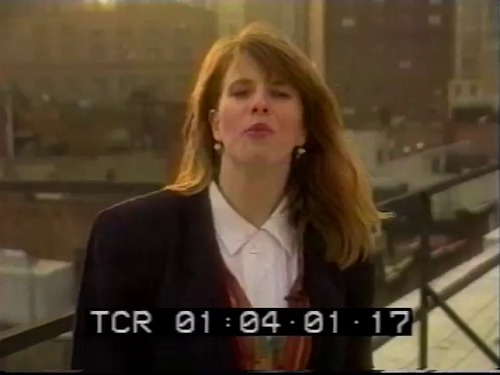
This segment shows a short interview with filmmaker Maria Maggenti about her 1995 film The Incredibly True Adventures of Two Girls in Love. Maggenti first developed the script of the film as a project for NYU’s Graduate Film Program, but abandoned it after several years of trying to work through much darker themes. She explains that, while the film deals with highly politicized topics like coming out, and interracial relationships, the film’s tone remains light and comedic. In this segment, Maggenti describes the making of the film, which included a crew that was entirely women, none of whom were paid; rather, she explains the film provided women the opportunity to expand their careers in the industry. The film was released on June 16th, 1995, and distributed by New Line Cinema. It also participated in several film festivals in 1995, including Sundance.
-

Linda, November 19, 1978 (Tape 2)
Linda discusses work and how her coworkers knew that she is a lesbian, which did not bother them. She recalls beginning to wear men's clothes to work in the 1970s when women began to wear pants. Linda discusses her relationship, and how her life centers around her lover. She believes that the younger generation is less monogamous than hers. Linda also discusses butch and femme dynamics in relationships.
The sound quality is poor in the beginning. The tape cuts off abruptly at the end. -

Linda, November 19, 1978 (Tape 1)
Linda talks about her relationships and the idea there are no longer clearly defined lesbian roles (i.e. butch and femme) in relationships, as there were when she first came out in the 1960s. She describes her family life growing up and when she came out to her family. -

Speaking to the Future: 1978 Lesbian Regional Conference (Tape 2)
Part 2 of interviews addressed to "lesbians of the future" conducted by the Lesbian Herstory Archives at the 1978 Lesbian Regional Conference. Among the subjects discussed in the interviews include coming out, lesbian bars, racism against lesbians of color, representations of violence against women, feminism, and older lesbians. -

Speaking to the Future: 1978 Lesbian Regional Conference (Tape 1)
Part 1 of interviews addressed to "lesbians of the future" conducted by the Lesbian Herstory Archives at the 1978 Lesbian Regional Conference. Among the subjects discussed in the interviews include coming out, lesbian fashion, older lesbians, chosen names, homophobia, and racism against lesbians of color. -
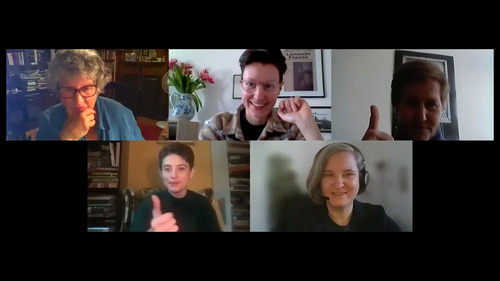
Honoring Lesbian-Queer Archiving: Online-Talk with Joan Nestle
A talk with Joan Nestle, co-founder of the Lesbian Herstory Archive, about the history and importance of lesbian archives and queer archives, along with her personal history. The discussion covers many topics in Joan's life and current activities within lesbian archives. -
