
Browse Items (771 total)
Sort by:
-

-
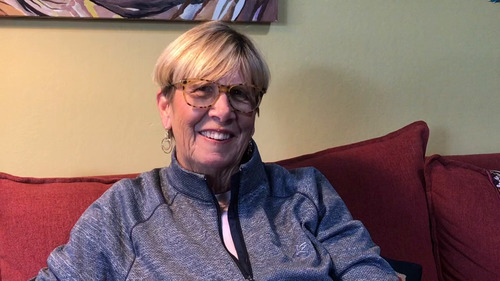
Renee Archer Interview
In this oral history conducted by the Rossmoor Lesbian Social Club, Renee Archer discusses her early feelings for other women, moving to California from Detroit, her marriage to a man and eventual coming out process, her involvement in activism, her work as a teacher, the importance of community, and her feelings about gender identity. -
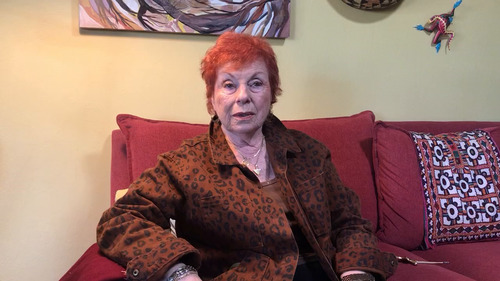
Nicole Schapiro Interview
In this oral history conducted by the Rossmoor Lesbian Social Club, Nicole Schapiro discusses her founding on the Bay Area Career Woman group, her family, her coming out process, and her work as a professional speaker and coach. -
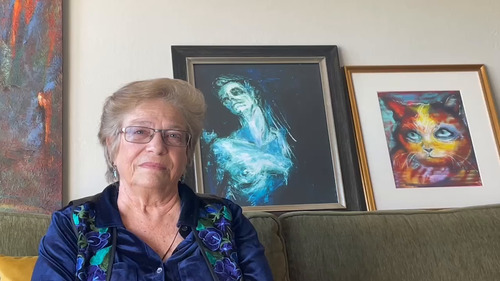
Judy Schavrien Interview
In this oral history conducted by the Rossmoor Lesbian Social Club, Judy Schavrien discusses her involvement in the feminist women’s movement, her relationships, her work as a professor and a psychotherapist, her move to the Bay Area, and her opinions of the lesbian community in Rossmoor. -
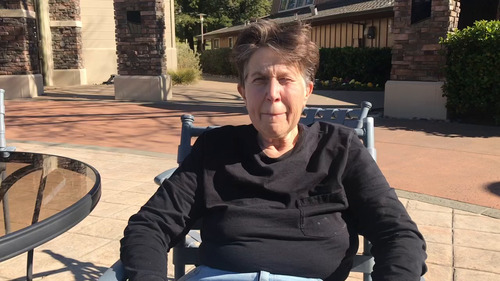
Judy Greyboys Interview
In this oral history conducted by the Rossmoor Lesbian Social Club, Judy Greyboys discusses her coming our process, here involvement in the Philly lesbian and political scene, her move to the Bay Area, involvement in activism and non-profit work, her work and travels as a musician, and the importance of community. -
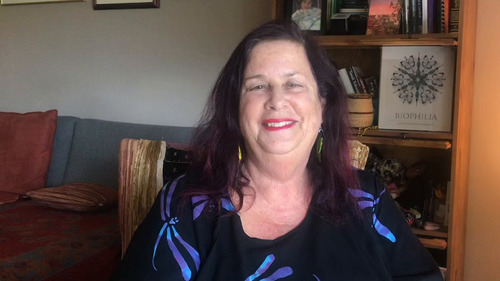
Janet Seldon Interview
In this oral history conducted by the Rossmoor Lesbian Social Club, Janet Seldon discusses her coming out process, growing up in the Bay Area, her law work, how she came to Rossmoor, the importance of Lesbian Community. -
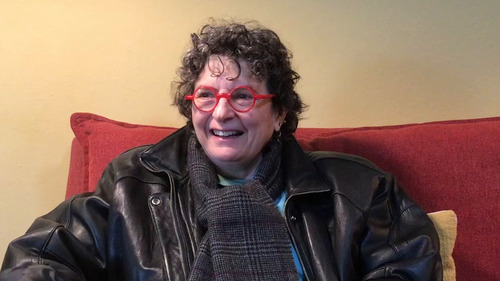
EJ Koch Interview
In this oral history conducted by the Rossmoor Lesbian Social Club, EJ Koch discusses her upbringing and family, her coming out process through her first marriage, the book she is writing with a colleague, and how she arrived at Rossmoor. -
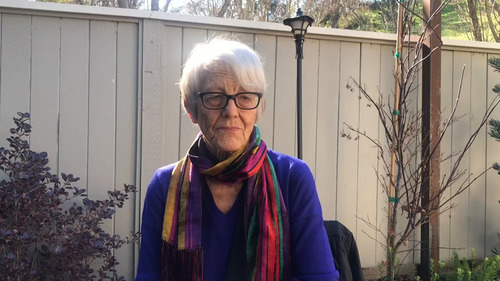
Carol Newhouse Interview
In this oral history conducted by the Rossmoor Lesbian Social Club, Carol Newhouse discusses her family history, her travels and life living around the in Puerto Rico, New York, and France, and her eventual move to the Bay Area and then to Rossmoor. -
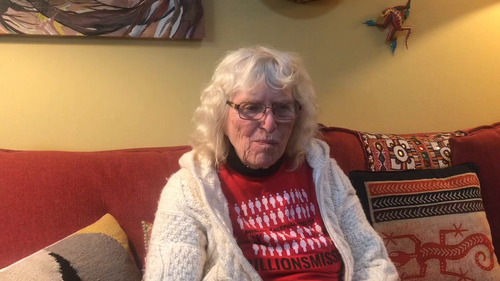
Bobbi Ausubel Interview
In this oral history conducted by the Rossmoor Lesbian Social Club, Bobbi Ausubel discusses her early life and family, her coming out process, the RLSC community during Covid and her experience with the second wave feminist movement and feminist liberation theater. -
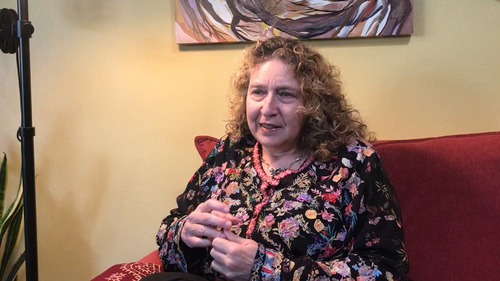
Amy Klitsner Interview
In this oral history conducted by the Rossmoor Lesbian Social Club, Amy Klitsner discuss her family, early life, her realization that she was a lesbian, her coming out process, and finding community with other women and lesbians. -
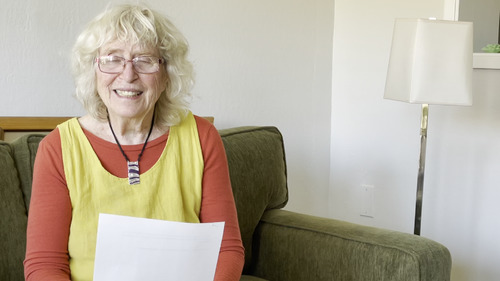
Rossmoor Lesbian Social Club Introduction Video
In this video, members and past presidents of the Rossmoor Lesbian Social Club give an introduction to their group and their oral history project. They discuss the history and growth of the group and their place in the larger Rossmoor community, and detail the events their group puts on. -

Susan Abod Interview
Susan Abod is interviewed by Ruth Scovill. The tape starts in the middle of a conversation. Susan talks about women’s rock music as the antithesis to “cockrock,” or rock music for and by men. She discusses her journey of auditioning and joining bands, and being influences by socialism, feminism, and how she joined a political band of women. (Some audio distortion). She talks about rewriting song lyrics, the concepts of straight-baiting, utopian politics, and differences between women’s music and feminist lyrics in music. Around 49:30 the narrator changes, and the topic changes to the Woman’s Coffee Coven, which later became a production company. This may be the predecessor of Olivia Records. -

Sally Piano Interview (Part 3)
Sally Piano is interviewed by Ruth Scovill. Sally talks about her distrust of the government, including phone-tapping, spying, and the CIA. She addresses mainstream musicians of ripping off minority culture, including lesbians by men in power. She shares views on women’s music as alienating male audiences, intended to create space for women-only, as well as differences between straight and gay audiences. She discusses issues of maintaining an ethnic name as a performer, and how she came about using a stage name. Sally touches on themes of separatism in the women’s and lesbian movements. Part 3 of 3. -

Sally Piano Interview (Part 2)
Sally Piano is interviewed by Ruth Scovill. Sally talks about her relationship with her audience as a performer. She addresses difficulties with men in the women’s music scene, as well as appropriation and criticism. Part 2 of 3. -

Sally Piano Interview (Part 1)
Sally Piano is interviewed by Ruth Scovill. Sally discusses her early life, including her ethnicity, and racial identity. She mentions how learning the piano and music led her to the women’s movement, and feminist music. Part 1 of 3. -

Olivia Records Interview (Part 2)
Jennifer Woodul and Ginny Berson, founders of Olivia Records, are interviewed by Ruth Scovill. Jennifer and Ginny continue to talk about women’s autonomy in the lyricism of women’s music. They talk about their views on music production and concerts as places of political organization. They attempt to self-define what “women’s music” means to them, while acknowledging the classism in the music industry. Part 2 of 2. -

Olivia Records Interview (Part 1)
Jennifer Woodul and Ginny Berson, founders of Olivia Records, are interviewed by Ruth Scovill. Jennifer Woodul and Ginny Berson talk about their band and production studio, Olivia. The recording starts mid-sentence. They discuss recording music and starting a music studio. They talk about how they met at The Furies Newspaper, and the need they seen for women-owned businesses, and issues with capitalism. Part 1 of 2. -

Margie Adam Interview (Part 4)
Margie Adam is interviewed by Ruth Scovill. Margie talks about the value of women musicians as speaking out for women’s communities. She discusses the roles of feminism and autonomy in women’s music. Margie talks about what it is like to be a traveling musician, and bands on tour, acknowledging that most women musicians at the time are soloist, white, middle-class women. She talks about trying to be accessible to audiences through music. Part 4 of 4. -

Margie Adam Interview (Part 3)
Margie Adam is interviewed by Ruth Scovill. Margie continues the interview, discussing her song-writing style, and musician performance technique. She is passionate about music for social change, and talks about difficulties making a living as a performer, specifically focusing on the financial responsibilities as a musician with women audiences. Part 3 of 4. -

Margie Adam Interview [Redubbed]
Margie Adam is interviewed by Ruth Scovill. Margie performs music, woven between interviews, in this redubbed interview. She discusses women’s music as not being mainstream music, as well as the politics of women’s music, and need for women’s production companies. She mentions the importance of networking with women-owned companies and businesses. Redubbed. -

Discussion on Waitressing
Recording starts with an introduction from the Feminist Radio Network, with female vocalizing, singing, and performing. The recording then begins to talk about women in the food service industry, and the statistics of how many women are waitresses. Upon interviewing a waitress, the conversation moves towards the low wages, and need for unionization in waitressing, since there is such a reliance on tips. Segueing through empowering music, the discussion shifts to women’s speeches, performances and testimonies on women’s liberation. The recording then moves on to a panel with Maxine Kumin, Grace Paley, and Alice Walker, discussing their thoughts on women’s writing. -

I Ain't Gonna Testify
Emily Hixon introduces the topic of grand jury abuse. Through interviews, testimonies, and conversation, they discuss how grand juries can attack political activists and their organizations. They also examine women’s politicized folk music, as well as trial tactics and strategies. They theorize about the intentions of the FBI, lawyers, legal organizing, and the federal government. -

Discussion on Sexual Abuse of Children (Incest)
Interviewee discusses the statistics of child sexual assault, and how they are not reported accurately. They claim that girls face more assault than boys, but much of it goes unreported. Conversation circles around parental assault, parental protection, and social services. The host and interviewer talk about the role of the patriarchy, victim denial, abuse, and the need for child abuse education for children. They advocate for child’s rights, and children’s need for peer relationships. -

Explorations in Self Help
John Cooper hosts "Explorations in Self Help," with guest Carol Sims. Carol talks about her new book, The Re-entry Game, a book for women dating post-divorce, published by Warner Books. She talks about the rise of the financial and socially independent woman, as influenced by Women’s Liberation, and life post-Women’s liberation. She touches on post-divorce topics like custody battles, and self-love. Recorded by KCRWM Santa Monica. -

Discussion on Battered Women, Wife Abuse
Interviewee discusses helping a domestic abuse victim retrieve their personal belongings, and shares statistics on reported domestic abuses. -

Holly Near Interview
Holly Near is interviewed by Ruth Scovill. Holly talks about her early life, and influences that led her to the women's movement. She talks about anti-imperialism, the role of women’s music, and her criticism within the women’s movement, along with influences in art and politics. -

Straight Talk About Lesbians, 1980
An educational film strip about lesbian women in which several speak frankly about who they are, as well as their culture and history. Features women discussing their experiences, histories, and perspectives as lesbians, including coming out and living in a homophobic society. Also features discussions with children about their experiences having lesbian parents, as well as with the parents of lesbians. Notable is the discussion of lesbian music, with many songs played throughout.
Video restoration created by digitizing two filmstrips and accompanying cassette tape and assembling through computer video editing program. -

Margie Adam Interview (Part 2)
Margie Adam is interviewed by Ruth Scovill. Margie talks about the Women’s Movement, and the National Womens’ Music Festival in Champaign-Urbana. She discusses definitions for women’s music, feminist music, and her song writing. Part 2 of 4. -

Margie Adam Interview (Part 1)
Margie Adam is interviewed by Ruth Scovill. Recorded April 1, 1976. Margie speaks about growing up with music in the home, and the role of music in civil disobedience. She mentions being deeply affected by tragedies of the day, including the Kent State Massacre, and how it informed her relationship with music, and later moving to California. Part 1 of 4. -

Stephanie Singer Interview
Recording of a Zoom event "Life Passages" where Stephanie Singer speaks on her experience as a transwoman and a Lesbian and discussed her early life, her coming out, and her family dynamics. After Stephanie speaks, there is a Q&A with other people on the Zoom meeting who are part of the Rossmoor Lesbian Social Club. -

Mabel Hampton Tapes transcripts
A two-volume transcript of several tapes in the Mabel Hampton Oral History collection. In addition to tape transcriptions, the volumes include notes and other annotations by Joan Nestle and Sara Atatimur. The final pages of volume two also include Joan Nestle's article "I Lift My Eyes to the Hill: The Life of Mabel Hampton as Told by a White Woman;" Mabel Hampton's obituary in the New York Times; and a draft of Joan Nestle's article "Her Spirit Soars Above Us." -

Ti-Grace Atkinson, Theories of Logic (Tape 1)
Part 1 of the recording of Ti-Grace Atkinson, a writer and philosopher who was part of the Women’s Movement in the 1970s, discusses elements of logic and different academic theories around logical thinking. She connects these elements of logic to oppression and the Women’s Movement. Part 1 mainly covers abstract theories of logical thinking. -

Lesbians in the 1970s Civil Rights Movement
Marcia Danub and Linda Daniels speak with Eleanor Cooper, spokeswoman for Lesbian Feminist Liberation, and Jean O'Leary, Legislative Coordinator, Board for the (then) National Gay Taskforce. LGBTQ+ and women’s rights activists were looking to repeal laws criminalizing homosexuality. Sodomy bills in the 1970s were explicitly written to target gay people, causing fear in the LGBTQ+ in their professional and personal lives. Intro 554 was one of many forms of the NYC Gay Rights Bill, which was passed in 1986, banning discrimination because of sexual orientation. Cooper and O'Leary provide information about the way these laws affect the lives of lesbians and how to participate in the repeal of sodomy laws and support the passing of Intro 554. -

Women Writers
The radio episode, which is part of the Feminist Radio Network, includes recordings from a conference panel which included the writers Maxine Kumin, Alice Walker, and Grace Paley. They discuss the challenges of being women writers, how their writing processes are affected by societal gender norms, and how important women’s stories are within the individualistic, middle-class American society where female bonding is not encouraged. This episode also includes excerpts from Living, by Grace Paley, and Everyday Use, by Alice Walker. -

Feminist Workshop: Gender Issues
Discussion of domestic relations, and how a woman agrees to certain terms when she gets married. Women do not know what they are agreeing to. They know what it is, but they do not want the details. There is a discussion of how women are programmed to inherently undermine their own thoughts, and to label them as “feelings” as opposed to facts. Further discussion on how gender issues are defined. -
Seneca Falls Radiodrama
The Seneca Falls radiodrama is a brief overview of what led to the first Women's Rights Convention in Seneca Falls, New York, 1848. The convention, now called the Seneca Falls Convention, was held in order to converse about the liberties that women do and do not have, be they civil, social, political, or religious. The recording introduces listeners to Lucretia Mott and Elizabeth Cady Stanton, two prominent members of the women’s rights movement at the time. A reading of the Declaration of Sentiments, which outlines the civil, social, political, and religious rights of women, as well as various quotes, are included in this recording. -

Lesbian Singer and Political Prisoners
This untitled interview features a guest who discusses her time in prison, the songs she wrote about another incarcerated woman, songs she wrote for political prisoners including Lolita Lebron and Susan Saxe, and conditions of the women’s prison which she was subjected to. She talks about how the state justified the horrible conditions at the prison, and the lack of access to any kind of rehabilitation programs, despite rehabilitation being the supposed purpose of prison. -

Learning to Fly, Sports
Thoughts on athletics as they exist in America, and the pressure to develop oneself physically. In this radio show there is a reclamation of the “physical you.” There is also a discussion of how sports have become controlled by big business interests, they are now a plaything of the rich. This dehumanizes athletes, causing them to strive for only what can make them rich. Women's sports don't get much spectatorship and consequently don't get promotion or funding. The guests discuss how sports have also become a masculinity rite, and how winning is associated with proving one’s virility. On the other end, women athletes are pressured to prove their femininity in a masculine field. The emphasis on winning destroys athletes' bodies and spirits. Coaching forces athletes to be disciplined and to accept commands unquestioningly. The upward social mobility of sports is an illusion, and can only benefit a small portion of women and POC. The athletic system in this country is elitist, and little encouragement is given to amateurs and women. Black and women athletes have been challenging institutional sports in America. -

Casse Culver and Others Music and Poetry Performances
Women perform poems and songs, including “Ode to a Gym Teacher” by Meg Parker. -
Ti-Grace Atkinson, Theories of Logic (Tape 3)
In part 3 of the recording of Ti-Grace Atkinson, she continues her discussion on the elements of logic. In Part 3, she further discusses different social movements and their analysis of their own oppression. -

Ti-Grace Atkinson, Theories of Logic (Tape 2)
In Part 2 of the recording of Ti-Grace Atkinson, she further discusses elements of logic. She connects these elements of logic to oppression and the Women’s Movement. She starts to connect the abstract elements of logic to social issues and includes a discussion of the class system based on the writings of Karl Marx. -

Olivia Records interview with Marcia Danab
In this interview, Marcia Danab, the host, talks to two members of Olivia Records: Ginny Berson, and Meg Christian. Berson and Christian talk about how they created their record label, as well as the challenges that they faced as a company made by women for women. They both talk about the struggles that they have faced in the music industry as women in regard to gaining ownership, being paid, being taken seriously as artists, and making music that is specific to the female experience and understanding. Olivia Records was founded in 1973 and played an important role within the gay rights and counterculture movements of the time. Notable artists they represented were Tret Fure, Kay Gardner, Leslie Ann Jones, BeBe K'Roche, Pat Parker, and Cris Williamson. Due to declining sales, Olivia Records became Olivia Cruises and Resorts, a lesbian vacation company, in 1990. -
Goddess, Mythology, and Ancient Matriarchy
In this program there is a discussion on the earliest myths on the creation of the universe, and goddess creation myths. There is a discussion of ancient matriarchal culture, and its survival as wicca/witchcraft. It pays homage to women who were hanged under accusations of witchcraft. The goddess is synonymous with gynocracy, and women participate in the divine. -

The Franny Chicago Play
This production from Radio Free Women is an interview with Judith Katz, playwright, and Betsy Toth, director, of the Franny Chicago Play. The play revolves around the suicide of Franny Chicago, a lesbian who lives with her partner and a roommate, who is also a lesbian. Katz and Toth speak about the struggle of accurately portraying lesbian life while not turning it into a spectacle. In addition, they talk about the importance of feminist representation in theater. -

Margaret Sloan
Sloan is the President of the National Black Feminist Organization. She discussed NBFO’s mission to provide an organization for black feminists who felt the need to fight both sexism and racism at the same time. She discussed the formation of the organization and the eastern conference on black feminism. -

Lee Brown: Streetology
Lee Brown is a black woman and an ex-offender, but says “none of the three overlap with each other”. Brown's conversation with Colivia Carter is an discourse touching on themes of intersectionality before the framework had its name. Brown reads poetry she calls “streetology” about her experiences with prostitution, incarceration, and black families. -

A New You: The Laura Grey Way
A New You: The Laura Grey Way, hosted by John Cox and Laura Grey, is a weekly radio show that talks about beauty, skincare, and health. In this two-part recoding, the hosts are interviewing Betty Morales, the president of the Cancer Control Society. These episodes specifically focus on the idea of cancer as a nutritional deficiency condition, with Morales promoting the use of Laetrile, also know amygdalin, as a way to 'control' cancer in patients. However, the FDA has never given approval for laetrile to be used in the United States.Tags Radio -

Jill Johnson on Lesbians in the Women's Movement
Columnist for the village voice, feminist, Jill Johnson discusses the role of the feminist lesbian within the larger movement of women’s liberation. Johnson discusses the variations in the NYC lesbian experience, and the relationship they have with straight women, and the overarching culture at large. She discusses the contributions that a lesbian feminist can make to empower other women. -

The Furies
The Furies was a group of twelve lesbian separatists in Washington, D.C. who saw heterosexual women as an obstacle in their feminism. Heterosexuality was as cyclical, and women in heterosexual relationships reinforced their oppression by absorbing the name and values of their male partners and moving them forward. The Furies published a newspaper, The Furies, that ran from 1972-1973.