
Browse Items (771 total)
-

Megan Christian and Holly Near Concert (Side A)
Live recording of Meg Christian and Holly Near performing at 1976 LFF concert. Note: playback speed changes so there is a brief cut in audio around the 12 min mark; poor sound quality. -

Advertisements
Opens with "Reasons" by Minnie Riperton and goes into an advertisement for Sophie's Parlor. A version of the advertisement repeats but is a blooper/is incomplete. Following this, another version of the advertisement plays. Includes sped-up song and an unknown ad, as well as "Check Out Your Mind" by Chaxayn. -

Learning to Fly, Women and Alcohol
This is a Radio Free Women episode about women and alcohol, including topics such as the societal pressures that might cause women to drink excessively. The different topics are also combined with the following songs: "Lilac Wine" by Nina Simone, "Red Wine" at Noon by Joy of Cooking, "Broke Down Girl" by Buffy Saint-Maire, "Shake Sugaree" by Elizabeth Cotten, "Leftover Wine" by Melanie, "Sunday Morning Coming Down" by Lynn Anderson, "Sweet Blindness" by Laura Nyro, and "Bye, Bye Baby" by Big Brother & The Holding Company & Janis Joplin. Nikki Giovanni's "All I Gotta Do" is also included. -
Channel 26 Show, November 30, 1971
Two radio excerpts from the Channel 26 Show.
Notes: The "right track" is muffled and indistinct, but appears to contain music and a comedy program. The "left track" contains a discussion on the topic of gay liberation. -

Lesbian Pride Week '77
Discussion at Lesbian Pride Week '77 that covers topics such as political activism.
Note: This recording suffers from poor sound quality. -

Kathy Bonk and Whitney Adams, Co-Coordinators of N.O.W. Fair (August 24, 1974)
Kathy Bonk and Whitney Adams from the National Organization for Women discuss the upcoming N.O.W. Fair on Radio Free Women. The fair will feature feminist activism, panels, political discussions, and interviews. Bonk and Adams go on to talk about other aspects of feminist political activism such as income inequality and racial discrimination. -

Unused Portion of Health Show
Discusses health administrations and hospitals disregarding women's wishes when giving birth, and taking the newborn away leaving the mother to wait for days to see the baby. The show also highlights women being rushed through birth, the instrumental nature of nurses, and complications with doctors. It focuses on connecting medicine with feminist ideology to insure legal change and rights protection. -

Robin Morgan
Robin Morgan talks about the creation of the New York Radical Women group in 1967 (20-25 women), the male Left, working on the Atlantic city pageant demonstration 1968, and publishing the "Sisterhood Is Powerful: An Anthology of Writings from the Women's Liberation Movement" in 1970. She then reads a poem and uses poetry as a political tool, as well as asserts that the Women's Movement is fostering relations between different strata of US society. Morgan advocates for women to take control legally, health-wise, and become an international force. She states that rape and pornography affect all women and she depicts women as the largest and longest subjugated people. The Women's Movement will continue to prosper. -

Leadership and Class
A discussion about the differences and challenges of the women's movement by various women. Personality, class tension, diversity, stereotyping, group identity, ideas of leadership are debated. The tension between lower class women and middleclass women is described in terms of leadership styles. Lower class women have a strong female role models to grow up with, this lacks completely for the middle class women. Action is perceived as a negative male trait by the middle class women, who are not used to take action but rather prefer moderation and security. -
Sophie's Parlor
Radio Free Women/ Sophie's Parlor episode about rape in terms of legal representation and shortcomings, poor and prejudiced treatment of rape victims. Audio is poor at times. The discussion focuses on the need to implement legal changes to how rape is understood through hearings and testimonies that are very difficult experience for the rape victims. They point out the sexist, classist, and racial discriminations against victims of sexual assault (such as victims having to pay for their medical expenses after forensic collection). They talked about the availability of the Rape Crisis Center to help women in need. -
-

Drunk Tape
Radio Free Women episode about "class and culture and how it applies to the women's movement". Opens with "Good Morning Heartache" by Diana Ross. Actual audio is an interview of performing duo. A majority of the audio is consists of casual conversation amongst friends. -

From an Old House in Char[?]
Live performance of a variety of songs, including covers of "Imagine my Surprise" by Holly Near and "Take it Easy" by the EaglesTags Music -

Coalition of Labor Union Women #1
This is the same discussion as CoalitionofLaborUnionWomen_2, but without the additional music conversation. The CLUW interview also has additional questions (at around minute 21): "How can women get in touch with you?" and "How many women are involved in the DC chapter of CLUW?"
Note: Audio has static throughout -

Women's Political Education Coalition with Carol Rogers
Carol Rogers is interviewed on the broad goals and current policy interests of the Women's Political Education Coalition. Discussed topics include the 1974 Washington D.C. mayoral election, childcare, employment, the minimum wage, Crime, Women's Health, and Title 34. -

Back Alley Theatre
Elaine Heffernan (director) and Jo Meyer (lighting design) are interviewed about their work with Back Alley Theatre on "The Independent Female, or A Man Has His Pride" and "Eve Has Not Been in Paradise Yet." They discuss the state of theater in relation to feminism, politics, and social consciousness.
Note: Some parts of this tape suffer from water damage and are difficult to hear. -

Women's Businesses
An episode of Radio Free Women in which four businesswomen discuss their work. Interviewees include (but are not limited to) Susan Sojourner of First Things First, a fe-mail order house for books for women and Sue Sasser, an auto mechanic. -

Timeless Teachings of Tarot
John Cox introduces a radio show on KCRW in which psychic Tamara Hearsay [sp?] gives an astrological forecast for Aries and answers letters from the audience. -

Coalition of Labor Union Women #2
This interview/discussion opens with "Frontier" by Cris Williamson. Pat Strand and Linda Osbourne are interviewed about the Coalition of Labor Union Women (CLUW) conference. They talk about how the women's unions and the coalition got their start. The effects of the conference on local unions is also talked about. The CLUW episode ends at 27 minutes. Note: At 27:20 the audio cuts to the middle of a conversation about women in music and the different challenges that are faced in male-dominated music spaces. -

Women In Athletics (Tape 2)
Audio opens with live coverage of women's tennis, moves on to women's athletics discussion with Billie Jean King. Discrimination against women in tennis and athletics overall is a main focus, centering specifically on pay disparities and lack of social support for participation in sports at all ages. -

Women In Athletics (Tape 1)
Women are interviewed about their experiences in sports, feminism in spots, and the struggles that women face when playing sports seriously at any level. This includes brief interview with Olympic swimmer Melissa Belote following 1972 Olympic wins, and ends with Althea Gibson introduction. -

Union of Democratic Filipinos
Interview with Representatives of the Union of Democratic Filipinos at protest against Miss Universe pageant being held in the Philippines as well the Marcos regime and increasing US involvement in Filipino affairs -

Irene Young Demo Tape
Irene Young music demo tape. Vocals by Stefanie Saldana and Judith Skolnik. Track Listing: 1. The Lie / 2. Sad Song / 3. It's Good to Meet You / 4. Pleasin' ManTags Music -

Cris Williamson, Singer
Cris Williamson talks about her music and plays some songs on guitar.
Note: The tape suffers from water damage which has made parts difficult to hear and which causes some drop-outs. -

Audition Tape
Collected Auditions for Radio Free Women: Interview with Robin Morgan, Interview and poetry readings with [???] and Rita May Brown, discussion of D.C. rape hearings with selected poets from Washington D.C. Rape Crisis center, Excerpt from 1972 Radio Free Women Collage show "Waitresses". Excerpt from 1973 Collage show "Advertising"
Audio fades out and in at several points. -

Lesbian Style Project: Mariya Gorkhover
Alaina Zulli interviews Mariya Gorkhover. They discuss her family, coming out to her parents, how her style has evolved with her sexuality, how she believes she is perceived, and how she would like to be perceived (based upon her looks). -
Lesbian Style Project: Fumio Ichikawa (Disc 2)
Alaina Zulli interviews Fumio Ichikawa, part two. She reflects on her experiences of xenophobia and colonialism, particularly in the context of the six month university exchange program that she spent in London. Then, she reflects on how she came to understand her lesbian identity, the tensions between Japanese cultural norms and gendered expectations and her identity as a lesbian, and how her identity is reflected in her style. -

Lesbian Style Project: Fumio Ichikawa (Disc 1)
Alaina Zulli interviews Fumio Ichikawa, part one. First she reflects on her experiences across her childhood and adolescence; she grew up in a small town in Kanagawa outside of Tokyo, and recounts her experience of class and gender in Japan. She also describes her difficulties adjusting to the culture and language in America as a young adult after her family moved to New York when she was 17 years old. -

Lesbian Style Project: Anonymous Interviewee
The interviewee recounts her experiences growing up lesbian and intersex in Brooklyn and Manhattan. She discusses the lesbian community, the ballroom scene, workplace and school bullying, and her experiences working at an urban clothing company.
The interviewee's name has been withheld at her request. -

First Black Lesbian Conference
Scan of letter distributed by planning committee members of First Black Lesbian Conference, San Francisco, 1980 -

National Black Lesbian Conference
Scan of "National Black Lesbian Conference" written by Becky Bertha originally published in PLGTF Bulletin, Volume 2, Number 8, 1980. Includes Bibliography on Black Women. -

Becoming Visible: The First Black Lesbian Conference
poster on paper -

Becoming Visible: First Black Lesbian Conference
Front and Back View of Brochure -

-

-

-

-

-

-

-

-

-

“Becoming Visible: Survival for Black Lesbians”
1981 – The first conference in the eastern U.S. for Black Lesbians opens in Brooklyn, New York. It was called “Becoming Visible: Survival for Black Lesbians." -
Ruth Berman & Connie Kurtz interview with Rose Jordan, 1984
This episode of "The Lesbian Radio Show" on WBAI is an interview of Ruth Berman and Connie Kurtz by Rose Jordan. The women discuss the importance of Coming Out, the adverse reactions people might have to that news, and the reaction that one might have to their own Coming Out. They talk about working on themselves and about how doing the inner work of acceptance makes it easier for them to live in a society that might not fully accept them. Ruthie and Connie share about their practice of Co-Counseling, in which people can provide emotional support for each other by deep listing. They discuss self esteem, pride, shame, and the connection between emotion and the health of our physical bodies. They encourage people to seek help should they need it.
Ruth and Connie discuss issues with unprocessed trauma and how being triggered can cause a trauma response, unconditional love and the importance of not weaponizing love, and take calls from listeners. They talk about upcoming workshops and counseling that they offer.
Songs played during the show include "I Am What I Am" by Gloria Gaynor and "She" by Holly Near
-
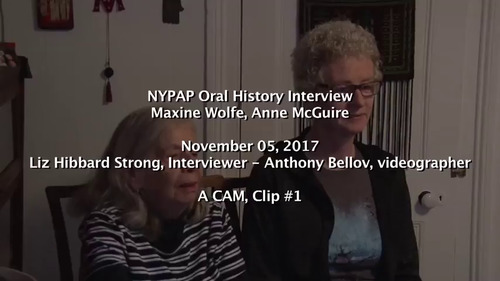
NYPAP Oral History Interview: Maxine Wolfe and Anne Maguire
Oral History conducted by New York Preservation Archive Project in which Maxine Wolfe and Anne Maguire are interviewed. They discuss their early lives, background on their family histories, and the work as activists.
The talk about the environments they grew up in, Maxine in Brooklyn and Anne in Dublin, and their early interest in, and awareness of, politics. Anne talks about the political climate of Ireland that made her want to leave, eventually winning a green card in a lottery, and moving to New York City. Anne describes meeting Maxine at a Thanksgiving Dinner through a friend, Marie, who would eventually become her partner.
Maxine discusses her involvement in various LGBTQ and Radical organizations in NYC that lead her to ACT UP. Anne discusses being part of the founding group of ILGO, the Irish Lesbian and Gay Organization, which started in 1990, and which she was part of for 10 years. She talks about ILGO's rejection from the St. Patrick's Day Parade and the publicity the group got from that.
They talk about the erasure of lesbian organizers and leadership within LGBTQ history which tends to focus on gay men, and how Lesbians had to advocate for themselves and form their own movements to be heard and to focus on Lesbian issues. They talk about Lesbian and women erasure during the AIDS crisis and how that lead them to for the Lesbian Avengers along with Ana Maria Simo, Anne-Christine D'askey, Marie Honan, and Sarah Schulman. They decided they wanted to focus on serious politics rather than cultural issues, and to not be a top-down organization. Anne and Maxine discuss the first meetings and actions of the Lesbian Avengers and talk about offering organizing help and support to other Lesbian groups around the country.
Maxine and Anne talk about the real depth of activism, and the dangerous legal and personal implications of direct actions. They discuss the importance of being part of a group and having a support structure when taking part in a direct action. Maxine talks about the learning and training and teaching that happens behind the scenes before any direct actions. They go into more detail about work they did as the Lesbian Avengers around the country, and the effect that their bottom-up structure had on small community movements.
They talk about the Alice Austen House and the fact that the Board was homophobic and hiding the queer part of that story, and work they did around protesting how the history was being handled. They discuss the importance of recovering queer histories from the 19th Century, and making gay history available to the public. Maxine talks about the role of the Lesbian Herstory Archives in preserving the history and lives of all lesbians for this reason. They talks about how visibility and survival are related for Lesbians, and the need for people to see themselves represented.
Maxine and Anne talk about seeing the fruits of their activist labor come to fruition after 25 years, and their thoughts about current acceptance of LGBTQ people as being partially related to capitalism and revenue. They discuss more recent LGBTQ history and archive projects and the celebrating of gay institutions that have survived over the past 50 years. However, through some of these projects, they are still experiencing Lesbian, Bisexual, and Transgender erasure and erasure of the history of every day people.
-
Ruth Berman, Connie Kurtz, and Karen Thompson at the National Organization for Women Conference in San Diego, CA
"Out: One Road to Empowerment" panel moderated by Dixie Johnson from National NOW Power Through Action Conference. Panel includes Karen Thompson, Ruth Berman, and Connie Kurtz.
Side 1 Ruth starts off by singing "I Am What I Am" by Gloria Gaynor and then talks about her life and knowing she was a lesbian from a young age and her journey to get rid of the same she originally felt about her sexuality. She talks about being married and having children, being in the closet, and her early relationship with Connie. She expresses the shame she first felt when being with Connie and regretting how much time she lost being in the closet. Ruth talks about going on the Phil Donahue show and the lawsuit after being denied partner benefits for Connie by the NYC Board of Education because they weren't married. She encourages the audience to undo the damage of being brought up as heterosexual women and to come out.
At 21:40 Connie speaks and talks about being a mother and grandmother, and her relationship to her family. She talks about how abuse has been perpetuated throughout her life about working through her problems and celebrating changes. Connie shares her experience of being diagnosed with cancer and her experience trying to heal herself and going into remission.
At 38:30 Karen Thompson discusses trying to be what other people wanted throughout her early life and meeting a partner who taught her how to live and be herself. She recalls not being able to admit her sexuality to herself or her partner, the car accident that her partner was involved in, and realizing she had to come out to get through this challenging time.
Side 2 The second part of this tape is a duplicate of the audio described in "National Organization for Women (NOW) NYC - Ruth Berman and Rosemary Dempsey" -
Ruth Berman and Connie Kurtz on the Michelangelo Signorile Show, 2003
Episode of the Michelangelo Signorile Show on Sirius OutQ which aired July 20, 2003 in which have Ruth Berman and Connie Kurtz to talk about their life and new film “Ruthie and Connie: Every Room in the House.” At the beginning of the episode, they also talk about other people they are having on the show.
Ruth and Connie's interview starts at 10:55 and ends at 30:30. They discuss their Cotello Towers neighbohood where they met when they were both married and young mothers. There they started the "Mother's Action Committe" within their community. They talk about their own internalized homophobia at the beginning of their relaionship and their fear that they would have been found out, and the transition to feeling comfortable with themselves and their sexuality. They discuss their lawsit with the New York City Board of Education for Domestic Partnership Benifits and their apperance on the Donahue Show in 1988.
They take questions from callers which relate to being lesbian and Jewish, the community they have found there, and the importance for others around the country to find similar communities, or to create them.
After Ruth + Connie's interview the hosts discuss a NYC teen, Natalie Young, who is sueing her teacher for harasmeent over comments made about the teenagers shirt that said "Barbie is a Lesbian"and other LGBT current events. -
Ruth Berman and Rosemary Dempsey for the National Organization for Women NYC, 1991
Audio starts with Ruth Berman talking to an audience about the importance of voting as a Lesbian and as an ally, an about the importance of being political and coming out as a gay person. She touches on the role of money and legality in domestic partnerships and the need to prove them. Ruth encourages the audience to join the National Organization for Women (NOW) to amplify their voices.
10:00 mins into the tape, Rosemary Dempsey from NOW discusses the importance of legal tools to protect gay people and their families, ad how coming out is an important part of that process.
Audio ends at 13:11, the rest of the tape is blank.
-
Ruth Berman & Connie Kurtz Talk with Pride NY, 2002
Audio recorded at an event put on by Pride NY, the employee network group for LGBT individuals at JP Morgan Chase with Out and Equal Metro New York and the NY Bankers Group.
Side1
Blythe Masters from JP Morgan Chase introduces Ruth Berman and Connie Kurtz . Connie recalls feeling different from an early age, issues with shame about being different, and the necessity to challenge the system that makes people feel that way. She talks about her relationship with her family and with Ruthies Family. Ruthie talks about being a mother, coming out as a lesbian as a parent, and her illness that resulted from her internal struggle and shame related to being a Lesbian. Ruthie talks about applying for partner benefits for Connie that lead to the lawsuit against the New York State Board of Eduction and her experience working with Lambda Legal. Ruthie discusses the collective power that queer people and their allies have.
Side 2
Ruthie + Connie talk about their film and take questions from the audience. They discuss making politicians accountable during their time in office and demanding full legal acknowledgement and recognition of rights and personhood. They talk about their involvement with their synagogue, and the power of corperate and professional LGBT groups.
-
SAGE's Second National Conference on Aging: the Many Faces of Activism for Middle Aged and Old Lesbians, 2000
Audio from SAGE's Second National Conference on Aging, which took place from May 5-6, 2000 in New York, NY.
The audio starts with a conversation with a woman discussing activism, being an out lesbian parent, and atheticism and answering questions from the auidence. She talks about "The Gay Games" and the healing effect of sports for women and girls. Questions from the audience include comments on finding community at the intersection of elder lesbians and sports.
At 9:41 the audio cuts to a panel discussion with Ruth Berman and Connie Kurtz. They play a clip of Ruthie + Connie's 1988 apperance on the Phil Donahue Show. Ruth and Connie talk about their personal hsitroy and early activism, their lawsuit against the New York City Board of Education for domestic partner benefits, the importance of being political and of coming out. They also talk about oening a counceling cener in their home and issues with the Butch/Femme Bianary.
At 28:41 the audio switches to Joan Nestle speaking about the Lesbian Herstory Archives and the importance of including reords about diverse Lesbian History.
AT 33:11 a woman from the aidence speaks from the perspective of radical lesbians who have never had children or been married and about expanding the lesbian agenda in the future. She reads from a a piece she wrote called “a week in the life of a 60 Year Old Lesbian” about her activism within the lesbian community. -
Ruth Berman, Connie Kurtz , and Deborah Dickson Interview with Bay Area Reporter, 2001
In this interview with an unknown reporter, Ruth Berman and Connie Kurtz discuss their lives in context with the recent documentary about their life directed by Deborah Dickson, who is also interviewed.
Ruth and Connie discuss how they met, their early activism within their communities, being married to men and having families, and their eventual falling in love with one another and coming out as Lesbians. They discuss their relationships with their families then and now, and the importance of coming out of the closet.
Deborah talks about her process when working in this film, and how she tried to make the film for both gay and striaght audiences -
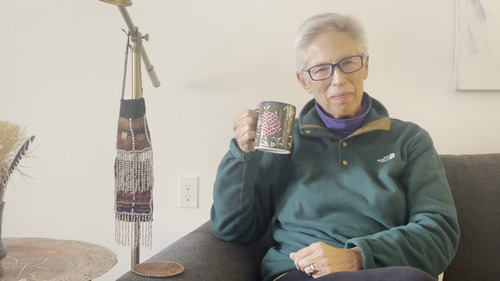
Victoria Rue Interview
In this oral history conducted by the Rossmoor Lesbian Social Club, Victoria Rue discusses growing up Catholic and her time in Catholic School and in the Convent for a short time. She talks about her first sexual encounter with a woman, living LA and then moving to New York City in 1977 to work in theater. Vitoria discusses getting a Master's of Divinity at Columbia and then a PHD in Berkley, CA and her focus on religion and the arts and exploring her identity as a Christian and a Lesbian. She talks about theater as activism, her involvement in the Women's Music Movement, and her relationship with her partner. She speaks about her relationship to both her family and her partners family. -
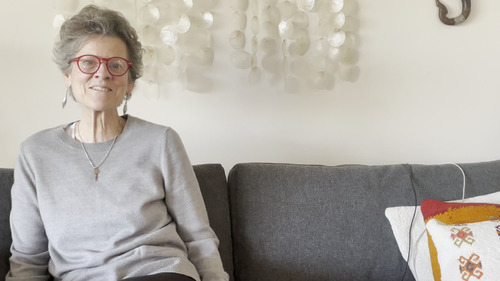
Kathryn Poethig Interview
In this oral history conducted by the Rossmoor Lesbian Social Club, Kathryn Poethig discusses growing up in the Philippines due to her parents work through the Presbyterian church and her positionality being raised there as a white person in a minority privileged position that affected the rest of her life. She talks about moving back to America and feeling uncomfortable at first with the culture as well as how sexualized things were in the US which lead to her further questioning her sexuality, her first feelings of attraction to women as an adult and her coming out process within a theological community. she talks about her feeling about various lesbian and women's groups she found herself in and moving to Rossmoor with her partner. -
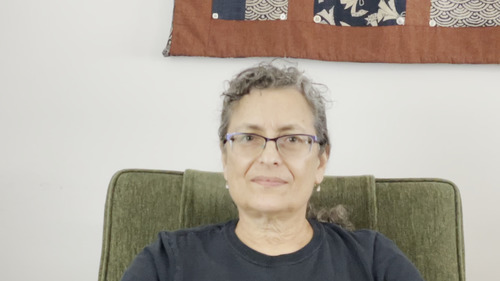
Jean Lerner Interview
In this oral history conducted by the Rossmoor Lesbian Social Club, Jean Lerner discusses being raised Jewish by very politically active communist parents, her realization in college she was in love with her girl friend, and her disillusionment with the Communism that she was raised with. She talks about being closeted in her work as a chiropractor even though she loved her job, her decision to get pregnant and raise a daughter on her own after a struggle to find a partner who also wanted to raise a child, and then meeting her partner when she was pregnant and their family growing as they adopting their son. -
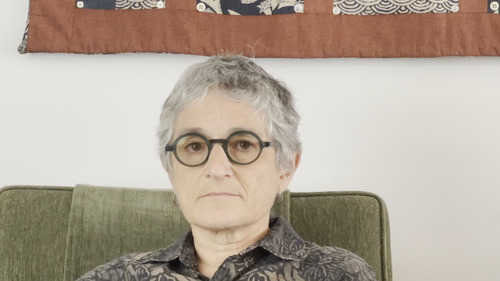
Liz Salen Interview
In this oral history conducted by the Rossmoor Lesbian Social Club, Liz Salen discusses her early feelings of attraction to girls, her experience having girlfriend at her Hebrew high school, remaining closeted through college and the beginning of law school and her ultimate coming out process and her family's reaction after her sister had also come out as a lesbian. She speaks about her work in her private law practice counseling non-profit activist organizations including OUT Week, ACT UP, and other queer focused organizations, becoming a mother with her partner's biological child, her own pregnancy journey and complications, and adopting a son. She discusses her daughters coming out to her as non-binary and moving to Rossmoor with her partner.
-
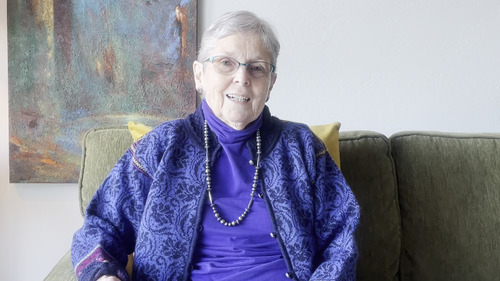
Bev Lyon Interview
In this oral history conducted by the Rossmoor Lesbian Social Club, Bev Lyon discusses her family background and history, her early feelings for other girls in High School and her coming out in her early 40s. She speaks about getting married to a man in her senior year of college and their adoption of a child together. She discusses her her first relationship with a women and breaking into the lesbians and feminist world, and her later coming out to her family amf her reations. Bev talks about her life long ilness and how that affecter her life as well as the misogyny that she encoutered in law school. She speaks about meeting her partner and her involvement with the Bay Area Career Women group. -
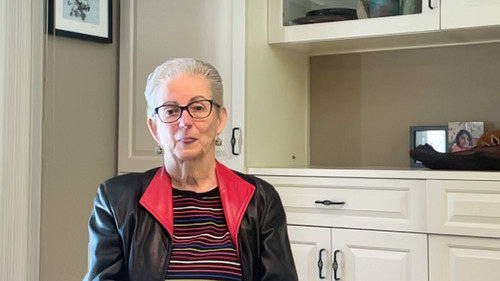
Ann Biderman Interview
In this oral history conducted by the Rossmoor Lesbian Social Club, Ann Biderman discusses her early feelings for other girls, her coming out process and mixed reactions that led her to be fearful of coming out to people. She talks about her relationship with her parents, looking for a Jewish Lesbian community in Austin, TX and eventually moving to San Francisco in 1987. Ann discusses her involvement with Bay Area Career Women, her Temple, and the National Center for Lesbian Rights. -
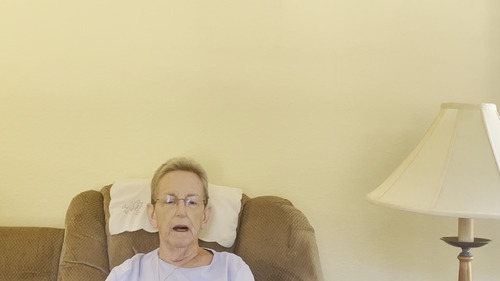
Deb Mayer Interview
In this oral history conducted by the Rossmoor Lesbian Social Club, Deb Mayer discusses her coming out process and finding lesbian community, her seven-year marriage to a navy pilot which brought her to the Bay Area, and her work in the juvenile justice system as a probation officer. She talks about her involvement in marriage equality and AIDS activism in San Francisco and also discusses moving to Rossmoor and the development of the Lesbian Social Club and the importance of friendship and community at this point in her life.
-
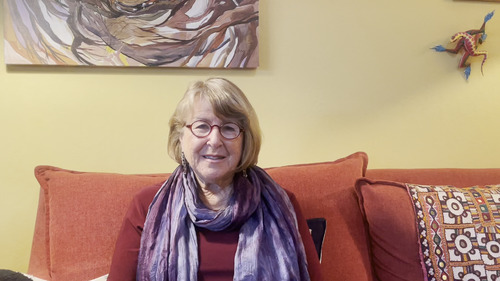
Cecelia Wambach Interview
In this oral history conducted by the Rossmoor Lesbian Social Club, Cecelia Wambach discusses her realization her being a lesbian after being married to a man, her experince of being in a convent for 10 years, teaching at a women’s college, her involvement with the civil rights and anti-war movement and her move to the west coast with her small family. She also talks about her involvement with the LGBTQ communities once she moved to San Francisco, finishing her PHD and working as a college professor at San Francisco State for 30 years, and her life long pursuit of painting.
-
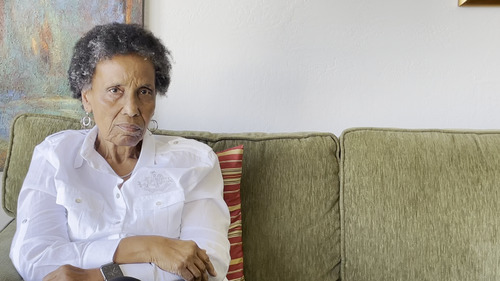
Andrea Gourdine Interview
In this oral history conducted by the Rossmoor Lesbian Social Club, Andrea Gourdine discusses growing up conservative in the bay area and the racial discrimination and segregation she and her family faced in 1940s in Richmond, CA. Her coming out process and the response from her mother. She discusses her career in HR which lead her to be the first black woman working in HR for the City and County of San Francisco where she ultimately become the director and the closeted environment of her professional work. She touches on her experience with the lesbian community in San Francisco and finding herself through that community, and later, through the Rossmoor community. -
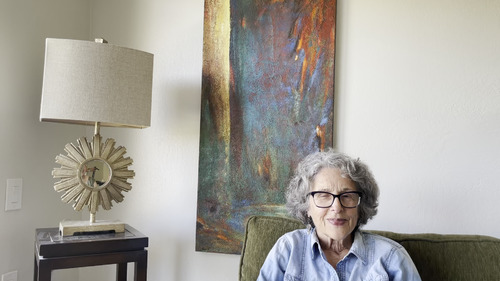
Andrea Gilbert Interview
In this oral history conducted by the Rossmoor Lesbian Social Club, Andrea Gilbert discusses her coming out process later in life and in relationship to her marriage to a man, her divorce, and her relationship to her children; as well as her family’s reaction to her coming out as a lesbian. She also discusses the impact of living at Rossmoor and the Rossmoor community on her life and her work in advocacy for the families of LGBTQ people. -
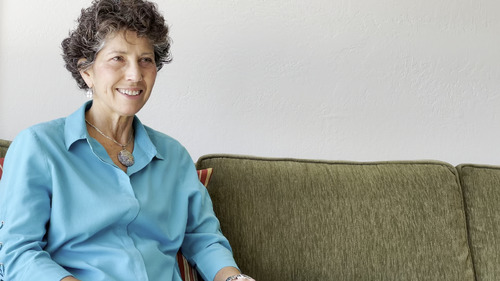
Jade Martner Interview
In this oral history conducted by the Rossmoor Lesbian Social Club, Jade Martner discusses her discusses her coming out process, both to herself at age 15, and to her mom when she was 17 which led to Jade being kicked out of the house. Moving to the Bay Area in 1988 from Arizona and finding a women’s group and community with the Palo Alto Lesbian Rap Group and in Lesbian Bars. Her work in IT management and being a Lesbian in a professional setting and starting an LGBTQ resource group at her company. -
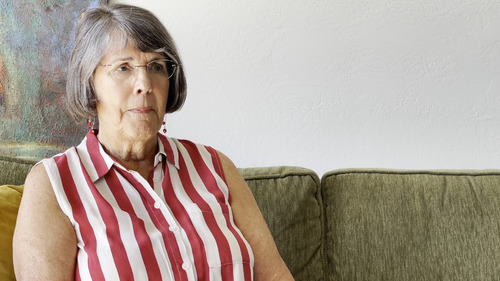
Lynn Gold Interview
In this oral history conducted by the Rossmoor Lesbian Social Club, Lynn Gold discusses being married right out of college, raising two children, their divorce after 20 years, and a second marriage to a man during which time she fell in love with a woman. She also discusses coming out later in life around the same time Ellen DeGeneres came out and that point of culture helping her come out. Despite the shifting cultural views she discusses issues that she had with some friends and family members over her sexuality and eventual marriage to a woman. She also discusses her relationship with her mother in regards to her sexuality and her mothers sexuality. -
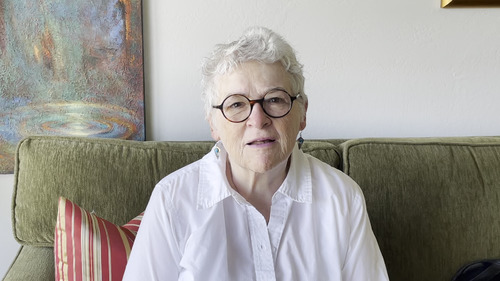
Marlene Michelson Interview
In this oral history conducted by the Rossmoor Lesbian Social Club, Marlene Michelson discusses Her early realizations of her sexuality, her work at the Oakland tribune starting in 1962 which began her 30 year career as journalist, her marriage to a man and experience raising two children, her ultimate separation from her husband, and her subsequent introduction to the lesbian scene in the Bay Area. She also discusses her late coming out after she arrived at Rossmoor and the start of the Rossmoor Lesbian Social Club. -
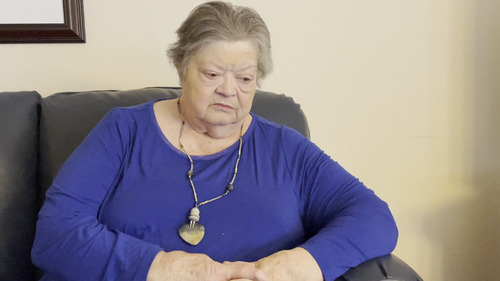
Sharon Noteboom Interview
In this oral history conducted by the Rossmoor Lesbian Social Club, Sharon Noteboom discusses growing up on a farm in the Midwest in a religious family, the influence of conservative religion through her life, her coming out process in the late 70s, her involvement with the civil rights movement and various communities in San Francisco, and teaching as an out Lesbian.