
Browse Items (5 total)
Sort by:
-
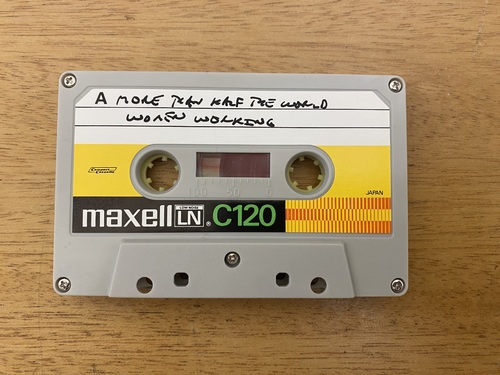
More Than Half the World - Women Working
Broadcast of More Than Half the World, noted as "More Than Half the World - Women Working" on side A and B. Judy Pasternak hosts broadcast themed around women at work. Includes excerpts from poetry, fiction, and nonfiction writing about women working. Plays music and shares updates including a fundraising plea to pay for WBAI reporters to travel to Texas for Internation Women's Day Programming. -
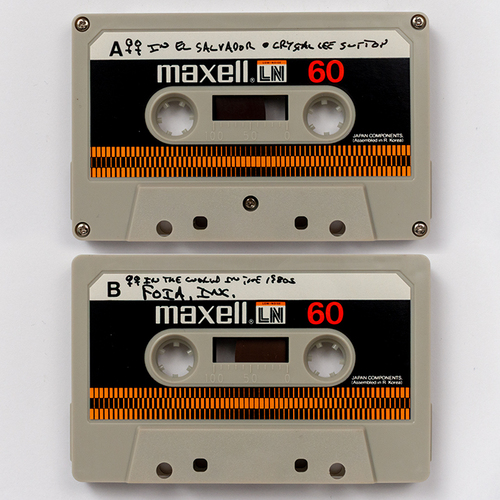
A: ♀♀ in El Salvador - Crystal Lee Sutton;
B: ♀♀ in the World in the 1980s - FOIA, Inc.Side A: Broadcast of radio show, program unknown, with cassette inscribed title “♀♀ in El Salvador - Crystal Lee Sutton”. Recording of live broadcast from a United Auto Workers (UAW) sponsored 1981 International Women’s Day event in Newark, NJ, where union activists Crystal Lee Sutton and Kathy Andrade spoke. Side B: Inaugural broadcast of Women in the World in the 1980s, inscribed title on the cassette "♀♀ in the World in the 1980s - FOIA, Inc". In this program, host Blanche Cook interviews Dr. Ann Mari Buitrago, (author: Are You Now or Have You Ever Been in the FBI Files?: How to secure and interpret your FBI files) and Kathy Engle (poet, organizer) about government efforts to destabilize progressive movements. Buitrago and Engle were the legislative director and executive director of the Fund for Open Information and Accountability Inc (FOIA) at the time of recording. -
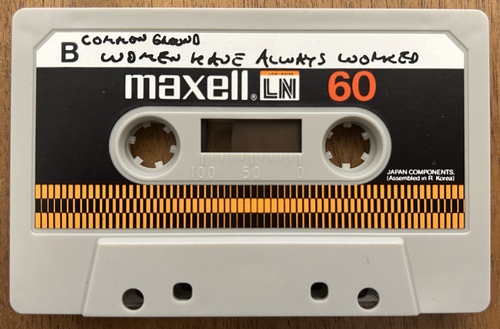
Common Ground - Women Have Always Worked
(This is side B of tape) An interview with Alice Kessler-Harris about her book, "Women Have Always Worked," published by Feminist Press. Hessler redefines "work" and also emphasizes how historically women's labor was not salaried or compenstated financially. -
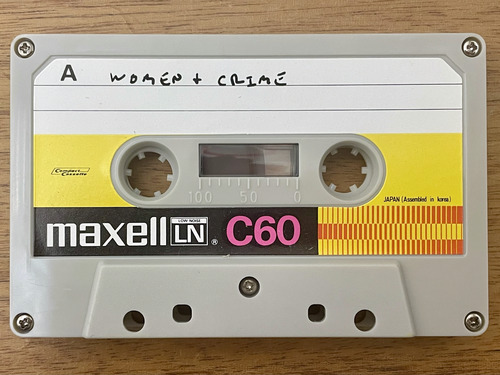
Women + Crime
Side A: In this interview, Dr. Freda Adler discusses the rise in female criminal behavior as a consequence of broader social changes, particularly women’s increased participation in public and professional life. She explains that as women gain access to new roles, they also gain opportunities to engage in crimes once dominated by men. Traditional “feminine” crimes (such as prostitution and shoplifting) are being replaced by more assertive and violent acts like armed robbery and even assassination. Adler emphasizes that this shift doesn’t stem from new motivations but from changing circumstances, and she challenges the myth of inherent female passivity by documenting the evolving cultural landscape.
Side B: This side explores how institutions—from law enforcement to the courts and prisons—have struggled to keep pace with changes in female behavior. Adler critiques the justice system’s gendered assumptions, showing how women have often received either harsher or overly lenient treatment based on outdated ideas. She also highlights discrimination in prison rehabilitation, the invisibility of women’s prison uprisings, and the psychological toll of role confusion (psychological and social uncertainty that many women face as gender roles shift rapidly) and cultural pressure. The tape closes with a call to treat women’s liberation and female criminality as separate issues, arguing for systemic reform rather than a return to traditional gender roles. -
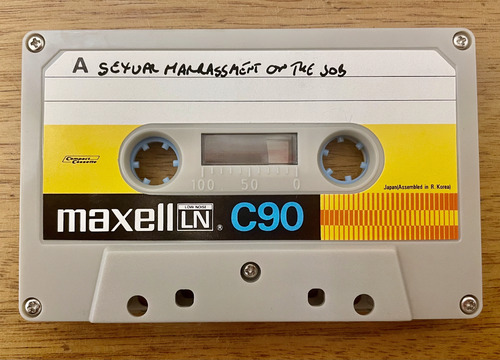
Sexual Harassment on the Job
Side A is a radio program on WBAI in New York, hosted by Viv Sutherland, and addresses the serious issue of sexual harassment in the workplace. The show consists of two central interviews: Mary Garvin, a carpenter and member of a union, and Rachel, a legal secretary, who both tell their own stories of being harassed at the workplace. Mary Garvin, a member of United Brotherhood of Carpenters and Joiners of America, Local 1204, describes her own encounters with casual and malicious forms of harassment at work on building sites, such as discriminatory treatment as a minority worker. Rachel describes a hellish experience of attempted sexual attack by her employer, a private attorney, detailing being physically restrained and assaulted in his office. The program also features phone-ins from listeners discussing different issues surrounding sexual harassment, law, and potential responses to such an event––some advocating for violent responses. The discussion touches upon the issue of complexities of building harassment cases, shortcomings in current legal protection, and the need for systemic changes to assist the victims better and prevent workplace harassment. Side B continues with call-ins. It expands on themes from the first half but brings in more emphasis on legal, economic, and cultural barriers to justice. The program ends with a call for systemic change, grassroots activism, and women reclaiming their power in courtrooms, workplaces, and daily interactions.