
Browse Items (8 total)
Sort by:
-
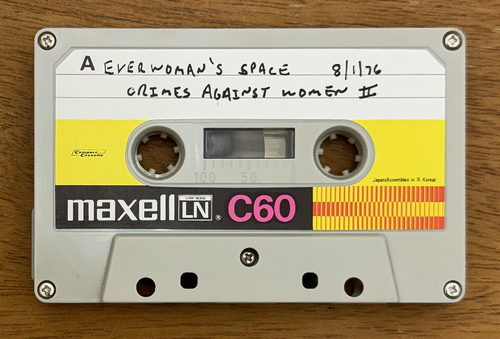
Everwoman's Space 8/1/76 - Crimes Against Women II [Side A]; Everywoman's Space 8/1/76 Violence Against Women II [Side B]
This Everywomanspace episode hosted by Irene Yarrow with guests Margaret Robinson, Yolanda Bacow, and Magna Taliswoman, focusing on violence against women. The program highlights rising rape statistics, community actions like the Women’s Walk Against Rape, and the case of Cheryl Todd and Desi Woods, two Black women punished for defending themselves. Discussion expands to systemic injustices, racism, and the importance of women’s solidarity and self-defense. -
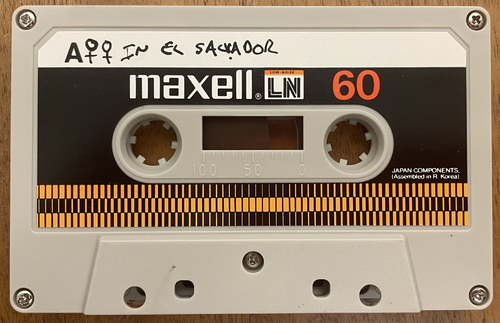
♀♀ [Women] in El Salvador [Side A]
(This is Side A of tape) Part one of a program on Latin-American women, features a recorded lecture by journalist Anne Nelson given at an International Women's League for Peace and Freedom meeting. Nelson discusses her trip to El Salvador, the paramilitary death squads, and the specific state violence done to Salvadoran women. Nelson laments how this is not being reported on or considered "news" by fellow American reporters and Washington. -
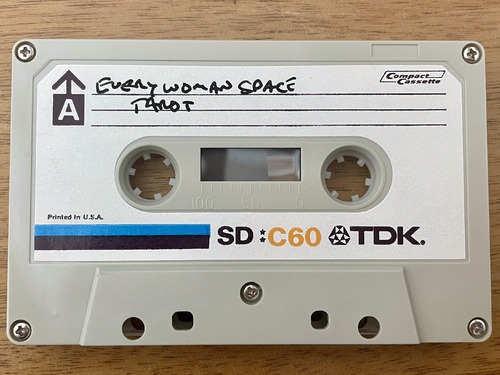
Everywomanspace - Tarot [Side A + B]
Tarot reader explains her practice and interpretation of tarot from a “subjective level.” Spirituality/tarot is positioned as a move from patriarchy. The tarot reader credits her practice of tarot to her upbringing around women, reading of feminist texts, also her mother is a witch. -
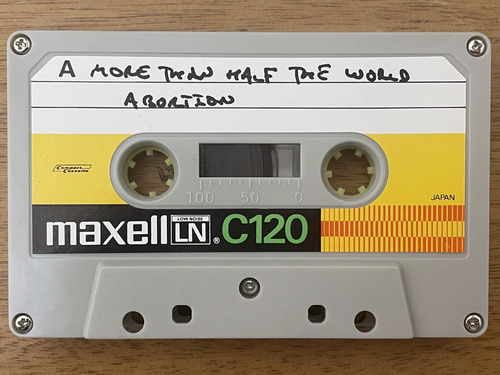
More Than Half the World - Abortion [Side A + B]
Host, Judy Pasternak, discusses abortion and the struggle for the legal right of women to have control over their bodies. In her reflection upon the legal battle surrounding this issue, Pasternak notes that the majority of the individuals making these decisions from a federal level down to its local implementation are male identifying. In her past experience and many other of the callers, the medical infrastructure and service providers were male which they felt impacted their care and the comportment of the medical team. -
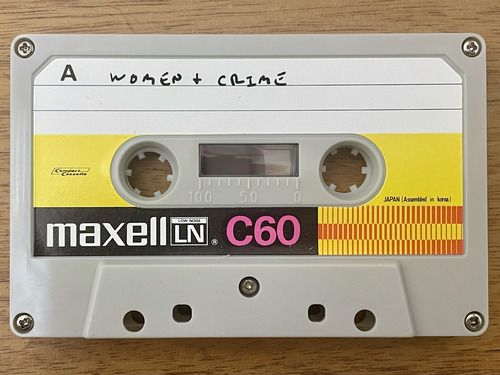
Women + Crime [Side A + B]
Side A: In this interview, Dr. Freda Adler discusses the rise in female criminal behavior as a consequence of broader social changes, particularly women’s increased participation in public and professional life. She explains that as women gain access to new roles, they also gain opportunities to engage in crimes once dominated by men. Traditional “feminine” crimes (such as prostitution and shoplifting) are being replaced by more assertive and violent acts like armed robbery and even assassination. Adler emphasizes that this shift doesn’t stem from new motivations but from changing circumstances, and she challenges the myth of inherent female passivity by documenting the evolving cultural landscape. Side B: This side explores how institutions—from law enforcement to the courts and prisons—have struggled to keep pace with changes in female behavior. Adler critiques the justice system’s gendered assumptions, showing how women have often received either harsher or overly lenient treatment based on outdated ideas. She also highlights discrimination in prison rehabilitation, the invisibility of women’s prison uprisings, and the psychological toll of role confusion (psychological and social uncertainty that many women face as gender roles shift rapidly) and cultural pressure. The tape closes with a call to treat women’s liberation and female criminality as separate issues, arguing for systemic reform rather than a return to traditional gender roles. -
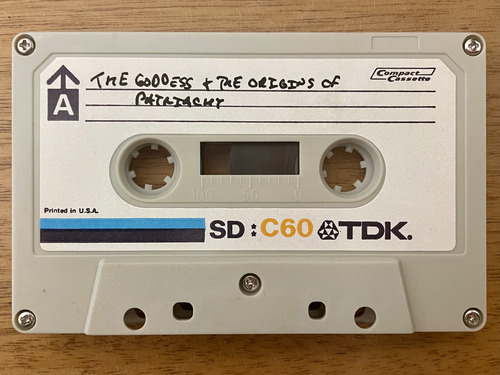
The Goddess and the Origins of Patriarchy [Side A + B]
The Lesbian Radio Show, hosted by Rose Jordan. Discussion about the ancient goddess culture and feminist spirituality with Merlin Stone, author of "When God Was a Woman" (1976) and Grace Chanel, who had recent article in feminist journal, Heresies (1978). -
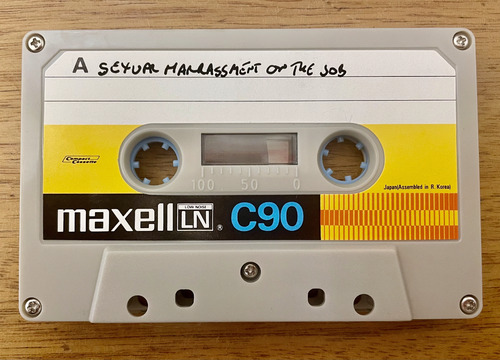
Sexual Harassment on the Job [Side A + B]
Side A is a radio program on WBAI in New York, hosted by Viv Sutherland, and addresses the serious issue of sexual harassment in the workplace. The show consists of two central interviews: Mary Garvin, a carpenter and member of a union, and Rachel, a legal secretary, who both tell their own stories of being harassed at the workplace. Mary Garvin, a member of United Brotherhood of Carpenters and Joiners of America, Local 1204, describes her own encounters with casual and malicious forms of harassment at work on building sites, such as discriminatory treatment as a minority worker. Rachel describes a hellish experience of attempted sexual attack by her employer, a private attorney, detailing being physically restrained and assaulted in his office. The program also features phone-ins from listeners discussing different issues surrounding sexual harassment, law, and potential responses to such an event––some advocating for violent responses. The discussion touches upon the issue of complexities of building harassment cases, shortcomings in current legal protection, and the need for systemic changes to assist the victims better and prevent workplace harassment. Side B continues with call-ins. It expands on themes from the first half but brings in more emphasis on legal, economic, and cultural barriers to justice. The program ends with a call for systemic change, grassroots activism, and women reclaiming their power in courtrooms, workplaces, and daily interactions. -

It's a Jungle Out There: Jan Alpert Speaks with Rita Mae Brown + Reads from Her Books [Side A + B]
Jan Alpert and Rita Mae Brown discuss Rita Mae's career path and motivations outside of being a writer, as well as her involvement as a street organizer in the women's and gay rights movements. Occasionally throughout the interview, Jan will read excerpts from Rubyfruit Jungle, Rita Mae's first novel, and In Her Day, Rita Mae's second novel. While discussing In Her Day, they cover the lessons Rita Mae learned from writing it.